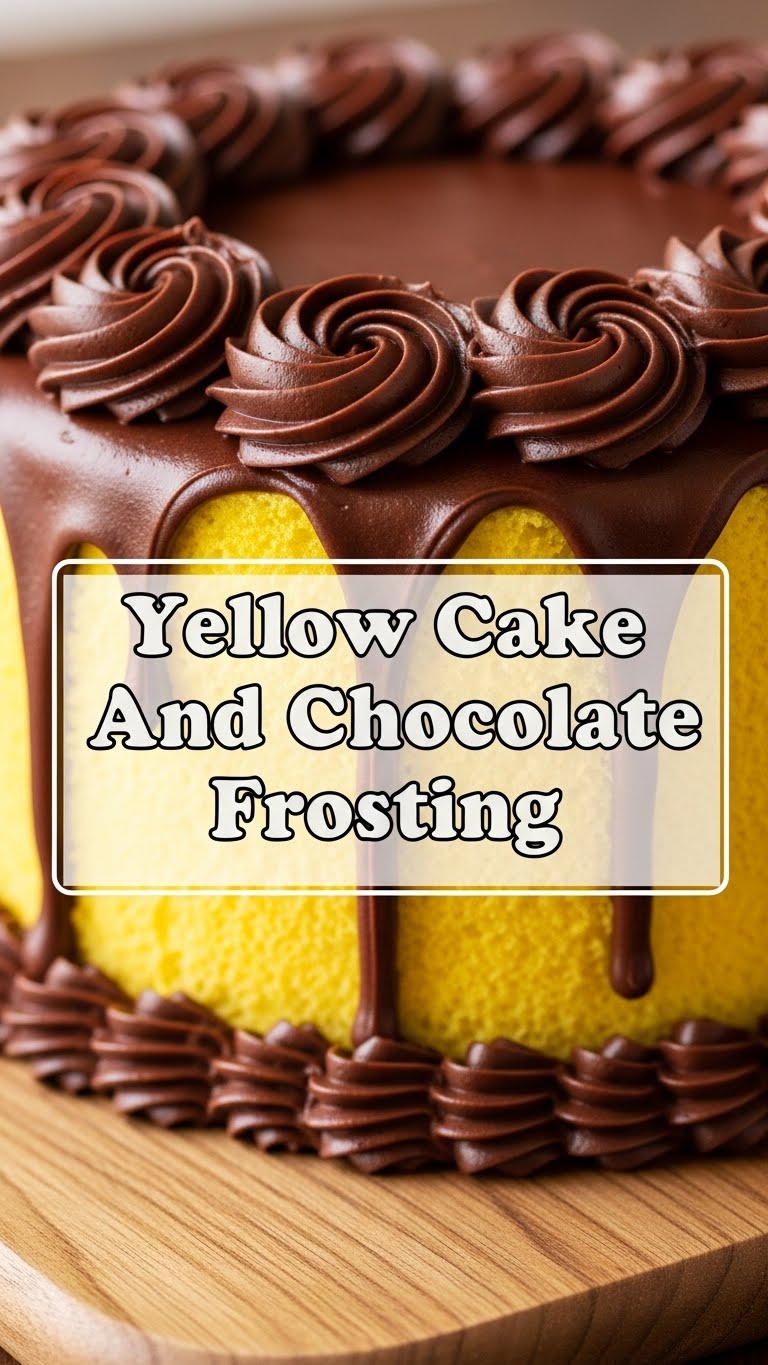
So you’re craving something tasty but too lazy to spend forever in the kitchen, huh? Same. We’ve all been there: that deep, primal urge for something sweet, something comforting, something that screams “I’m a grown-up who can make cake whenever I want!” but also whispers “please don’t make me pull out every single pot and pan.” Good news, my friend. Today, we’re tackling the undisputed champion of feel-good desserts: classic yellow cake with a dreamy chocolate frosting. And trust me, it’s so easy, your dog could probably supervise (and maybe even get a lick of the bowl, if you’re feeling generous).
Why This Recipe is Awesome
Let’s be real, you could buy a box mix. But why settle for ‘meh’ when you can achieve ‘OMG’ with just a tiny bit more effort? This recipe is awesome because it’s a **classic for a reason**. It delivers that perfect, tender, buttery yellow cake crumb that practically melts in your mouth, paired with a rich, fudgy chocolate frosting that makes you question all your life choices (in a good way). Plus, it’s genuinely **idiot-proof**. I’ve made this while distracted, sleep-deprived, and probably singing off-key, and it still came out amazing. It’s also incredibly versatile, and the smell alone will make your kitchen feel like a warm hug. What’s not to love?
Ingredients You’ll Need
Time to gather your edible treasures! Make sure everything is at room temperature for the best results – it really does make a difference, promise.
For the Yellow Cake:
- 1 ½ cups (3 sticks) unsalted butter, softened – Because butter makes everything better, DUH.
- 2 cups granulated sugar – For that perfect sweet kiss.
- 4 large eggs, at room temperature – They’re the binding glue of your cake dreams.
- 1 tablespoon vanilla extract – Don’t skimp here; it’s the soul of yellow cake.
- 3 cups all-purpose flour – Sifted, if you’re feeling fancy (or want an extra fluffy cake).
- 1 tablespoon baking powder – The secret to a good lift.
- ½ teaspoon salt – Balances the sweet, like a culinary superhero.
- 1 ¼ cups whole milk, at room temperature – Gives it that moist, tender texture.
For the Chocolate Frosting:
- 1 cup (2 sticks) unsalted butter, softened – Again with the butter, because we have standards.
- 4 cups powdered sugar (confectioners’ sugar), sifted – Essential for silky smooth frosting, unless you like crunchy bits (you don’t).
- ¾ cup unsweetened cocoa powder, sifted – The key to deep, chocolatey goodness.
- ½ teaspoon salt – Cuts through the sweetness so it’s not cloying.
- 1 tablespoon vanilla extract – Adds depth and warmth.
- ½ cup whole milk or heavy cream (more or less, as needed) – For that perfect, spreadable consistency.
Step-by-Step Instructions
Alright, let’s get baking! Don’t overthink it, just follow along.
- Preheat & Prep: Preheat your oven to 350°F (175°C). Grease and flour two 8 or 9-inch round cake pans. You can also line the bottoms with parchment paper if you want to be extra safe.
- Cream the Butter & Sugar: In a large bowl, using an electric mixer, cream together the softened butter and granulated sugar until light and fluffy. This usually takes about 3-5 minutes. **Don’t rush this step!** It incorporates air, which makes your cake light.
- Add Eggs & Vanilla: Beat in the eggs one at a time, mixing well after each addition. Scrape down the sides of the bowl as needed. Stir in the vanilla extract.
- Combine Dry Ingredients: In a separate bowl, whisk together the flour, baking powder, and salt. Set aside.
- Alternate Wet & Dry: Gradually add the dry ingredients to the wet mixture, alternating with the milk. Start and end with the dry ingredients (e.g., flour, milk, flour, milk, flour). Mix until just combined – **do not overmix!** Overmixing develops gluten, leading to a tough cake.
- Bake It Up: Divide the batter evenly between your prepared cake pans. Bake for 28-32 minutes, or until a wooden skewer inserted into the center comes out clean.
- Cool Down: Let the cakes cool in the pans for about 10-15 minutes before inverting them onto a wire rack to cool completely. **This is crucial!** Frosting a warm cake is a one-way ticket to a soupy disaster.
- Make the Frosting: While the cakes cool, beat the softened butter in a large bowl with an electric mixer until creamy.
- Add Dry Frosting Ingredients: Gradually add the sifted powdered sugar, cocoa powder, and salt to the butter, beating until smooth. Start on low speed to avoid a cocoa explosion in your kitchen.
- Achieve Frosting Perfection: Beat in the vanilla extract. Then, slowly add the milk or cream, one tablespoon at a time, until you reach your desired consistency. You want it fluffy, spreadable, but not too runny.
- Assemble Your Masterpiece: Once the cakes are completely cool, place one layer on your serving plate. Spread about a third of the frosting evenly over the top. Carefully place the second cake layer on top, then frost the top and sides of the entire cake.
- Eat It! (Or Share, I guess): Slice, serve, and bask in the glory of your homemade deliciousness. You earned it!
Common Mistakes to Avoid
Nobody’s perfect, but we can at least avoid these common cake blunders. Learn from my past (many) errors!
- Not preheating the oven: Rookie mistake! Your oven needs to be at the correct temperature from the start to ensure even baking and proper rising. Otherwise, you get sad, dense cake.
- Overmixing the batter: I cannot stress this enough. Mix until just combined. The moment you see no more streaks of flour, stop. **Overmixing equals tough, chewy cake**. Trust me, you don’t want that.
- Ingredients not at room temperature: Cold butter and eggs don’t emulsify properly, leading to a lumpy batter and a less uniform cake texture. Plan ahead, people!
- Frosting a warm cake: Oh, the horror. Warm cake + frosting = chocolate soup and a very messy countertop. Patience, young padawan. **Wait until it’s completely, unequivocally cool.**
- Forgetting to sift powdered sugar/cocoa: If you skip this, expect lumps in your frosting. Lumps. Everywhere. Just do it. Your tongue will thank you.
Alternatives & Substitutions
Feeling adventurous? Or just realized you’re missing an ingredient? Here are some quick fixes and fun twists:
- Dairy-Free Delight: For the cake, swap regular milk for a plant-based alternative like almond or oat milk. Use a good quality dairy-free butter alternative for both the cake and frosting.
- Gluten-Free Goodness: You can absolutely use a 1:1 gluten-free flour blend in this recipe. Just make sure it contains xanthan gum, or add about a teaspoon if it doesn’t.
- Flavor Frenzy (Cake): Try adding a little almond extract instead of, or in addition to, some of the vanilla for a different depth of flavor. A tiny bit of lemon zest in the cake batter can also brighten it up beautifully.
- Frosting Variations: Instead of cocoa, try a cream cheese frosting (reduce sugar a bit) or even a simple vanilla buttercream. Want it extra rich? Use dark cocoa powder. Feeling fancy? Add a splash of strong coffee to the chocolate frosting for a mocha vibe.
- Sprinkle It Up: This isn’t really a substitution, but **add sprinkles!** Rainbow sprinkles make everything instantly more celebratory and fun. It’s a scientific fact.
FAQ (Frequently Asked Questions)
Got questions? I’ve got (casual) answers!
- Can I use margarine instead of butter? Well, technically yes, you can. But why hurt your soul like that? Butter provides a richer flavor and superior texture. Margarine will work in a pinch, but the results won’t be quite as glorious. Just sayin’.
- Why do my ingredients need to be at room temperature? Is it really that important? YES! It’s super important. Room temperature butter and eggs cream together much better, creating a smooth, emulsified batter that holds more air. This leads to a lighter, more tender cake. Cold ingredients can make your batter curdle and result in a dense cake.
- Can I make this cake ahead of time? Absolutely! The unfrosted cake layers can be baked, cooled completely, wrapped tightly in plastic wrap, and stored at room temperature for up to 2 days, or frozen for up to 2 months. Thaw frozen cakes in the fridge before frosting.
- How do I store the finished cake? Keep it covered at room temperature for up to 3 days, or in the fridge for up to a week. If you refrigerate it, let it come to room temperature for about 30 minutes before serving for the best flavor and texture.
- My cake came out dry. What did I do wrong? Chances are, you overbaked it. Ovens vary, so always keep an eye on your cake and test for doneness earlier than the recipe states. An extra minute or two can make all the difference!
- My frosting is too thick/too thin! Help! No worries, this is an easy fix! If it’s too thick, add more milk or cream, a teaspoon at a time, until it reaches your desired consistency. If it’s too thin, beat in more sifted powdered sugar, a quarter cup at a time, until it thickens up.
- Can I use self-rising flour? You technically *could*, but you’d need to adjust the baking powder and salt in the recipe. To keep it simple, stick to all-purpose flour and add the specified leavening agents.
Final Thoughts
There you have it! A perfectly delightful, utterly classic yellow cake with chocolate frosting, made by YOU. See? Told you it wasn’t that hard. This isn’t just a dessert; it’s a hug in cake form, a trip down memory lane, and a testament to your newfound (or refined) baking prowess. So go ahead, cut yourself a generous slice, maybe even two. You’ve battled bowls, conquered crumbs, and emerged victorious with a delicious creation. Now go impress someone—or yourself—with your new culinary skills. You’ve earned it!