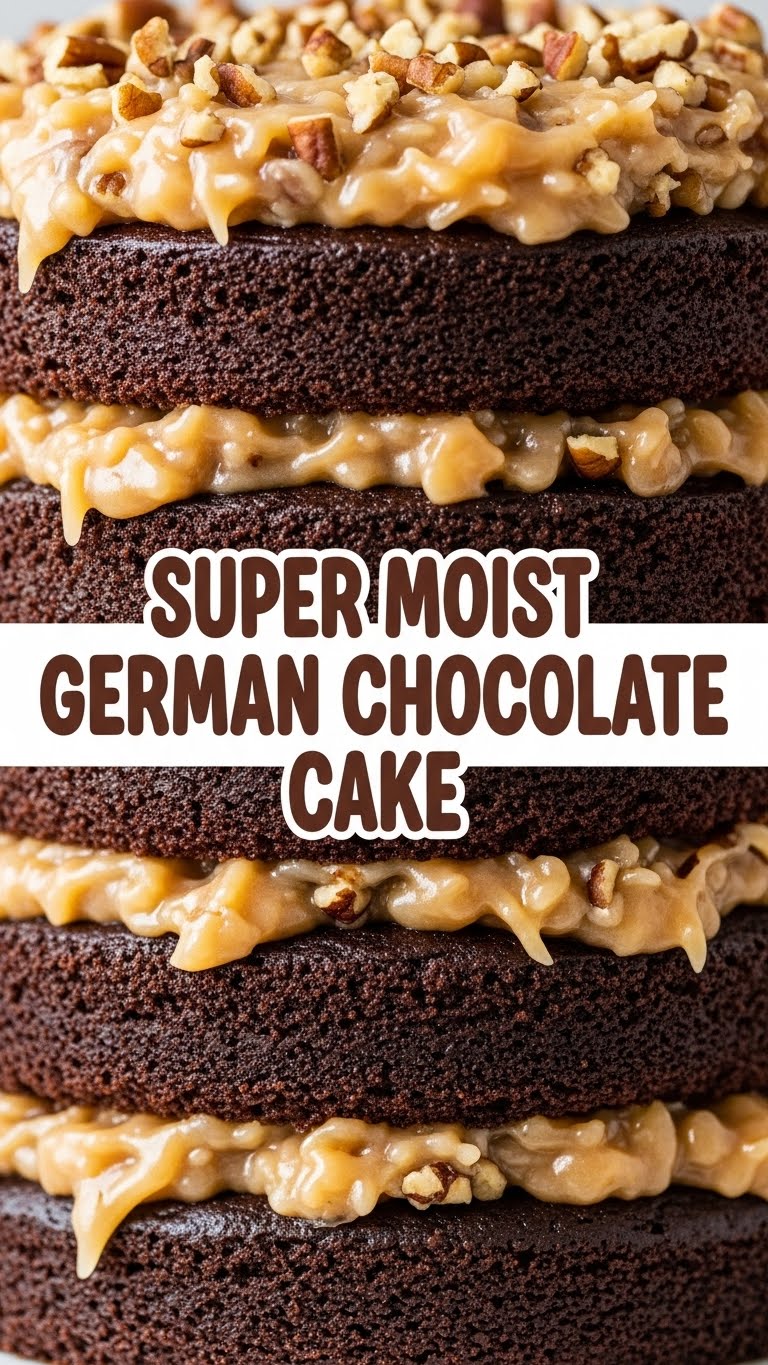
So, you’re craving something ridiculously tasty, chocolatey, and moist but don’t want to spend your entire day in the kitchen feeling like a contestant on a baking show? Same, friend, *same*. We’re here for the good stuff, the easy wins, and the desserts that make people go, “OMG, you *made* this?!” without actually making us break a sweat. Get ready for a Super Moist German Chocolate Cake that’s so good, you might just marry it.
Why This Recipe is Awesome
Because it’s practically **idiot-proof**. Seriously, if I can nail this without setting off the smoke alarm (most of the time), you’re golden. This isn’t just *moist*; it’s a luscious, fudgy, melt-in-your-mouth experience that will make you question every dry, crumbly cake you’ve ever suffered through. Plus, that iconic coconut-pecan frosting? It’s like a warm, nutty hug for your tastebuds. It looks impressive, tastes divine, and won’t require a culinary degree. What’s not to love?
Ingredients You’ll Need
Gather ’round, pantry warriors! Here’s your shopping list. Try not to eat half of the chocolate before it makes it into the cake, okay?
For the Cake:
- 1 cup (2 sticks) unsalted butter, softened (room temp is key, don’t ignore this!)
- 1 ¾ cups granulated sugar (the sweet stuff)
- 4 large eggs (happy, free-range eggs, if you’re fancy)
- 1 teaspoon vanilla extract (real vanilla, please. Your cake deserves it.)
- 2 cups all-purpose flour (the plain kind, not self-rising, unless you like surprises)
- ¾ cup unsweetened cocoa powder (Dutch-processed for a richer color, but regular works too)
- 1 teaspoon baking soda (the fizzing magic)
- ½ teaspoon salt (enhances all that glorious chocolate)
- 1 ½ cups buttermilk (or regular milk with a splash of lemon juice/vinegar – don’t panic if you don’t have it)
For the Famous Coconut-Pecan Frosting:
- 1 cup evaporated milk (not condensed! That’s a different beast)
- 1 cup granulated sugar
- 4 large egg yolks (save the whites for an omelet, or a meringue, if you’re feeling ambitious)
- ½ cup (1 stick) unsalted butter
- 1 teaspoon vanilla extract
- 1 ½ cups sweetened shredded coconut (the sticky, yummy kind)
- 1 cup chopped pecans (toasted, if you wanna be extra)
Step-by-Step Instructions
- Preheat & Prep: Get your oven ready to rock at **350°F (175°C)**. Grease and flour two 9-inch round cake pans. Or, if you’re smart, line the bottoms with parchment paper and then grease/flour. Less stick, more cake!
- Cream It Up: In a large bowl, cream together the softened butter and sugar until it’s light and fluffy. Like a cloud, but edible. Then beat in the eggs one at a time, followed by the vanilla.
- Dry Mix Time: In a separate bowl, whisk together your flour, cocoa powder, baking soda, and salt. Give it a good whisk to break up any lumps.
- Alternate Wet & Dry: Now for the magic! Add about a third of the dry ingredients to your butter mixture, mix until *just* combined. Then add half of the buttermilk, mix. Repeat with another third of dry, then the remaining buttermilk, and finish with the last of the dry. **Do not overmix!** Mix until just combined, a few streaks are fine.
- Bake, Baby, Bake: Divide the batter evenly between your prepped pans. Bake for 30-35 minutes, or until a toothpick inserted into the center comes out clean. Let them cool in the pans for 10-15 minutes before flipping them out onto a wire rack to cool completely. Patience, grasshopper.
- Frosting Frenzy: While the cakes cool, let’s make that legendary frosting. In a medium saucepan, whisk together the evaporated milk, sugar, egg yolks, and butter. Cook over medium-low heat, stirring constantly, until the mixture thickens (about 10-12 minutes). It should be thick enough to coat the back of a spoon.
- Flavor Bomb: Remove the frosting mixture from the heat and stir in the vanilla, coconut, and pecans. Let it cool down a bit – it will thicken more as it cools.
- Assemble Your Masterpiece: Once the cakes are completely cool (this is important, folks!), place one layer on your serving plate. Spread about half of the frosting evenly over the top. Carefully place the second cake layer on top, then slather it with the remaining frosting. You can let some drip down the sides for that rustic, “I totally meant to do that” look.
Common Mistakes to Avoid
- Ignoring Room Temperature Ingredients: Seriously, this isn’t just for show. **Cold eggs and butter don’t emulsify properly**, leading to a dense, not-so-moist cake. Plan ahead, okay?
- Overmixing the Batter: This is a cardinal sin. You’ll activate too much gluten, resulting in a tough, chewy cake. We want tender, not tire rubber. Mix until *just* combined.
- Opening the Oven Door Early: Resist the urge! Let your cakes bake undisturbed, especially in the first 20 minutes. Otherwise, they might deflate.
- Not Cooling Cakes Completely: Frosting a warm cake is a recipe for disaster. You’ll have a sliding, melting mess. Be patient!
- Using the Wrong Milk: Evaporated milk for the frosting, buttermilk for the cake. They are not interchangeable. **FYI**, evaporated milk is concentrated, while buttermilk adds tang and moisture.
Alternatives & Substitutions
- Buttermilk Swap: No buttermilk? No problem! Add 1 ½ tablespoons of lemon juice or white vinegar to your regular milk and let it sit for 5-10 minutes until it curdles slightly. Boom, instant buttermilk.
- Nutty About Nuts: Not a pecan fan? Walnuts work wonderfully in the frosting too! Or, if you’re allergic, simply omit them. The coconut frosting is still divine on its own.
- Dark Chocolate Drama: If you want an even deeper, darker chocolate flavor, consider using a high-quality dark cocoa powder (like Ghirardelli or Valrhona) for the cake. It’ll be less sweet but more intense.
- Oil vs. Butter in Cake: While butter adds flavor, using half oil (like vegetable or canola) can actually make your cake even *more* moist. Try ½ cup butter and ½ cup oil if you’re feeling adventurous.
FAQ (Frequently Asked Questions)
- Can I make this cake ahead of time? Absolutely! The cake layers can be baked a day in advance, cooled completely, wrapped tightly in plastic wrap, and stored at room temperature. The frosting can also be made a day ahead and stored in the fridge, then gently reheated and stirred before using.
- How should I store German Chocolate Cake? Cover it loosely and store it at room temperature for up to 2-3 days. If it’s super warm in your kitchen, the fridge is a safer bet, but let it come to room temp before serving for the best flavor and texture.
- What makes this German Chocolate Cake so moist? The combination of buttermilk, oil (if you use it), and the precise ratio of ingredients helps retain moisture. And **IMO**, cocoa powder contributes to a tender crumb too!
- Can I use margarine instead of butter? Well, technically yes, but why hurt your soul like that? Butter provides a richer flavor and better texture. Margarine will work, but it won’t be quite the same level of deliciousness.
- Is German Chocolate Cake actually German? Nope! It was named after an American baker, Samuel German, who developed a type of dark baking chocolate for Baker’s Chocolate Company in the 19th century. So, more “German’s chocolate” than “German.” Fun fact!
- My frosting seems too thin/thick. What do I do? If it’s too thin, cook it a little longer over low heat, stirring constantly, until it thickens. If it’s too thick after cooling, you can gently warm it over low heat with a tiny splash of milk or water, stirring until it reaches your desired consistency.
Final Thoughts
You did it! You’ve just unlocked the secret to a Super Moist German Chocolate Cake that will make you the hero of any potluck, family gathering, or Tuesday night couch-fest. Don’t be shy; take a huge slice. You’ve earned it. Now go impress someone—or yourself—with your new culinary skills. Happy baking!