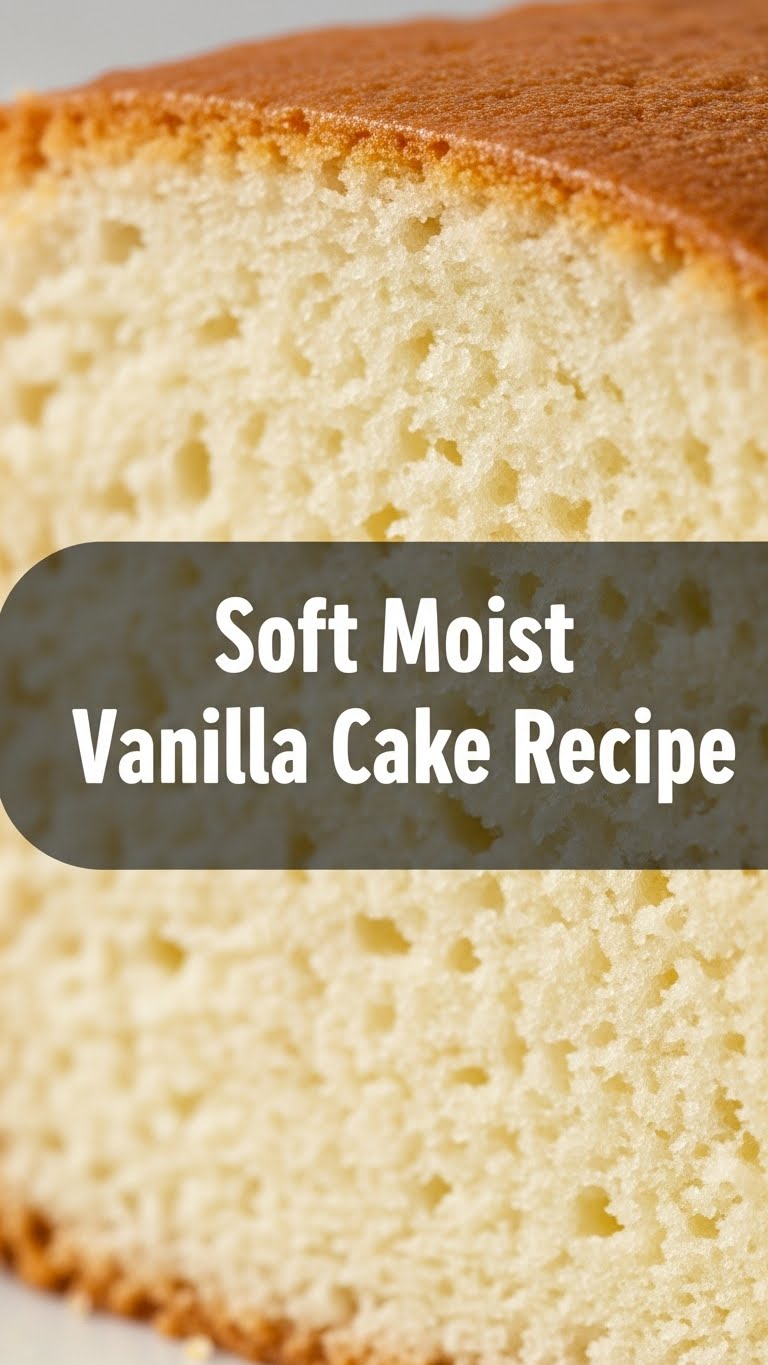
So you’re craving something tasty but too lazy to spend forever in the kitchen, huh? Same. We’ve all been there: staring into the fridge, dreaming of something sweet and comforting, but the thought of a complicated recipe makes you want to just order takeout. Well, my friend, put down that phone because I’ve got you covered. This isn’t just *a* vanilla cake recipe; it’s *the* Soft Moist Vanilla Cake recipe that’s so easy, you’ll wonder why you ever bought a store-bought mix. Get ready to bake like a boss, with minimal fuss and maximum deliciousness!
Why This Recipe is Awesome
Let’s be real, most cake recipes sound like they were written for professional pastry chefs. Not this one! This recipe is idiot-proof, even I didn’t mess it up (and trust me, I’ve had some kitchen disasters that belong in a comedy special). It’s designed for real humans with busy lives who still want to eat amazing cake. Think of it as your new best friend in the kitchen: reliable, sweet, and always there to make you happy.
The result? A vanilla cake so soft, so moist, and so perfectly balanced in flavor, it’ll make you question every dry, crumbly cake you’ve ever encountered. Seriously, no weird complicated steps, no obscure ingredients, just pure, unadulterated vanilla cake joy. You’re welcome.
Ingredients You’ll Need
Gather ’round, baking buddy! Here’s your simple shopping list. Pro tip: **Room temperature ingredients are KEY here**, so pull that butter and those eggs out of the fridge an hour or two before you start. Trust me on this one!
- 1 ½ cups (190g) All-Purpose Flour: The good ol’ reliable stuff. No need for fancy cake flour, unless you *want* to be extra.
- 1 ½ teaspoons Baking Powder: Our little helper that makes the cake rise high and mighty.
- ½ teaspoon Salt: Just a pinch to balance out all that sweetness. Don’t skip it!
- ¾ cup (170g) Unsalted Butter: **Softened to room temp!** This is non-negotiable for that perfect fluffy texture.
- 1 ¼ cups (250g) Granulated Sugar: For that sweet, sweet bliss.
- 2 Large Eggs: Also **at room temp!** They’ll emulsify better with the butter and sugar, making a smoother batter.
- 2 teaspoons Pure Vanilla Extract: The star of the show! **Seriously, invest in good quality vanilla.** It makes all the difference. None of that imitation nonsense, okay?
- ¾ cup (180ml) Whole Milk: Again, **room temp!** Whole milk gives the best moistness and flavor.
Step-by-Step Instructions
Alright, let’s get down to business. Follow these steps, and you’ll be swimming in soft, moist vanilla cake goodness in no time.
- Preheat & Prep: Preheat your oven to 350°F (175°C). Lightly grease and flour an 8-inch round cake pan. If you’re feeling fancy, line the bottom with parchment paper too. No one wants a stuck cake!
- Whisk the Dry Stuff: In a medium bowl, whisk together the flour, baking powder, and salt. Set it aside for a moment. We’ll get back to it.
- Cream the Dream Team: In a large bowl, using an electric mixer (handheld or stand mixer works!), cream the softened butter and granulated sugar together on medium-high speed. Beat until it’s light and fluffy, about 3-5 minutes. This is where the magic starts!
- Egg-cellent Addition: Add the eggs one at a time, beating well after each addition until just combined. Then, stir in that glorious vanilla extract. Scrape down the sides of the bowl to make sure everything’s incorporated.
- Alternate & Mix: With the mixer on low speed, gradually add about a third of your dry ingredient mix to the wet ingredients, mixing until just combined. Then, pour in half of the milk, mixing again until just combined. Repeat with another third of the dry ingredients, then the remaining milk, and finally the last of the dry ingredients.
- The Golden Rule (Don’t Overmix!): **Mix only until just combined.** Seriously, stop the mixer as soon as you don’t see any dry streaks of flour. Overmixing develops gluten and makes your cake tough – and we want soft and moist, remember?
- Bake It Up: Pour the batter evenly into your prepared cake pan. Pop it into the preheated oven and bake for 30-35 minutes.
- Check for Doneness: How do you know it’s ready? A toothpick inserted into the center should come out clean, or with a few moist crumbs attached. The cake should also spring back when lightly touched.
- Cool Down: Let the cake cool in the pan for about 10-15 minutes on a wire rack. Then, carefully invert it onto the rack to cool completely. Patience, young grasshopper! **Don’t try to frost a warm cake**, unless you want a melted mess.
- Frost & Enjoy: Once completely cool, frost it with your favorite vanilla buttercream (or chocolate, or cream cheese… I won’t judge!). Slice it up and bask in your baking glory.
Common Mistakes to Avoid
Baking is a science, but sometimes the ‘science’ of being human gets in the way. Here are a few traps to steer clear of:
- Thinking you don’t need to preheat the oven—rookie mistake. Your cake needs that consistent heat from the get-go to rise properly.
- **Using cold ingredients.** I know, I sound like a broken record, but cold butter won’t cream properly, and cold eggs can cause your batter to curdle. Room temp, people!
- **Overmixing the batter.** Seriously, this is the number one cake killer for softness. As soon as the flour disappears, STOP. Your goal is a smooth, not stretchy, batter.
- **Opening the oven door constantly.** Resist the urge! Every time you peek, the oven temperature drops, which can cause your cake to sink in the middle. Be patient!
- **Not properly greasing and flouring your pan.** Unless you enjoy chiseling cake out of metal, make sure your pan is prepped meticulously.
Alternatives & Substitutions
Life happens, and sometimes you don’t have exactly what the recipe calls for. Here are a few ways to tweak things:
- Milk: While whole milk is ideal for ultimate moistness and richness, 2% or even skim milk can work in a pinch. Just know your cake might be slightly less decadent. Plant-based milks like almond or soy also work, but can subtly alter the flavor.
- Butter: For a dairy-free option, you can use a good quality plant-based butter (like Miyoko’s Kitchen or Earth Balance sticks) or even refined coconut oil, though the latter might give a slight coconut flavor. Margarine? See the FAQ. 😉
- Flour: If you happen to have cake flour, you can definitely use it for an even lighter, more tender crumb. Just use 1:1. For gluten-free, a 1:1 gluten-free baking blend (the one with xanthan gum already in it) usually works well, but texture might vary slightly.
- Vanilla Extract: Feeling adventurous? You could swap out some of the vanilla for almond extract (start with ¼ teaspoon) for a different flavor profile, or even a touch of lemon zest for a brighter cake. But for classic vanilla, stick to the good stuff.
FAQ (Frequently Asked Questions)
Got questions? I’ve got (casual and hopefully helpful) answers!
- Can I use margarine instead of butter? Well, technically yes, you *can*, but why hurt your soul like that? Butter gives a superior flavor and texture that margarine just can’t replicate. For a truly amazing cake, stick with butter. IMO.
- My cake sunk in the middle, what happened? Oh, the heartbreak! Could be several things: oven door opened too early, underbaked, too much leavening, or overmixing. Next time, be patient, make sure your oven temp is accurate, and trust the process!
- Can I make this into cupcakes? Absolutely! Divide the batter into cupcake liners in a muffin tin. Reduce the baking time to about 18-22 minutes. Keep an eye on them, as oven times vary!
- How do I know when it’s done? A trusty toothpick inserted into the center should come out clean, or with a few moist crumbs attached. If it’s still gooey, give it a few more minutes.
- Can I make this ahead of time? You bet! This cake stays wonderfully moist for 3-4 days if stored properly (airtight container at room temperature). You can also bake the layers, wrap them tightly, and freeze them for up to a month!
- What kind of frosting should I use? A classic homemade vanilla buttercream is always a winner and complements the cake perfectly. A tangy cream cheese frosting is also divine if you want a little extra zing!
- Why is room temperature so important? Great question! Room temperature butter creams with sugar better, incorporating more air for a lighter cake. Room temperature eggs and milk emulsify more smoothly into the batter, preventing curdling and leading to a consistent, smooth texture. It’s a small step that makes a huge difference, FYI!
Final Thoughts
And there you have it, folks! Your new favorite soft, moist vanilla cake recipe that’s almost as easy as ordering takeout (but way more satisfying, promise). This isn’t just a cake; it’s an experience, a little hug in edible form, and proof that baking doesn’t have to be intimidating. So go ahead, whip up this beauty, and prepare for compliments. Now go impress someone—or yourself—with your new culinary skills. You’ve earned it! Happy baking, my friend!