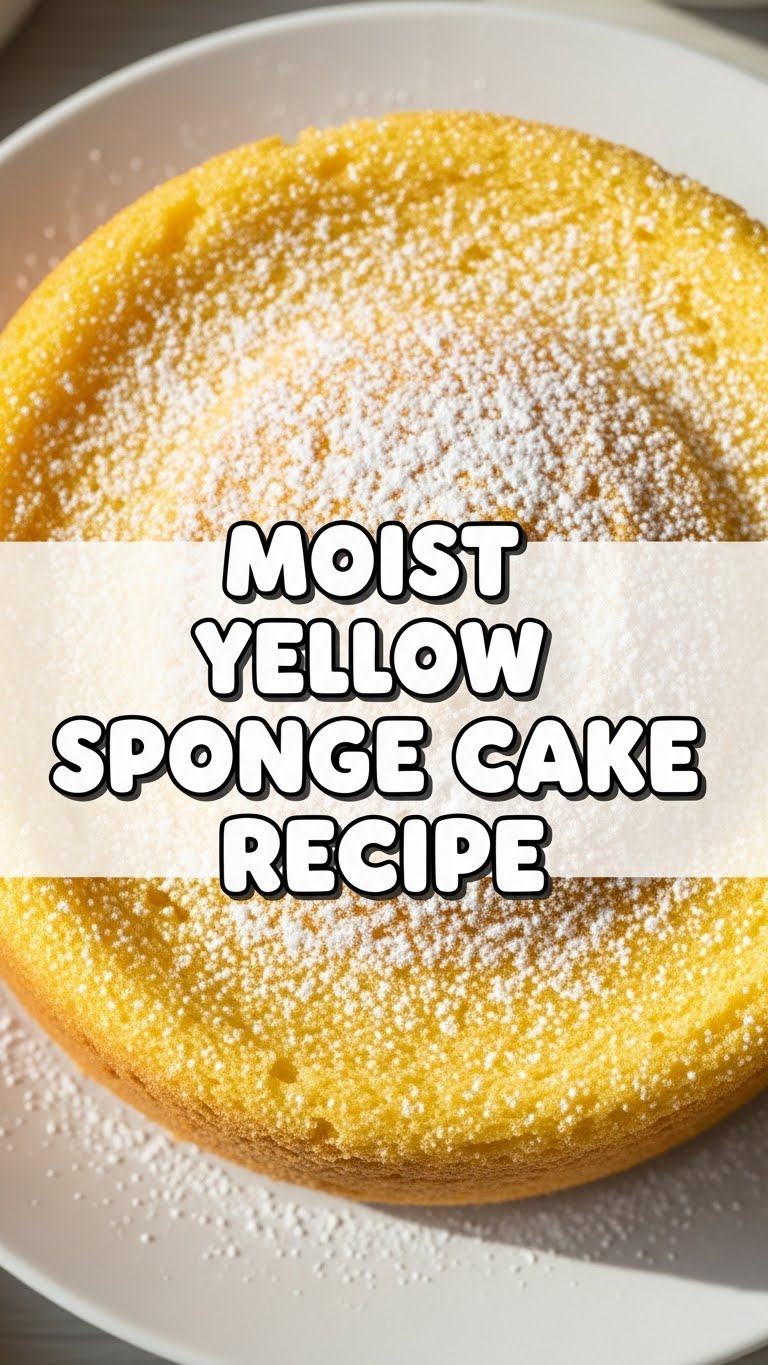
So, you’ve got that craving, huh? That specific, undeniable urge for something sweet, soft, and utterly comforting? And maybe, just maybe, you’re not in the mood for a culinary marathon that requires a chef’s hat and three different spatulas. Good news, my friend! You’ve landed in the right spot. We’re diving into the glorious world of a **Moist Yellow Sponge Cake** that’s so ridiculously easy, you’ll wonder why you ever bought a pre-made mix. Seriously, this isn’t rocket science; it’s just pure, unadulterated, buttery cake joy. Let’s get baking!
Why This Recipe is Awesome
Okay, so why this particular recipe over the gazillion others floating around the internet? Well, for starters, it’s pretty much **idiot-proof**. And I say that with love, as someone who once mistook salt for sugar (don’t ask). This cake comes out **insanely moist** every single time, with that beautiful, sunny yellow crumb that just screams “happy place.” It’s the kind of cake that makes you look like a domestic god/goddess without having to break a sweat or sacrifice a small animal. Plus, it’s versatile! It’s delicious naked, with a simple dusting of powdered sugar, or as the sturdy, yet tender, base for all your frosting dreams. Basically, it’s a show-stopper without the show-offy attitude. You’re welcome.
Ingredients You’ll Need
Gather ’round, fellow bakers (or aspiring bakers who just want cake). Here’s your shopping list for pure happiness:
- All-Purpose Flour: The backbone of our cake. Sifted, please! No lumpy bits allowed in this luxurious sponge.
- Granulated Sugar: For that sweet, sweet goodness. Don’t skimp, unless you’re into savory cake (and who is?).
- Baking Powder: Our little lift-off agent. Makes the cake fluffy, not flat.
- Salt: Just a pinch! It enhances all the other flavors. Think of it as the cake’s secret handshake.
- Unsalted Butter: Softened, please! Room temperature is key here. It should be squishy, not melted. Seriously, **room temp butter makes all the difference**.
- Large Eggs: Also at room temperature. Cold eggs can mess with the emulsion, and nobody wants a broken emulsion on their watch.
- Whole Milk: Again, room temperature is your friend. It adds moisture and richness. If you only have skim, fine, but whole is better, IMO.
- Vanilla Extract: Use the good stuff! It’s a yellow cake, vanilla is kind of its whole deal. Don’t be shy.
Step-by-Step Instructions
- Prep Your Pan & Oven: First things first, get that oven preheated to **350°F (175°C)**. Then, butter and flour a 9-inch round cake pan. You can also line the bottom with parchment paper for extra insurance against sticking. Trust me on this, a sticky cake is a sad cake.
- Whisk Dry Ingredients: In a medium bowl, whisk together your flour, sugar, baking powder, and salt. Make sure they’re well combined. This ensures even distribution of your leavening, so no surprise dense spots!
- Cream Butter & Eggs: In a large bowl (or stand mixer), beat your softened butter until creamy. Add the eggs one at a time, beating well after each addition until fully incorporated. Scrape down the sides of the bowl often. This step is where magic happens!
- Alternate Dry & Wet: Now for the dance! Add about a third of your dry ingredients to the butter-egg mixture and mix on low speed until just combined. Next, pour in half of your room-temp milk and mix until combined. Repeat with another third of the dry, then the remaining milk, and finally the last of the dry ingredients. **Don’t overmix!** Mix only until just combined to keep the cake tender.
- Add the Vanilla: Stir in that glorious vanilla extract. Give it one last gentle mix to distribute the flavor.
- Bake It Up: Pour the batter into your prepared cake pan and smooth the top. Pop it into your preheated oven and bake for **30-35 minutes**, or until a wooden skewer inserted into the center comes out clean. The cake should be golden brown and springy to the touch.
- Cool Down: Once baked, let the cake cool in the pan on a wire rack for about 10-15 minutes. Then, carefully invert it onto the wire rack to cool completely. **Resist the urge to cut into it hot!** It needs time to set properly.
Common Mistakes to Avoid
- Not Preheating the Oven: Rookie mistake! Your cake needs that immediate hot blast to rise properly. Planning ahead saves sorrow.
- Cold Ingredients: We talked about this! Cold butter and eggs lead to a lumpy, separated batter and a less-than-ideal cake texture. **Room temperature is non-negotiable for success!**
- Overmixing the Batter: Once you add the flour, treat that mixer with kid gloves. Overmixing develops the gluten, resulting in a tough, dense cake. Mix until *just* combined, then stop.
- Opening the Oven Door Too Soon: Patience, young padawan. Opening the oven door lets out heat and can cause your cake to sink. Wait until at least 25 minutes into baking, or when the edges start to pull away from the pan.
- Impatience During Cooling: I know, the smell is intoxicating. But cutting into a hot cake means crumbs, structural weakness, and a potentially messy situation. Let it cool!
Alternatives & Substitutions
Feeling adventurous? Or just missing an ingredient? No stress, we’ve got options!
- Milk Alternatives: While whole milk gives the best richness, you can absolutely use 2% milk, or even a plain unsweetened plant-based milk like almond or oat. Just be aware the texture might be *slightly* different, but still delish.
- Flavor Boosters: Want to jazz it up? Add a teaspoon of lemon or orange zest to the batter for a bright citrusy twist. Almond extract can also be swapped for half the vanilla for a different aromatic vibe.
- Cupcakes: This batter makes excellent cupcakes! Just divide it into a lined muffin tin and bake for about 18-22 minutes. Keep an eye on them!
FAQ (Frequently Asked Questions)
Because let’s face it, we all have questions, especially when cake is involved!
- Can I use margarine instead of butter? Well, technically yes, but why hurt your soul like that? Butter provides a richer flavor and better texture. If you absolutely *must*, use a good quality stick margarine, but just know it won’t be quite the same level of heavenly.
- Why is it called “sponge cake”? Because of its super airy, porous texture that resembles a sea sponge! It’s meant to soak up moisture (like syrup or frosting) without getting soggy. Pretty cool, huh?
- My cake turned out dry, what happened? Oh no! This is usually due to **overbaking** or using too much flour. Make sure you measure your flour correctly (spoon into cup, then level off!) and keep an eye on that oven. An oven thermometer is your best friend here, FYI.
- How do I store this cake? At room temperature, covered tightly, for 2-3 days. In the fridge, it can last up to a week. For longer storage, wrap individual slices tightly and freeze for up to 2 months. Thaw at room temp.
- Can I make this a chocolate cake? Not this particular recipe, my friend. This is *the* yellow sponge. For chocolate, you’d need a different ratio of ingredients to incorporate cocoa powder properly. But hey, now you have a reason to find another awesome recipe!
Final Thoughts
See? That wasn’t so scary, was it? You just made a glorious, moist, yellow sponge cake from scratch! Pat yourself on the back, you culinary genius. Whether you’re planning to devour it all yourself (no judgment here, trust me) or share it with adoring fans, you’ve earned every delicious bite. Now go impress someone—or yourself—with your new culinary skills. You’ve earned it! Happy baking, and happy eating!