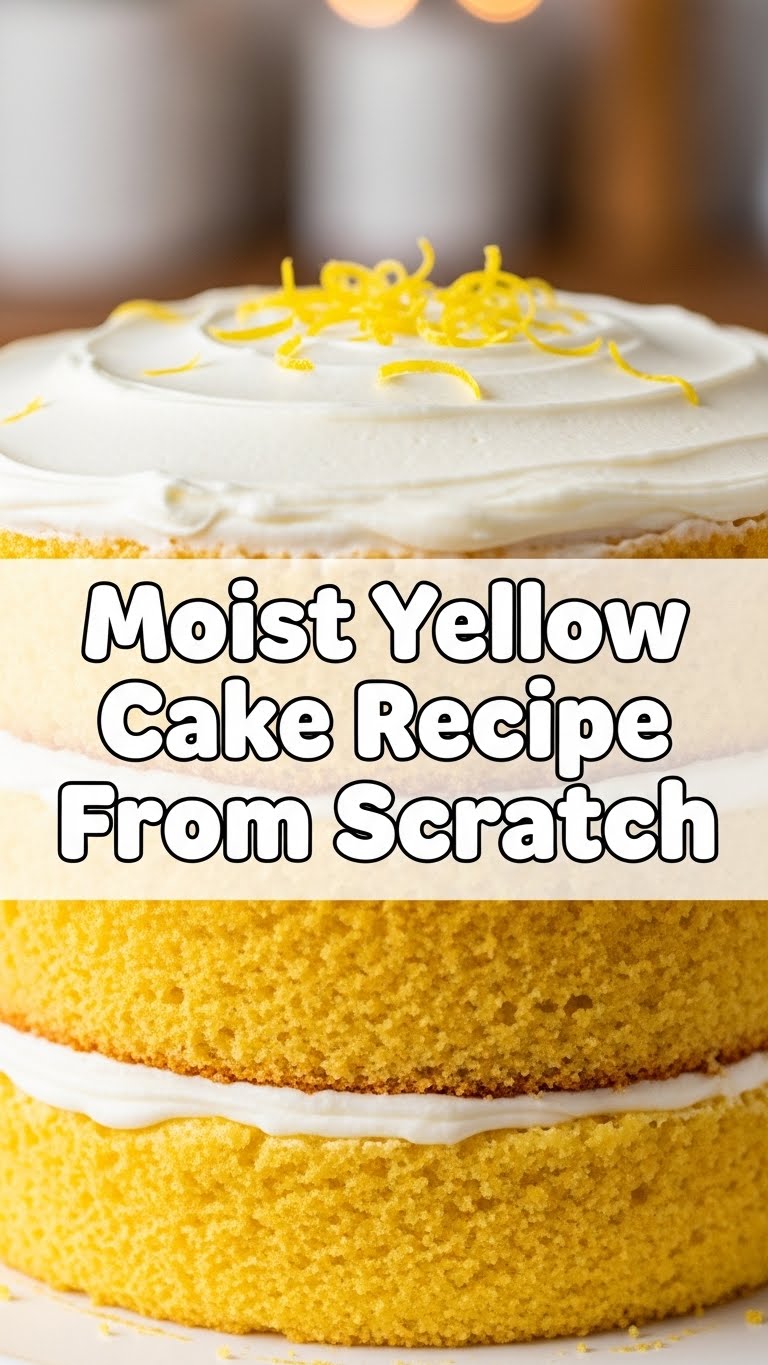
Okay, so you’re craving something warm, comforting, and absolutely drenched in nostalgia, but the thought of a “from-scratch” recipe makes you wanna just order takeout, huh? Been there, done that, got the stained apron. But what if I told you we could whip up a ridiculously moist yellow cake that tastes like sunshine and hugs, without, like, *actually* spending all day in the kitchen? Yep, we’re doing this. And it’s gonna be epic.
Why This Recipe is Awesome
This isn’t just *any* yellow cake recipe, my friend. This is *the* recipe. Why? Because it’s so ridiculously easy, you’ll wonder why you ever bought a box mix. Seriously, it’s pretty much **idiot-proof** – and coming from someone who once set off a smoke alarm making toast, that’s high praise! It comes out moist, fluffy, and perfectly golden every single time. Plus, it uses ingredients you probably already have lurking in your pantry, so no emergency grocery runs in your PJs. Win-win, IMO.
Ingredients You’ll Need
Gather your troops, folks! Here’s what you’ll need to make this magic happen:
- 1 ½ cups all-purpose flour: The backbone of our cake. Don’t substitute with self-rising unless you’re feeling adventurous (and possibly regretful).
- 1 ½ teaspoons baking powder: Our little lift-off agent. Makes things fluffy!
- ½ teaspoon salt: Balances everything out. Crucial, like that friend who tells you when you have spinach in your teeth.
- ½ cup (1 stick) unsalted butter, softened: Let it chill on the counter for a bit. Not melted, not rock hard. Just… softened.
- 1 cup granulated sugar: Sweetness! Because life is better with sugar.
- 2 large eggs: Room temperature, please! It helps with emulsification – fancy word for “making things smooth.”
- 1 teaspoon vanilla extract: The soul of any good yellow cake. Don’t skimp.
- ¾ cup whole milk, room temperature: Again with the room temp! Trust me on this one. It’s key for that moist crumb.
Step-by-Step Instructions
Alright, apron on, music up! Let’s bake some happiness.
- Prep Time! First things first, **preheat your oven to 350°F (175°C)**. Grease and flour a 9-inch round cake pan. If you’re feeling extra fancy (or just want easier cleanup), line the bottom with parchment paper.
- Dry Mix Magic. In a medium bowl, whisk together the flour, baking powder, and salt. Give it a good whisk until everything is super combined. Set aside.
- Cream it Up. In a large bowl (or your stand mixer if you’re living the dream), beat the softened butter and granulated sugar together on medium speed until it’s light and fluffy. This usually takes about 2-3 minutes. Scrape down the sides of the bowl often!
- Egg-cellent Addition. Add the eggs, one at a time, beating well after each addition. Then stir in that glorious vanilla extract.
- Alternating Act. Now for the slightly tricky part, but you got this! With the mixer on low speed, **gradually add the dry ingredients to the wet ingredients in three additions, alternating with the milk in two additions.** Start and end with the flour mixture. So it’s: flour, milk, flour, milk, flour. Mix just until combined after each addition. **Don’t overmix!** Overmixing = tough cake. Nobody wants a tough cake.
- Pour & Bake. Pour your beautiful batter into the prepared cake pan, spreading it evenly.
- The Grand Finale. Bake for 28-32 minutes, or until a wooden skewer or toothpick inserted into the center comes out clean.
- Cool Down. Let the cake cool in the pan for about 10-15 minutes before inverting it onto a wire rack to cool completely. **Patience, young grasshopper!** Don’t try to frost a warm cake unless you enjoy a melted, messy frosting puddle.
Common Mistakes to Avoid
Listen, we all make mistakes. But these ones? Let’s just… not.
- **Thinking you don’t need to preheat the oven.** Rookie mistake, pal. Your cake won’t rise properly if it doesn’t hit that hot oven immediately.
- **Using cold ingredients.** I know, I sound like a broken record, but cold butter and milk make for a lumpy, less-than-moist cake. Just take ’em out ahead of time, okay?
- **Overmixing the batter.** Remember that tough cake comment? Yeah. Mix until *just* combined. There might be a few small lumps, and that’s totally fine.
- **Opening the oven door constantly.** Resist the urge to peek! Every time you open that door, the temperature drops, and your cake’s delicate structure can fall. Wait until at least the 20-minute mark.
- **Not greasing and flouring your pan properly.** Unless you want half your cake stuck to the bottom, don’t skip this. Or use parchment paper!
Alternatives & Substitutions
Feeling wild? Here are some tweaks you can make without totally messing things up.
- Butter vs. Oil: You *could* use vegetable oil instead of butter for an even moister cake, but honestly, the butter flavor is just too good to pass up for a classic yellow cake. If you do use oil, use the same amount.
- Milk Alternatives: Out of whole milk? You can use 2% or even unsweetened almond milk in a pinch. The cake might be *slightly* less rich, but still delish. Don’t even *think* about skim milk, though. That’s just an insult to cake.
- Flavor Boosts: Want to switch it up? Add a teaspoon of almond extract along with the vanilla for a different vibe, or a pinch of nutmeg for a warmer spice.
- No cake flour needed! For a softer crumb, some recipes call for cake flour. But honestly, for this recipe, good old all-purpose flour works perfectly. Don’t stress it.
FAQ (Frequently Asked Questions)
Got questions? I probably do too, but let’s see if I can answer yours!
- Can I use margarine instead of butter? Well, technically yes, but why hurt your soul like that? Butter just tastes better, period. It brings a richness margarine can’t compete with.
- My cake is dense. What went wrong? Chances are you either overmixed the batter (developing too much gluten) or didn’t use fresh enough baking powder. Old baking powder is a silent killer of fluffy cakes!
- Can I make this into cupcakes? Absolutely! Divide the batter into 12-18 lined cupcake tins and reduce the baking time to 18-22 minutes, or until a toothpick comes out clean. Easy peasy!
- How do I know if my butter is “softened” enough? It should be soft enough that you can easily make an indentation with your finger, but not so soft that it’s greasy or melted. Think room temperature, not hot fudge.
- Can I store the cake? And for how long? Yep! Store it in an airtight container at room temperature for up to 3-4 days. If it’s frosted with a cream cheese frosting (yum!), it’s probably best in the fridge.
- Do I *have* to use room temperature ingredients? Okay, fine, you don’t *have* to, but it makes a *huge* difference in the cake’s texture and moisture. Cold ingredients don’t emulsify as well, leading to a less uniform and potentially tougher crumb. So, do it for the cake!
Final Thoughts
See? That wasn’t so scary, was it? You just conquered a scratch-made yellow cake, my friend! Now go impress someone—or yourself—with your new culinary skills. Slather on some chocolate frosting, vanilla buttercream, or just eat it plain with a fork while standing over the sink (no judgment here!). You’ve earned it! Seriously, pat yourself on the back. You’re a baking rockstar.