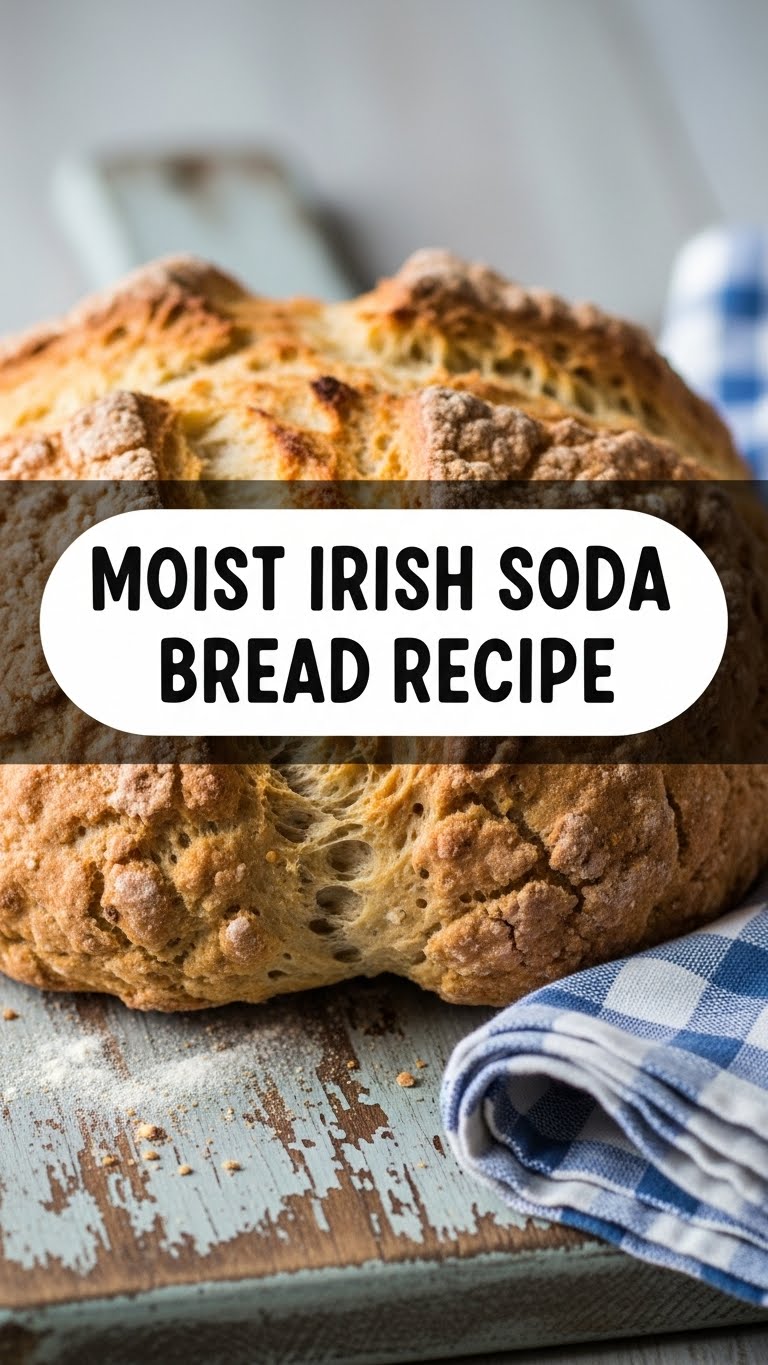
So you’re craving something tasty but too lazy to spend forever in the kitchen, huh? Same. Like, seriously, who has time for fussy yeast or complicated proofing when deliciousness could be just a whisk and a bake away? If that’s you (and let’s be real, it’s all of us sometimes), then you’ve stumbled upon exactly what your carb-loving heart needs: a genuinely **moist** Irish Soda Bread recipe. We’re talking minimal effort, maximum cozy vibes. Let’s get baking!
Why This Recipe is Awesome
Okay, let’s be honest. This isn’t just *a* recipe; it’s practically a magic trick. This soda bread is the kitchen equivalent of that friend who’s always effortlessly cool and gets things done without breaking a sweat. **No yeast, no kneading, no waiting around for hours.** You literally just mix, shape, and bake. It’s so idiot-proof, even I didn’t mess it up (and I once set off a smoke detector making toast). It comes out with a perfectly crusty exterior and a beautifully tender, moist crumb that’ll make you wonder why you ever bothered with anything more complicated. Plus, your kitchen will smell like a dream, which is a bonus, IMO.
Ingredients You’ll Need
Gather your supplies, my friend! You probably have most of this stuff lurking in your pantry already. No fancy-schmancy ingredients here, just good old basics.
- 3 ½ cups All-Purpose Flour: The backbone of our bread. Don’t overthink it.
- 1 tsp Salt: Because flavor, duh.
- 1 tsp Baking Soda: This is our leavening MVP, the secret to that lovely rise. Make sure it’s fresh!
- 1 tbsp Granulated Sugar: Just a touch for balance, not for sweetness. It’s bread, not cake.
- 4 tbsp Cold Butter, cubed: Like your ex’s heart, but infinitely more useful. It’s key for tenderness.
- 1 ¾ cups Buttermilk: The real MVP for moisture and that signature tang. Don’t skimp!
Step-by-Step Instructions
Alright, apron on (or not, we don’t judge). Let’s do this thing!
- Get Your Oven Ready: Preheat your oven to a toasty 400°F (200°C). Line a baking sheet with parchment paper. Trust me, parchment paper is your friend here.
- Mix the Dry Stuff: In a large bowl, whisk together the flour, salt, baking soda, and sugar. Give it a good whisk to make sure everything’s evenly distributed. We’re looking for homogeneous dry goodness.
- Cut in the Butter: Add your cold, cubed butter to the dry ingredients. Now, use your fingertips or a pastry blender to rub the butter into the flour until it resembles coarse crumbs. We want tiny, pea-sized bits of butter throughout. This is what helps create that beautiful texture.
- Add the Buttermilk: Make a well in the center of your dry mixture and pour in the buttermilk. Using a wooden spoon or your hands (they’re the best tools, really), gently mix until a shaggy dough forms. **Do NOT overmix!**
- Shape the Dough: Turn the dough out onto a lightly floured surface. Gently knead it just a few times, just enough to bring it together into a rough, round loaf. It should be soft and slightly sticky, but manageable. Don’t fuss with it too much.
- Score and Bake: Transfer your dough ball to the prepared baking sheet. Using a sharp knife, cut a deep ‘X’ into the top of the loaf, going almost to the edges. This isn’t just for looks; it helps the bread cook evenly. Pop it into your preheated oven.
- Bake Until Golden: Bake for 35-45 minutes, or until the crust is beautifully golden brown and sounds hollow when you tap the bottom. If you have a thermometer, the internal temp should be around 200°F (93°C).
- Cool Down: Transfer the bread to a wire rack to cool completely. Or, if you’re like me, cut a slice while it’s still warm and slather it with butter. Totally your call!
Common Mistakes to Avoid
We all make mistakes, darling. But with this list, you won’t make *these* ones. Consider yourself schooled!
- Overmixing the Dough: This is the cardinal sin of soda bread. Seriously, don’t do it. Overworking the dough develops the gluten too much, resulting in a tough, dense, sad loaf. Mix until just combined, then back off.
- Using Old Baking Soda: Baking soda loses its potency over time. If yours has been in the back of the pantry since the dinosaurs roamed, it’s time for a fresh box. **A good rule of thumb: If it doesn’t fizz when mixed with a bit of vinegar, it’s dead.**
- Not Preheating the Oven: Rookie mistake! A cold oven won’t give your bread that initial burst of heat it needs to rise properly. Get that oven piping hot before the bread goes in.
- Forgetting the ‘X’ (or not cutting deep enough): It’s not just a decoration! The cross helps the loaf expand and cook evenly from the center. If it’s too shallow, the bread might crack randomly.
- Substituting Buttermilk with Regular Milk: While you *can* make your own buttermilk substitute (see below!), just using regular milk won’t give you the same moistness, tang, or reaction with the baking soda needed for that perfect rise.
Alternatives & Substitutions
Feeling adventurous? Or just missing an ingredient? No stress, we’ve got options!
- No Buttermilk? No Problem! You can DIY it. For 1 ¾ cups buttermilk, measure out 1 ¾ cups regular milk (whole or 2% works best) and stir in 1 ½ tablespoons of lemon juice or white vinegar. Let it sit for 5-10 minutes until it curdles slightly. Voila! Instant buttermilk.
- Add-ins for Flair: Want to spice things up? Try adding ½ cup of raisins, currants, or dried cranberries to the dry ingredients for a slightly sweeter touch. A tablespoon of caraway seeds gives it a traditional kick, and orange zest can add a lovely brightness.
- Whole Wheat Wonders: You can swap out up to half of the all-purpose flour for whole wheat flour for a nuttier, heartier loaf. Just be aware it might be a bit denser.
FAQ (Frequently Asked Questions)
Got questions? I’ve got (casual and hopefully helpful) answers!
- Can I use margarine instead of butter? Well, technically yes, but why hurt your soul like that? Butter just tastes better and contributes to a superior texture. For a really moist crumb, butter is the way to go.
- My bread turned out dry and crumbly. What gives? Usually, this means you either overbaked it, or you didn’t add enough buttermilk. Sometimes, if your flour is super dry, it can absorb more liquid. Or, horror of horrors, your baking soda was expired.
- Why do I need to cut an ‘X’ on top? Is it for good luck? Kinda! While some believe it wards off evil spirits (fun, right?), scientifically, it allows the steam to escape from the center of the loaf, helping it to cook evenly and prevent giant cracks.
- Can I add cheese and herbs to this recipe? Absolutely! Soda bread is surprisingly versatile. Add ½ cup of shredded cheddar or a mix of herbs like chives or rosemary to the dry ingredients for a savory twist.
- How do I store leftover soda bread? Keep it tightly wrapped in plastic wrap or in an airtight container at room temperature for up to 2-3 days. It’s best fresh, but still good the next day toasted!
- Is Irish Soda Bread supposed to be dense? It’s not supposed to be airy like a baguette, no. It has a fairly tight, dense crumb, but it should still be tender and moist, not heavy or brick-like. If it’s heavy, you likely overworked the dough.
Final Thoughts
See? That wasn’t so scary, was it? You just whipped up a loaf of moist, delicious Irish soda bread with minimal fuss. Now go impress someone—or yourself—with your new culinary skills. Slather a slice with some good butter and jam, or serve it alongside a hearty stew. Whatever you do, savor it. You’ve earned it!