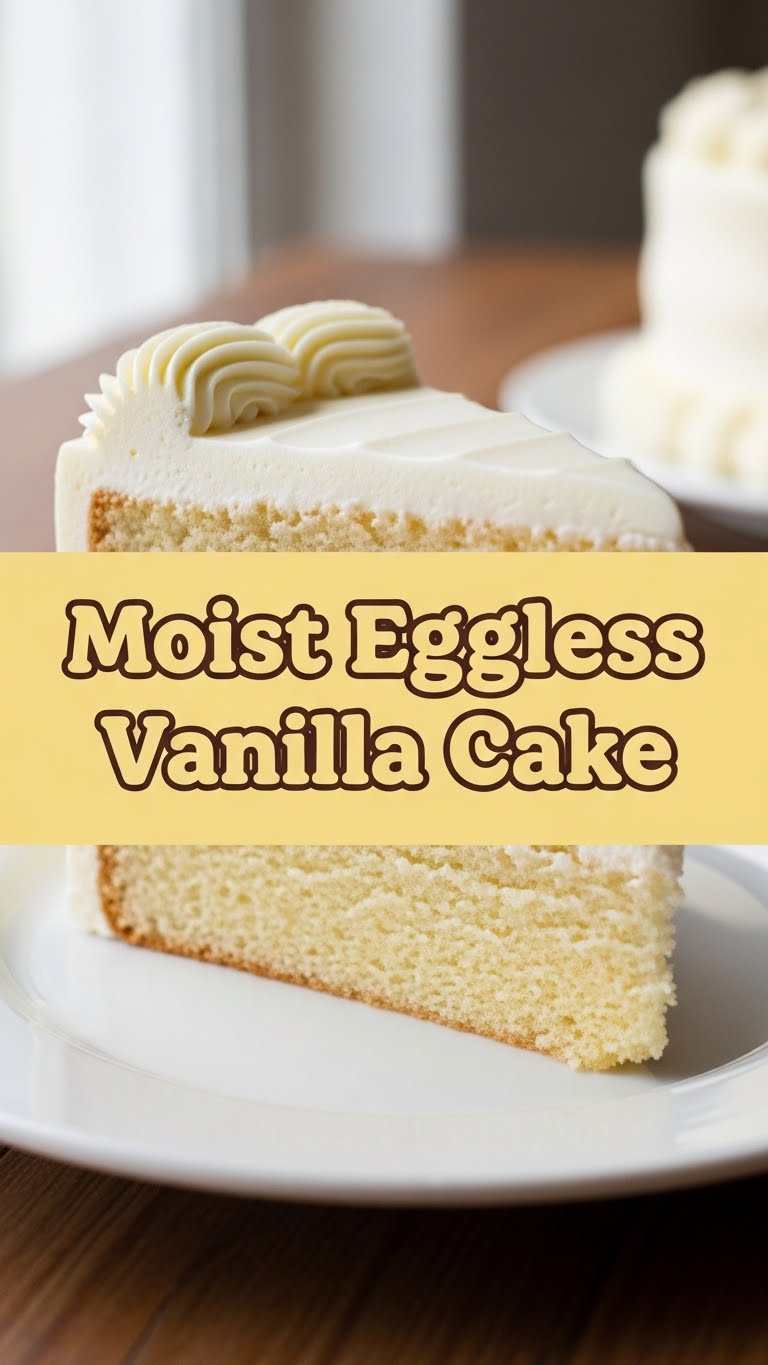
Okay, so you’ve got that sudden, undeniable urge for something sweet, but your fridge is looking a bit… egg-less? And, let’s be real, you’re not trying to become the next *Great British Bake Off* champion; you just want a damn good cake, right? Same, friend, same. Get ready to ditch the eggs (and the fuss!) because we’re whipping up a Moist Eggless Vanilla Cake that’s so good, you’ll wonder why you ever bothered with eggs in the first place.
Why This Recipe is Awesome
Let me tell you, this isn’t just *any* eggless cake. This is THE eggless cake. Seriously, it’s so incredibly moist, fluffy, and full of vanilla goodness, your taste buds will throw a party. **It’s practically idiot-proof**, even on days when my brain feels like a deflated soufflé, I manage to nail this. Plus, no eggs means less fuss, fewer potential allergies, and honestly, sometimes less guilt (don’t @ me). It comes together quicker than you can say “where did all the cake go?”, making it perfect for those spontaneous dessert cravings or when you suddenly remember you promised to bring something to the potluck. You’re welcome.
Ingredients You’ll Need
- **All-Purpose Flour:** About 1 ½ cups. The backbone of our cake, keeping it all together. Don’t skimp, don’t overfill.
- **Granulated Sugar:** 1 cup. For that essential sweetness. Yes, a full cup. We’re not here for a salad.
- **Baking Powder:** 1 ½ teaspoons. Our little magic leavening agent. Don’t confuse it with baking soda!
- **Baking Soda:** ½ teaspoon. This guy works with the acid (hello, yogurt!). Partners in crime for fluffiness.
- **Salt:** ¼ teaspoon. Just a pinch to make all the other flavors sing.
- **Plain Yogurt:** 1 cup. Full-fat, unsweetened, please! This is our egg replacement superstar and moisture provider. Seriously, it’s the secret weapon.
- **Milk:** ½ cup. Any kind works, but whole milk gives a richer taste.
- **Vegetable Oil:** ½ cup. Or any neutral oil. This is key for that moist texture. Don’t use olive oil unless you want an *interesting* flavor profile.
- **Vanilla Extract:** 1 ½ teaspoons. The star of the show! Use good quality stuff; it makes a difference, trust me.
Step-by-Step Instructions
- **Get Ready, Get Set, Preheat!** First things first, preheat your oven to **350°F (175°C)**. Grab an 8 or 9-inch round cake pan, grease it like you mean it, and then lightly flour it. Or line it with parchment paper for extra peace of mind.
- **Dry Mix Magic:** In a large bowl, whisk together your flour, sugar, baking powder, baking soda, and salt. Make sure there are no lumpy bits trying to hide. We want smooth sailing!
- **Wet Mix Wonders:** In a separate medium bowl, combine the yogurt, milk, vegetable oil, and vanilla extract. Give it a good whisk until everything is nicely incorporated.
- **Bring Them Together:** Pour the wet ingredients into the dry ingredients. **Mix gently with a spatula** until just combined. Don’t overmix! Overmixing is the enemy of a tender cake; it makes it tough. A few tiny lumps are totally fine.
- **Into the Pan:** Pour your glorious batter into the prepared cake pan. Give it a gentle tap or two on the counter to level it out and release any major air bubbles.
- **Bake It Till You Make It:** Pop that pan into your preheated oven. Bake for about **30-35 minutes**, or until a toothpick inserted into the center comes out clean. Keep an eye on it – ovens vary!
- **Cool Down, Buttercup:** Once baked, let the cake cool in the pan for about 10-15 minutes before carefully inverting it onto a wire rack to cool completely. Patience is a virtue here; a warm cake tends to crumble when sliced.
- **Frost or Feast!** Once completely cooled, frost it with your favorite vanilla buttercream (or chocolate, no judgment here!) or just dust it with some powdered sugar and devour. Enjoy your masterpiece!
Common Mistakes to Avoid
- **Not Preheating the Oven:** Rookie move! An oven that’s not up to temp will mess with your leavening agents and give you a dense, sad cake. Always preheat. Always.
- **Overmixing the Batter:** We talked about this! Once the wet and dry ingredients just come together, STOP. Mixing too much develops the gluten, making your cake tough and chewy instead of light and fluffy.
- **Substituting Baking Powder for Baking Soda (or vice versa):** These aren’t interchangeable, folks! They react differently. Stick to the recipe amounts for each.
- **Opening the Oven Door Too Early:** Resist the urge to peek! Especially in the first 20 minutes, opening the door can cause your cake to sink in the middle. Let it do its thing.
- **Using Cold Ingredients:** If your yogurt or milk are fridge-cold, they can affect the batter’s consistency and how the ingredients emulsify. Room temperature is usually best for baking, FYI.
Alternatives & Substitutions
Life’s too short for rigid rules, right? Here are a few ways to shake things up:
- **Milk:** Ran out of cow’s milk? Almond milk, soy milk, or even oat milk will work perfectly fine. Just make sure it’s plain and unsweetened.
- **Yogurt:** If plain yogurt is playing hard to get, you can totally use an equal amount of **buttermilk** for a similar tangy effect and moisture boost. Or, if you’re feeling adventurous, sour cream can step in too.
- **Oil:** Vegetable oil is neutral, but if you want to experiment, melted unsalted butter can be used for a richer flavor, though it might result in a slightly different texture (a bit denser). Just make sure it’s cooled slightly before adding.
- **Vanilla Extract:** Want to jazz it up? Add a pinch of cinnamon or a tiny bit of almond extract for a different flavor profile. Don’t go wild, though; vanilla is king for a reason.
- **Add-ins:** Feeling fancy? Gently fold in some sprinkles (make it a funfetti cake!), chocolate chips, or even a handful of berries (though berries add moisture, so keep an eye on baking time).
FAQ (Frequently Asked Questions)
- **Can I make this cake in a different size pan?** You totally can! For cupcakes, reduce baking time to 18-22 minutes. For a 9×13 inch rectangular pan, you might need to increase the recipe by 1.5 times and bake for slightly longer, around 35-40 minutes. Just keep an eye on it!
- **My cake turned out dense. What went wrong?** Ah, the age-old baking dilemma! Most likely, you either **overmixed the batter** (remember, gluten development = tough cake!) or your leavening agents (baking powder/soda) were past their prime. Check those dates!
- **Can I use Greek yogurt instead of plain regular yogurt?** You can, but Greek yogurt is thicker. If you use it, I’d suggest thinning it out with a tablespoon or two of milk to get a similar consistency to regular plain yogurt. Otherwise, your cake might be a tad drier.
- **How do I store this eggless cake?** Keep it covered tightly at room temperature for up to 2-3 days, or pop it in the fridge for up to 5 days. If you’re planning ahead, it freezes beautifully too – just wrap slices tightly in plastic wrap and foil for up to a month.
- **Why eggless? Is it just for people with allergies?** Not at all! While great for allergies, many people prefer eggless cakes for their unique texture (often super moist!) or simply because they ran out of eggs. Plus, IMO, they’re just plain delicious!
- **Can I use margarine instead of butter or oil?** Well, technically yes, but why hurt your soul like that? Margarine can work, but it might not give you the same rich flavor or desired texture as oil or butter. Stick to oil for moisture, butter for flavor, if you have to choose!
Final Thoughts
And there you have it, superstar! You’ve just mastered the art of making an unbelievably moist, delicious eggless vanilla cake. Go on, pat yourself on the back, you deserve it. Now, whether you share it with friends, impress your family, or just hoard it all for yourself (no judgment here, I’ve done it), enjoy every single crumb. Happy baking, my friend!