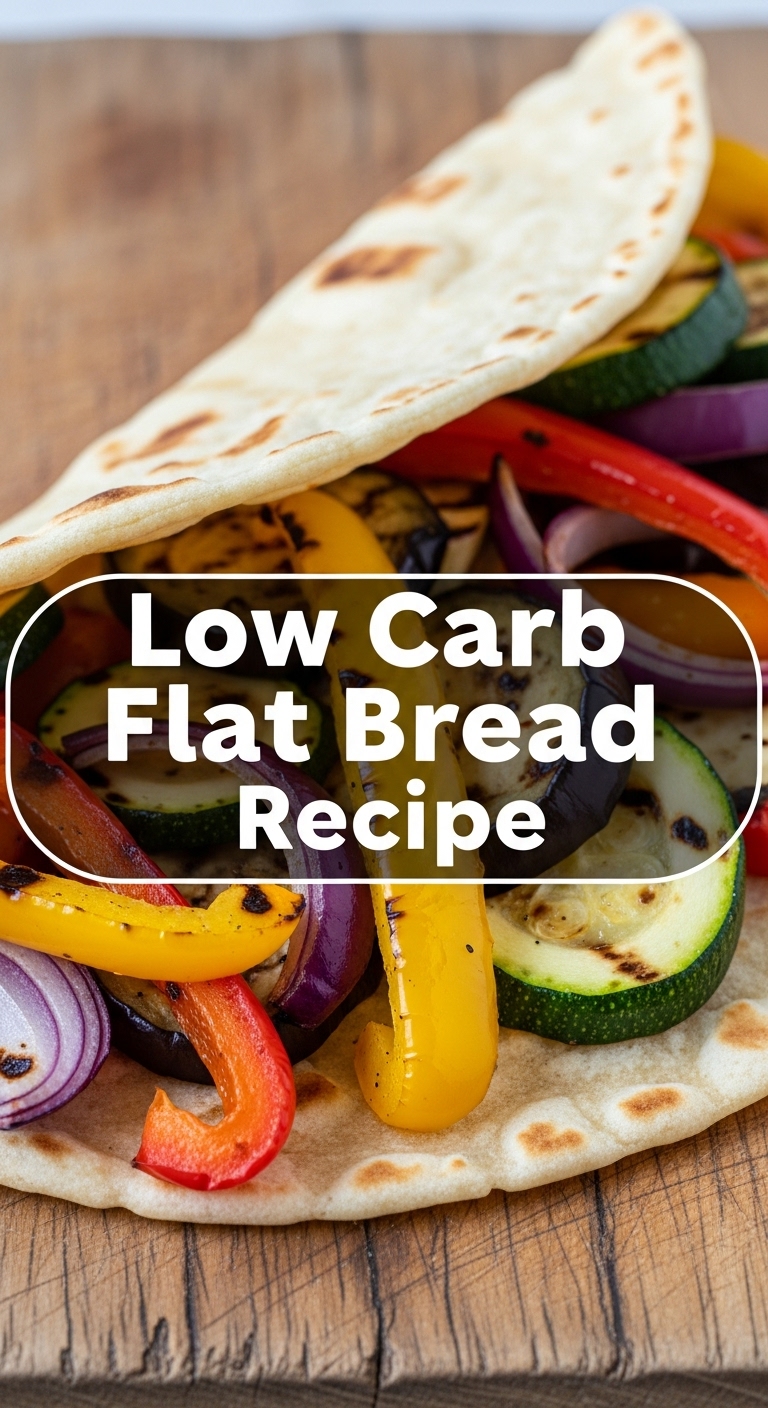
So you’re craving something tasty but too lazy to spend forever in the kitchen, huh? Same. High-five! If you’re on the low-carb train (or just dabbling because, well, carbs), you know the struggle is real when it comes to bread. But what if I told you there’s a magical flatbread that’s ridiculously easy, super versatile, and won’t kick you out of ketosis? Yeah, I thought that’d get your attention! Grab a cuppa (or a low-carb kombucha), and let’s make some magic.
Why This Recipe is Awesome
Okay, let’s be real. Most low-carb bread recipes involve a science experiment, a full moon, and potentially a sacrifice. Not this one! This flatbread is so simple, it’s practically idiot-proof. Seriously, even I didn’t mess it up, and my kitchen adventures sometimes involve setting off the smoke detector. It’s quick, requires minimal ingredients, and tastes way better than anything you’d expect from a low-carb impostor. Plus, it’s super versatile – think tacos, mini pizzas, a vehicle for dips, or just a plain old delicious snack. You’re welcome!
Ingredients You’ll Need
Get ready for a short list. No obscure, hard-to-find stuff here, promise!
- 1 cup Almond Flour: Your low-carb BFF. Make sure it’s superfine for the best texture.
- 2 tablespoons Psyllium Husk Powder: This is the secret binder! Do NOT skip this unless you enjoy crumbly messes. It’s what gives our flatbread that bendy, doughy vibe.
- 1 teaspoon Baking Powder: For a little lift, because nobody likes a completely flat flatbread (irony noted).
- 1/2 teaspoon Salt: Because bland is a no-go. Adjust to your taste, of course.
- 1/2 cup + 2 tablespoons Hot Water: And I mean *hot*. Not lukewarm. This activates the psyllium magic.
- 1 tablespoon Olive Oil or Melted Butter: For richness and flexibility. Avocado oil works too!
- Optional flavor boosters: A pinch of garlic powder, onion powder, or some Italian seasoning for an extra kick.
Step-by-Step Instructions
Time to get your hands a little dirty, in the best possible way!
- Mix the Dry Crew: In a medium bowl, combine your almond flour, psyllium husk powder, baking powder, and salt. If you’re adding any optional spices, throw them in now too. Give it a good whisk to make sure everything’s evenly distributed.
- Bring in the Wet Squad: Pour in the hot water and olive oil (or melted butter) into your dry mixture. Stir everything with a spoon until a shaggy dough starts to form.
- Get Your Knead On: Once it’s cool enough to handle, use your hands to knead the dough for about 2-3 minutes. It should come together into a relatively smooth ball. If it feels too dry, add a tiny bit more hot water (like a teaspoon at a time). If it’s too sticky, a tiny bit more almond flour. Wrap it in plastic wrap and let it chill out for 5 minutes. This lets the psyllium do its thing and absorb the liquid.
- Divide and Conquer: Divide the dough into 4-6 equal pieces, depending on how big you want your flatbreads. Place one piece between two sheets of parchment paper (this is key!). Roll it out as thinly as you possibly can, aiming for a round or oval shape. The thinner, the better!
- Hot Pan Action: Heat a non-stick pan or cast-iron skillet over medium-high heat. No oil needed, unless your pan is super sticky. Carefully peel off one side of the parchment paper, then place the flatbread dough-side down onto the hot pan. Peel off the other side of the parchment.
- Cook ‘Em Up: Cook for 2-3 minutes per side, or until you see golden-brown spots forming and the flatbread starts to puff up a bit. Flip it carefully and cook the other side. Repeat with the remaining dough.
- Serve it Up: Transfer your freshly cooked flatbreads to a plate and serve immediately. They’re best fresh, but can be reheated!
Common Mistakes to Avoid
Learn from my (many) mistakes, folks!
- Skipping the Psyllium Husk Powder: This isn’t optional, people! Without it, your flatbread will crumble like a sad sandcastle.
- Not Rolling Thin Enough: If your flatbreads are thick, they’ll be dense, chewy hockey pucks instead of pliable goodness. Go thin!
- Using Cold Water: Hot water is crucial for activating the psyllium and getting that perfect texture. Don’t eyeball it with cold tap water.
- Overcooking: Keep an eye on them! Overcooked flatbreads turn brittle and stiff. We want pliable!
- Not Using Parchment Paper: Rolling this dough directly on a floured surface can be a sticky, frustrating mess. Trust me, parchment is your friend here.
Alternatives & Substitutions
Wanna get creative? I got you!
- Flour Swap: While almond flour is my top pick for taste and texture, you *could* try half almond and half coconut flour. Just be warned: coconut flour is like a tiny sponge, so you’ll definitely need to add more water, probably another 1/4 to 1/2 cup. It’ll change the texture, though – a bit denser. IMO, stick with almond flour for this recipe.
- Fats: No olive oil? Avocado oil, melted coconut oil (neutral kind!), or even melted butter work wonderfully.
- Seasonings: The sky’s the limit! Add everything bagel seasoning, rosemary and garlic, smoked paprika, or chili flakes for a spicy kick. Play around and make it your own!
FAQ (Frequently Asked Questions)
- Can I use coconut flour instead of almond flour?
Well, technically yes, but why make life harder? Coconut flour is super absorbent, so you’d need to seriously up the water content, and the texture will be quite different, usually denser. My advice? Stick to almond flour for this specific recipe for the best results.
- Why is my dough crumbly?
Did you skip the psyllium husk powder? Or maybe you didn’t add enough hot water? The psyllium is essential for binding, and hot water helps activate it. Add a teaspoon of hot water at a time and knead until it comes together.
- Can I bake these instead of pan-frying?
You *can*, but they tend to get more cracker-like in the oven rather than soft and pliable. If you want a crispy cracker, go for it! But for that classic soft flatbread feel, pan-frying is the way to go.
- How long do these flatbreads last?
They’re best eaten fresh, but you can store them in an airtight container at room temp for a day or two, or in the fridge for up to 4 days. Reheat gently in a dry pan or microwave for a few seconds.
- Can I add cheese to the dough?
Oh, you’re speaking my language! Absolutely! A couple of tablespoons of finely grated Parmesan or nutritional yeast (for a dairy-free cheesy vibe) in the dough would be divine. Just make sure the cheese isn’t too moist.
- Are these truly gluten-free?
Yes, if your almond flour and psyllium husk powder are certified gluten-free (most are!). This recipe totally skips traditional wheat flour.
Final Thoughts
See? I told you it was easy! You just whipped up a batch of delicious, low-carb flatbreads like a pro. Go on, give yourself a pat on the back. Now you can enjoy your favorite wraps, dips, and sandwich fillings without the carb guilt. Seriously, this recipe is a game-changer for those low-carb days when you’re just yearning for something bready. So, what are you waiting for? Go impress someone—or yourself—with your new culinary skills. You’ve earned it!