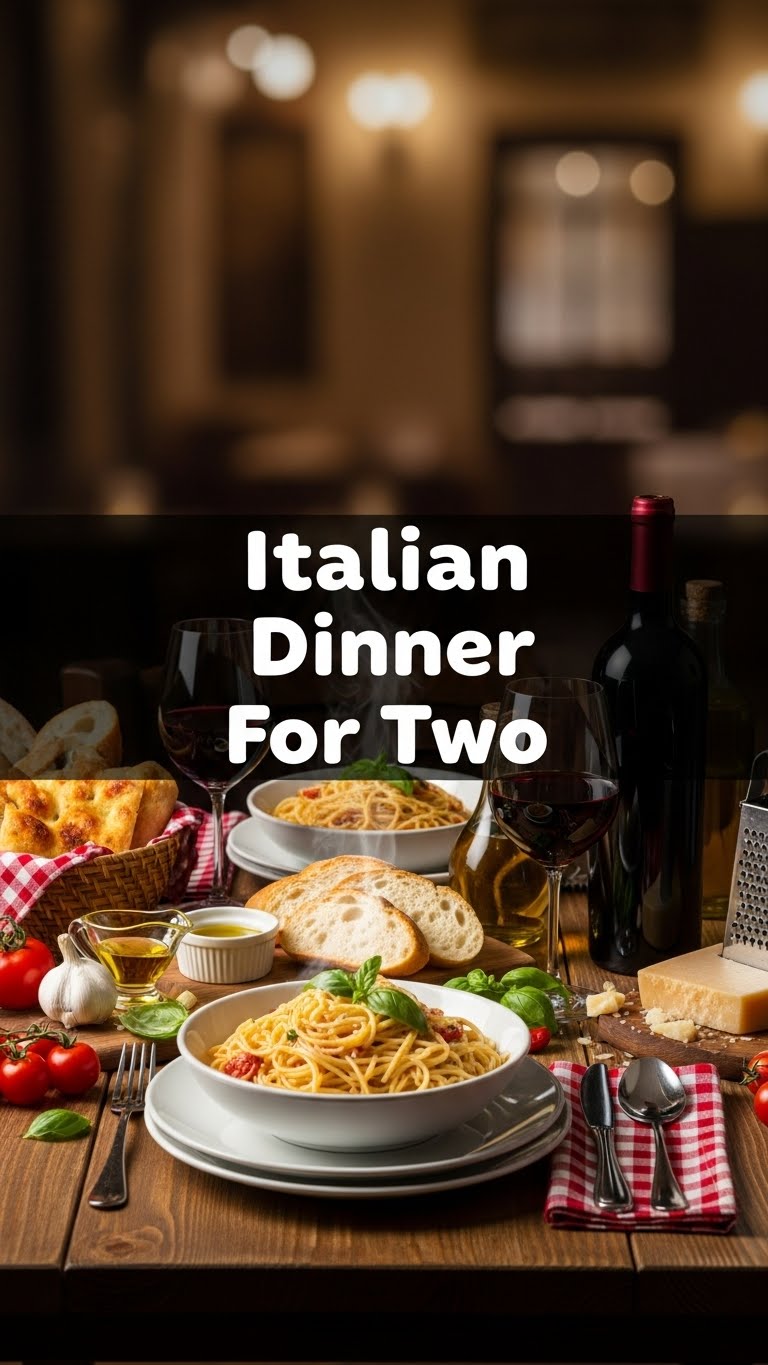
So, you’re looking to whip up something seriously delicious, impress a certain someone (or just yourself, because #selflove), but also, like, *not* spend your entire evening slaving over a hot stove, right? Yeah, thought so. You’ve come to the right place, my friend. Tonight, we’re diving headfirst into an Italian dinner for two that’s so good, so easy, and so utterly swoon-worthy, you’ll wonder why you ever ordered takeout. Get ready to channel your inner nonna, but, like, the cool, effortlessly chic nonna who gets dinner on the table in a snap.
Why This Recipe is Awesome
Okay, so why this particular culinary adventure? Because it’s basically the culinary equivalent of a warm hug and a high-five all in one. This isn’t some fussy, pretentious meal. We’re talking about a **classic Cacio e Pepe** (aka “cheese and pepper,” but sounds way fancier in Italian, right?) and a ridiculously fresh, garlicky **Bruschetta al Pomodoro**. It’s elegant enough for a date night, comforting enough for a lazy Tuesday, and (here’s the kicker!) so simple even your friend who burns water could probably nail it. Seriously, if I can do it without setting off the smoke alarm, you can too. It’s also incredibly budget-friendly, meaning more cash left over for, you know, dessert or a *really* nice bottle of wine. Priorities, people.
Ingredients You’ll Need
Gather your gladiators, chefs! Here’s what you need to conquer this deliciousness:
- For the Cacio e Pepe:
- 8 oz (about half a box) good quality Spaghetti (or bucatini, if you’re feeling fancy and want more chew)
- 1.5 cups finely grated Pecorino Romano cheese (and yes, it HAS to be Pecorino, not parmesan, unless you want to invite culinary controversy)
- 1-2 teaspoons freshly cracked black pepper (seriously, grind it yourself, the pre-ground stuff is just sad)
- 2 tablespoons olive oil (the good stuff, not the questionable stuff from the back of the pantry)
- Salt, for the pasta water (to taste, but make it salty like the sea!)
- For the Bruschetta al Pomodoro:
- 1 small baguette or ciabatta loaf (something crusty, please!)
- 2 large ripe tomatoes (or a pint of cherry tomatoes, halved) – the riper, the better!
- 2 cloves garlic (or 3, or 4… I don’t judge your garlic obsession)
- 1/4 cup fresh basil leaves, roughly chopped (don’t even *think* about dried basil here)
- 2 tablespoons extra virgin olive oil (again, the good stuff!)
- 1 tablespoon balsamic glaze (optional, but gives it a nice sweet tang)
- Pinch of salt and a grind of black pepper
- For the Vibe:
- A bottle of your favorite red or white Italian wine (or sparkling water, no judgment!)
- Some chill background music (think Dean Martin, not heavy metal)
- Your hungry stomach, ready for deliciousness!
Step-by-Step Instructions
Alright, let’s get cooking! We’re multitasking like pros here, so read through everything first, then get your game face on.
- Pasta Prep & Cook: Get a large pot of water on the stove and bring it to a rolling boil. Add a generous amount of salt – remember, salty like the sea! Once boiling, add your spaghetti and cook according to package directions until **al dente**. This is key, folks. While the pasta is doing its thing, reserve about 1.5 cups of the starchy pasta water before draining. Don’t forget this! It’s liquid gold.
- Pepper Power: While the pasta cooks, heat 2 tablespoons of olive oil in a large, wide skillet over medium heat. Add your freshly cracked black pepper and toast it for about 30 seconds until super fragrant. Mmm, smell that? That’s flavor!
- Cheese Magic: In a medium bowl, combine your grated Pecorino Romano with about 1/2 cup of the reserved hot pasta water. Stir vigorously with a fork or whisk until you have a smooth, creamy, somewhat thick paste. If it’s too thick, add a tiny bit more water, a teaspoon at a time. This is your sauce base!
- Bruschetta Bonanza (Parallel Task!): Slice your baguette into 1/2-inch thick pieces. You can either toast them lightly in a dry skillet, in the oven, or under the broiler until just golden and crisp. Don’t burn ’em! While still warm, rub one side of each toast with a raw garlic clove. This infuses that beautiful garlic flavor directly into the bread.
- Tomato Topping: Dice your ripe tomatoes into small pieces (or halve cherry tomatoes). In a separate bowl, combine them with the chopped fresh basil, 2 tablespoons of extra virgin olive oil, a pinch of salt, and a grind of pepper. Give it a good stir.
- Pasta Perfection: Drain your al dente spaghetti (remembering to save that pasta water!). Add the hot pasta directly to the skillet with the toasted pepper and olive oil. Immediately add your creamy Pecorino paste. Toss everything like crazy, adding the reserved pasta water, a splash at a time, until the sauce emulsifies and beautifully coats every strand of pasta. You’re aiming for creamy, not soupy, not dry. **Keep tossing!** The friction helps create that glorious sauce.
- Assemble Bruschetta: Spoon your fresh tomato mixture generously over each garlic-rubbed toast. Drizzle with a little balsamic glaze, if using.
- Serve & Devour: Serve the Cacio e Pepe immediately, garnished with a little extra Pecorino and pepper if you’re feeling fancy. Plate alongside your glorious bruschetta. Congrats, you just made magic!
Common Mistakes to Avoid
Listen up, buttercup. We all make mistakes, but let’s try to avoid these rookie errors, shall we?
- Not Salting the Pasta Water Enough: Seriously, this is where the flavor starts. Pasta cooked in bland water tastes like… well, bland water. Don’t be shy with the salt!
- Overcooking the Pasta: Soggy pasta is a tragedy. We want “al dente” – still has a slight bite to it. It will continue to cook a tiny bit in the hot sauce.
- Using Pre-Grated Cheese for Cacio e Pepe: Just no. Pre-grated cheese often has anti-caking agents that make it impossible to get that silky smooth sauce. Grate your own, trust me. It’s worth the extra 30 seconds.
- Forgetting the Pasta Water: This is your emulsifier, your secret weapon! Without it, you’ll have clumpy cheese and dry pasta, not a creamy dream.
- Burning the Bread for Bruschetta: A golden toast is good. A charcoal briquette is not. Keep an eye on it!
- Ignoring the Fresh Herbs: Dried basil for bruschetta? Might as well use sawdust. Fresh is non-negotiable for that vibrant flavor.
Alternatives & Substitutions
Life’s too short for boring food, and sometimes you gotta work with what you got! Here are a few tweaks:
- Cheese Swap: No Pecorino? While it’s traditional, you *could* try Parmesan, but honestly, it won’t be quite the same spicy kick. Or try a mix of both!
- Add-ins for Cacio e Pepe: Want some protein? Sauté some pancetta or guanciale until crispy, then add it to the pasta at the end. Or throw in some grilled chicken or shrimp. Leftover veggies? Go wild (within reason!).
- Bruschetta Topping Twists: Get creative! Try a pesto spread before the tomatoes, or top with ricotta cheese and honey for a sweeter version. Prosciutto, olives, roasted red peppers – the world is your bruschetta oyster.
- Gluten-Free: Totally doable! Just swap the spaghetti for your favorite gluten-free pasta. The Cacio e Pepe sauce is naturally GF.
- Make it Vegan: This one’s a bit trickier for Cacio e Pepe as cheese is the star. You’d need a really good plant-based parmesan that melts well. For the bruschetta, simply omit any non-vegan toppings.
FAQ (Frequently Asked Questions)
Got questions? I probably already thought of them. You’re welcome.
- Can I make the Cacio e Pepe ahead of time? Oh, sweet summer child, no. This pasta dish is all about fresh, hot, creamy magic. It’s a “serve immediately” kind of deal. Reheating will lead to a gloopy, sad mess. Don’t do it to yourself.
- What kind of wine should I pair with this? A light-to-medium-bodied red like a Chianti, Sangiovese, or even a Pinot Noir would be lovely. If you’re a white wine person, a crisp dry white like a Sauvignon Blanc or a Pinot Grigio works too!
- Can I use margarine instead of butter in the Cacio e Pepe? Well, technically yes, but why hurt your soul like that? Cacio e Pepe traditionally uses olive oil, not butter, but if you’re asking about other recipes, butter is usually preferred over margarine for flavor and texture. Stick to the olive oil for this one, IMO.
- Is it okay to add cream to the Cacio e Pepe for extra creaminess? Hold up! That’s a different dish, my friend. True Cacio e Pepe gets its creaminess from the emulsification of Pecorino, black pepper, and starchy pasta water. Adding cream would make it a different (though possibly still tasty) dish entirely. Purists will come for you!
- My sauce is clumpy/too dry/too wet! What happened? Ah, the delicate balance! Too clumpy/dry? You probably didn’t use enough hot pasta water or didn’t whisk the cheese paste enough. Too wet? Too much pasta water, or perhaps your cheese wasn’t finely grated enough. It takes a little practice to get the hang of the emulsion, so don’t sweat it if your first try isn’t perfectly silky. It’ll still taste amazing!
- What if I don’t like black pepper? Then… this might not be the dish for you, as pepper is literally half the name! But if you’re adventurous, you could try using less, or perhaps using white pepper for a milder kick.
Final Thoughts
See? You’re practically a Michelin-starred chef already! Or at least, you’ve tricked your dinner companion into thinking you are, which is almost as good. This Italian dinner for two isn’t just a meal; it’s an experience. It’s proof that simple, good quality ingredients, handled with a little love and confidence, can create something truly spectacular. Now go impress someone—or yourself—with your new culinary skills. You’ve earned it! Buon appetito!