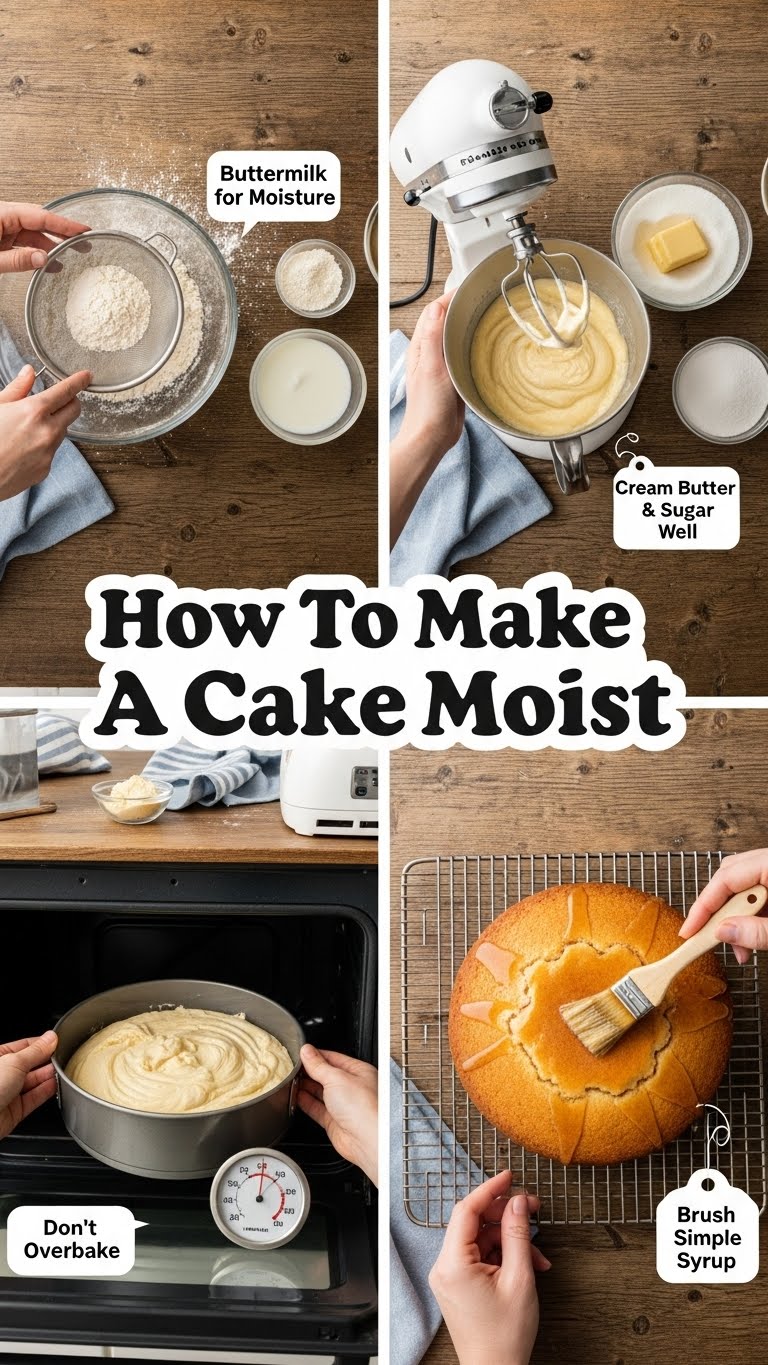
Ever baked a cake that felt more like a delicious, albeit crumbly, building material than a fluffy cloud of joy? Yeah, been there, done that, accidentally choked on the evidence. But fear not, my friend! Today, we’re diving into the sacred art of making your cakes so ridiculously moist, they’ll practically weep with happiness.
Why This Recipe is Awesome
Why bother with these tips and tricks, you ask? Because life’s too short for dry cake, that’s why! This isn’t just about a recipe; it’s about a *philosophy* for moistness. It’s so utterly simple, even your cat could probably follow along (if it had opposable thumbs and a sweet tooth, that is). Plus, you’ll instantly become the moist-cake guru of your friend group. Prepare for endless compliments and maybe a few marriage proposals.
Ingredients You’ll Need (and how they help!)
- Softened Butter: Your creamy BFF. Don’t melt it unless you want sad, flat cake. “Softened” means it squishes slightly when you poke it. This helps create air pockets.
- Granulated Sugar: Sweetness and, surprisingly, a moisture magnet! It dissolves into the liquid ingredients, keeping things juicy.
- Room Temperature Eggs: The glue and the lift. Let them chill out of the fridge for a bit – they mix better warm and emulsify more effectively with the butter.
- All-Purpose Flour: The structure. Don’t go crazy with this, less is sometimes more for moistness (over-flouring is a common dry-cake culprit!).
- Baking Powder/Soda: The puff-up magic. Make sure it’s not expired, unless you like dense bricks. Fresh leavening means a lighter crumb.
- Liquid (Milk, Buttermilk, Yogurt, Sour Cream, Coffee): The ultimate moisture providers. Pick your poison – buttermilk is a superstar here for its acidity and richness.
- Neutral Oil (Vegetable, Canola): Optional, but a secret weapon for lasting moistness. Use alongside butter for the best of both worlds; oil stays liquid at room temp!
- Vanilla Extract: For flavor, obvs. Don’t skip it; it rounds everything out beautifully.
- A Trusty Oven Thermometer: Because oven temps lie, FYI. This is your secret weapon against overbaking.
Step-by-Step Instructions for Ultimate Moistness
- Cream Butter & Sugar Like a Boss: Get that softened butter and sugar into a mixer. Beat them together until they’re light, fluffy, and look like sunshine. This crucial step creates tiny air pockets, which mean a lighter, more tender crumb that’s better at holding moisture.
- Add Eggs, One by One: Crack those room-temp eggs in, *one at a time*. Beat well after each addition until fully incorporated. This emulsifies everything beautifully, trapping more air and moisture in your batter.
- Alternate Wet & Dry: Start and end with your dry ingredients. Add about a third of the flour mixture, then half the liquid, another third of flour, the rest of the liquid, and finally the last third of flour. Mix *just until combined* after each addition.
- Seriously, Don’t Overmix! This is huge. Overmixing develops gluten, which makes cake tough and dry. Stop mixing the second you don’t see any more dry streaks of flour. A few tiny lumps are okay, promise!
- Bake Low and Slow(ish): Follow your recipe’s temperature, but know that slightly lower temps for a tiny bit longer can help prevent overbaking. **Always use that oven thermometer!** It’s your best defense against unexpected oven hot spots and inaccuracies.
- Do NOT Overbake, Period: Pull that cake out when a toothpick inserted into the center comes out with moist crumbs, not wet batter, and *definitely* not bone dry. Overbaking is the arch-nemesis of moistness, drying out your cake faster than you can say “buttercream.”
- Saturate (Optional but Awesome): Brush your cooled cake layers with a simple syrup, milk, or even a booze-infused liquid (for adult cakes!). This adds an extra layer of moisture that’s just divine.
- Wrap it Up Tightly: Once completely cool, wrap your cake in plastic wrap (or place it in an airtight container). This traps moisture and keeps it fresh longer. Trust me, it’s worth the effort.
Common Mistakes to Avoid (Unless You Like Dry Cake)
- Overmixing the Batter: We talked about this! Unless you want cake that doubles as a hockey puck, stop mixing the second the flour just disappears. Less is more, people!
- Using Cold Ingredients: Cold eggs and butter don’t emulsify properly. Give ’em a warm-up. Seriously, it matters for that smooth, cohesive batter.
- Eyeballing Ingredients: Baking is a science, my friend. Too much flour = dry cake. Use a kitchen scale for precision, or at least level your cups properly.
- Not Preheating Your Oven: Rookie mistake! Your cake needs that consistent, correct heat from the get-go to rise properly and bake evenly. Don’t rush it.
- Overbaking: The biggest sin against moistness. Watch your cake, not just the clock! It’s done when a toothpick has moist crumbs, remember? Pull it out!
- Cutting into a Hot Cake: Patience, padawan. Let it cool. Cutting hot cake releases precious steam (moisture!) and can make it crumble.
Alternatives & Substitutions for Next-Level Moisture
- Buttermilk Bonanza: Don’t have buttermilk? Mix a tablespoon of lemon juice or white vinegar with regular milk and let it sit for 5 minutes. Instant buttermilk! Or, IMO, just buy real buttermilk; it’s cake magic and adds a lovely tang.
- Sour Cream/Yogurt Secret: These are secret weapons for moisture and a super tender crumb. Swap out some of your recipe’s liquid for equal parts full-fat sour cream or plain yogurt. Full fat is absolutely key here!
- Oil for Longevity: For cakes that stay moist longer, try replacing a portion (say, half) of the butter with a neutral oil like canola or vegetable oil. Oil stays liquid at room temperature, keeping things lush and soft.
- Brown Sugar Boost: Sometimes, swapping some white sugar for brown sugar can add a deeper flavor and extra moisture due to the molasses content. Give it a whirl, especially in spice cakes!
- Apple Sauce/Mashed Banana: Looking for a healthier twist or just happen to have some overripe fruit? These can replace some of the fat and add moisture, especially in spice or carrot cakes. Just don’t overdo it, or your cake might taste, well, appley or banana-y.
FAQ (Frequently Asked Questions from Fellow Cake Lovers)
- “Can I use margarine instead of butter?” Well, technically yes, but why hurt your soul like that? Butter tastes better and provides a richer crumb. Margarine has more water and can affect texture. Stick with butter for best results, unless you absolutely can’t!
- “My cake always sinks in the middle! What gives?” Ah, the dreaded crater! Usually, this means your oven door was opened too soon, your leavening agent is old, or you overmixed. Check those expiration dates, and resist peeking during the first 2/3 of baking!
- “How do I know my cake is truly done without opening the oven constantly?” Great question! Trust your nose – a baked cake often smells incredibly divine when it’s ready. Also, gently press the center with your finger; if it springs back, it’s likely done. And of course, the trusty toothpick test at the very end!
- “Can I add extra liquid for more moistness?” Hold your horses there, moisture-seeker! Too much liquid can actually make your cake dense, gummy, and heavy. It’s a delicate balance. Stick to the recipe’s ratio and use the other techniques we discussed.
- “How long does a truly moist cake stay fresh?” Wrapped properly (hello, plastic wrap!), a truly moist cake can stay delicious for 3-4 days at room temperature, or even longer in the fridge. But honestly, it probably won’t last that long before it’s devoured!
- “What’s a simple syrup and how do I make it?” Easy peasy! It’s equal parts sugar and water, heated gently until the sugar dissolves. Let it cool completely, then brush it liberally on your cooled cake layers. You can add extracts or liqueurs for extra pizzazz!
- “Does freezing a cake help with moisture?” Actually, yes! Freezing a cake, especially when well-wrapped immediately after it’s cooled, can lock in moisture. Just make sure it’s completely cooled before wrapping and freezing, then thaw slowly in the fridge for best results.
Final Thoughts
Phew! That was a lot, huh? But armed with these tips and tricks, you’re officially ready to conquer the world of dry, sad cakes and replace them with glorious, moist masterpieces. Go forth and bake with confidence! Remember, practice makes perfect (and delicious!). Now go impress someone—or yourself—with your new culinary skills. You’ve earned it! And maybe send me a slice? Just kidding… mostly.