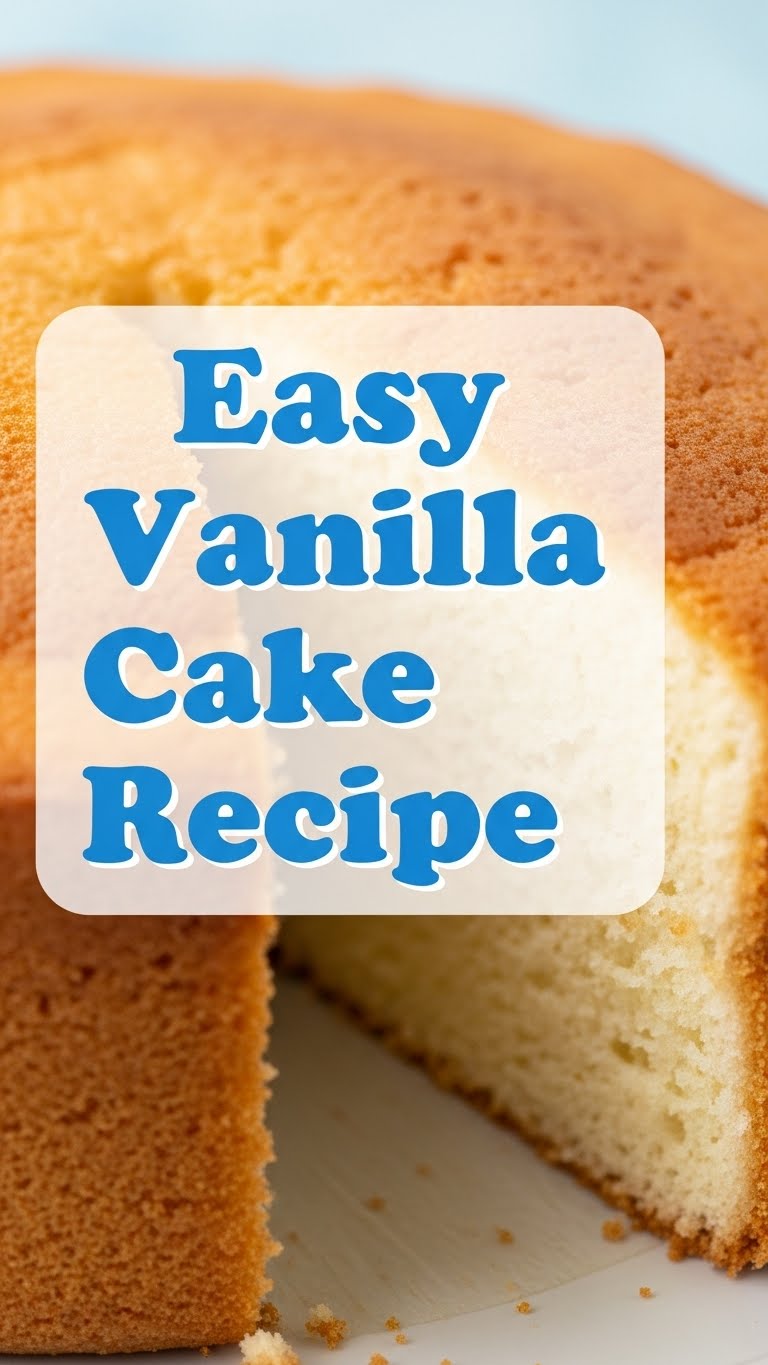
So you’re craving something tasty but too lazy to spend forever in the kitchen, huh? Same. High five! We’ve all been there – staring into the fridge, dreaming of cake, but picturing a mountain of dishes and a recipe with 17 obscure steps. Well, darling, put those anxieties aside because today we’re making a **super easy vanilla cake** that’s so straightforward, you might just wonder if you accidentally skipped a step. (Spoiler: you didn’t!) Get ready to impress yourself (and maybe a few lucky friends) with minimal effort.
Why This Recipe is Awesome
Okay, let’s be real. There are a million vanilla cake recipes out there. So why *this* one? Because it’s basically foolproof. Seriously, it’s so simple, even I didn’t mess it up, and my track record with “easy” recipes is… questionable. This recipe delivers a moist, fluffy, perfectly vanilla-y cake without requiring you to have a pastry chef degree or a stand mixer that costs more than your first car. No fancy techniques, no obscure ingredients, just pure cake-making joy. It’s the kind of recipe that makes you feel like a baking wizard, even if your only previous culinary achievement was not burning toast. Plus, it’s a total crowd-pleaser. Who doesn’t love vanilla cake?
Ingredients You’ll Need
Gather your troops! These are the heroes of our delicious tale. Don’t worry, no foraging for rare spices required.
- 1 ½ cups (3 sticks) unsalted butter, softened. And I mean *softened*. Cold butter is the enemy of fluffy cake. Let it chill out on the counter for a bit.
- 2 cups granulated sugar. Just plain old white sugar. We’re keeping it classic today.
- 4 large eggs, at room temperature. Again, room temperature is your friend here. It helps everything emulsify beautifully.
- 2 teaspoons pure vanilla extract. This is where the magic happens! Don’t skimp, get the good stuff. Trust me, it makes a difference.
- 2 ½ cups all-purpose flour. Your basic pantry staple.
- 1 tablespoon baking powder. Make sure it’s fresh! Expired baking powder is just flour with trust issues.
- ½ teaspoon salt. Just a little pinch to balance all that sweetness.
- 1 cup whole milk, at room temperature. Whole milk gives the best richness, but you do you.
Step-by-Step Instructions
Alright, apron on, game face ready! Let’s bake some cake. These steps are designed to be quick and painless.
- First things first: **Preheat your oven to 350°F (175°C)**. While it’s heating, generously grease and flour a 9×13 inch baking pan (or two 8-inch round pans if you’re feeling fancy). This is crucial; no one wants a stuck cake!
- In a large bowl, cream together the softened butter and granulated sugar until it’s light and fluffy. This should take about 3-5 minutes with an electric mixer. You want it to look pale and airy, like a cloud.
- Beat in the eggs, one at a time, making sure each is fully incorporated before adding the next. Then, stir in the vanilla extract. Scrape down the sides of the bowl to ensure everything is mixed evenly.
- In a separate medium bowl, whisk together the flour, baking powder, and salt. Give it a good whisk to make sure the leavening is evenly distributed.
- Now, here’s the key: gradually add the dry ingredients to the wet ingredients, alternating with the milk. Start and end with the flour mixture. Add about a third of the flour, mix until just combined, then half the milk, mix, another third of flour, remaining milk, and finally the last third of flour. **Do NOT overmix!** Mix only until just combined. Overmixing makes for a tough cake.
- Pour the batter into your prepared baking pan(s) and smooth the top with a spatula. Give the pan a gentle tap on the counter to release any air bubbles.
- Bake for 30-35 minutes for a 9×13 pan, or 25-30 minutes for round pans. You’ll know it’s done when a toothpick inserted into the center comes out clean. The cake should also spring back when lightly touched.
- Let the cake cool in the pan for about 10-15 minutes before inverting it onto a wire rack to cool completely. **Patience is a virtue here!** Seriously, don’t try to frost a warm cake unless you want a melty mess.
Common Mistakes to Avoid
Nobody’s perfect, but we can learn from past mishaps. Here are a few “oopsies” to dodge:
- **Not preheating the oven:** Rookie mistake! Your cake needs a consistent, hot environment from the get-go to rise properly.
- **Cold ingredients:** Using cold butter, eggs, or milk can result in a lumpy batter and a denser cake. Room temperature, folks, it’s not just a suggestion, it’s a lifestyle choice for bakers.
- **Overmixing the batter:** I know, it’s tempting to keep beating, but once the flour is added, mix just until combined. Overmixing develops the gluten too much, leading to a tough, chewy cake. We want tender, fluffy goodness!
- **Opening the oven door too soon:** Resist the urge! Opening the door lets out heat, which can cause your cake to sink in the middle. Give it at least 25 minutes before peeking.
- **Not greasing and flouring your pan properly:** This is a classic tragedy. If you don’t do this right, your beautiful cake will stubbornly cling to the pan, and you’ll end up with crumbs instead of a masterpiece.
Alternatives & Substitutions
Feeling a little rebellious, or just missing an ingredient? Here are some simple swaps:
- No whole milk? You can totally use 2% milk, or even a dairy-free alternative like almond or oat milk. Just know that the texture might be slightly less rich, but still delicious!
- Butter vs. Margarine: While butter gives the best flavor and texture, you *can* use margarine if that’s all you have. Just be aware the taste might not be quite as decadent. IMO, butter is king.
- **Flavor it up:** Want to make it less “plain vanilla”? Add a teaspoon of lemon or orange zest to the batter for a bright citrusy kick! Or fold in some sprinkles at the very end for a funfetti vibe.
- **Cupcakes instead?** Absolutely! Divide the batter into cupcake liners. They’ll bake faster, typically 18-22 minutes.
FAQ (Frequently Asked Questions)
Got questions? I’ve got (casual) answers!
Q: Can I use self-rising flour?
A: Technically yes, but you’ll need to adjust the baking powder and salt. To keep things easy, I’d stick to all-purpose and add the leavening agents separately, as listed.
Q: My cake sank in the middle! What happened?
A: Oh no! This often happens from overmixing, opening the oven door too early, or using too much leavening. Next time, be gentle, be patient, and measure those ingredients accurately!
Q: How long does this cake last?
A: Stored in an airtight container at room temperature, it’s usually good for 3-4 days. If you’ve frosted it, especially with a cream cheese frosting, it might last longer in the fridge.
Q: Can I freeze this cake?
A: You bet! Wrap cooled, unfrosted cake layers tightly in plastic wrap, then foil. It’ll keep well in the freezer for up to 2 months. Thaw overnight in the fridge before frosting.
Q: What kind of frosting should I use?
A: A classic American buttercream is always a winner with vanilla cake. Or, for something tangy, a cream cheese frosting is divine! Keep it simple or go wild, it’s your cake!
Final Thoughts
And there you have it, superstar! You just whipped up an amazing vanilla cake with minimal fuss. Wasn’t that way easier than you thought? Now, go impress someone—or yourself—with your new culinary skills. Slice it up, grab a fork, and bask in the glory of your baking prowess. You’ve earned it!