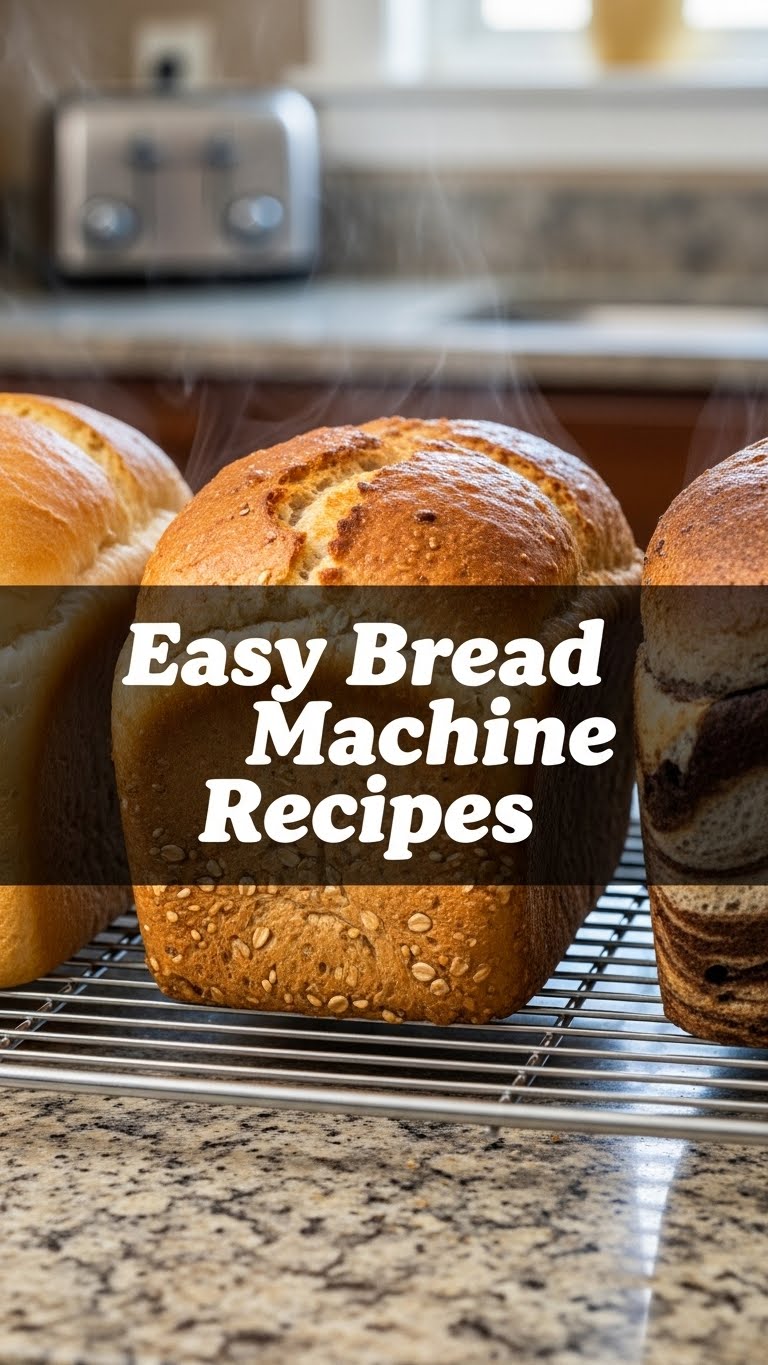
So, you’re craving that warm, toasty smell of fresh bread wafting through your kitchen, but the thought of kneading, proofing, and generally adulting for hours makes you want to crawl back into bed, huh? Same, friend, *same*. Good news! Your bread machine isn’t just a fancy paperweight; it’s a magic portal to carb heaven with minimal effort. Today, we’re diving into an easy-peasy bread machine recipe that’ll make you feel like a master baker, even if your biggest culinary achievement last week was microwaving popcorn without burning it.
Why This Recipe is Awesome
Because it’s practically brainless, that’s why! Seriously, this isn’t some gourmet, artisanal sourdough nonsense that requires a specific temperature in your house and a starter named ‘Bertha.’ This is the kind of recipe that lets you dump ingredients, hit a button, and walk away to binge-watch your favorite show. You come back hours later, and BOOM – fresh bread. It’s **idiot-proof**, I swear, and trust me, I’ve tested that theory extensively. Plus, your house will smell like a bakery, and isn’t that just the best?
Ingredients You’ll Need
Gather ’round, my lazy-baker friends! Here’s your shopping list for a glorious 1.5 lb loaf of classic white bread. Don’t worry, it’s nothing too exotic.
- 1 cup + 2 tablespoons warm water (Around 105-115°F, or just warm to the touch. Not hot enough to brew tea, not cold enough for ice cubes.)
- 2 tablespoons unsalted butter (Melted, or softened and cut into a few pieces. Margarine? Don’t even think about it. Your soul deserves better.)
- 3 cups bread flour (Not all-purpose! Bread flour has more protein for that lovely chew. It’s like the bodybuilder of flours.)
- 2 tablespoons granulated sugar (Feeds the yeast, makes the crust happy. Sugar, spice, and everything nice.)
- 1 ½ teaspoons salt (For flavor, obvs. Don’t skimp, unless you like bland bread, which, who does?)
- 2 teaspoons active dry yeast (The real MVP! Make sure it’s fresh. Old yeast is like trying to party with a sleepy toddler – no fun at all.)
Step-by-Step Instructions
Alright, buttercup, this is where the “hard” work (ahem, button-pressing) begins. Follow these super simple steps, and you’ll be golden.
- First things first, **add the liquids to your bread machine pan.** That’s the warm water and the melted (or softened) butter. Most bread machine manuals say liquids first, so let’s stick to that, shall we?
- Next, **carefully add the dry ingredients.** This means the bread flour, followed by the sugar and the salt. Try to keep the salt and sugar in separate corners, not directly on the liquids if you can help it.
- Finally, **make a small indent in the center of your flour pile** and add the yeast there. It’s like building a tiny yeast nest. Keep it away from the salt initially; salt can be a yeast-killer if they mingle too soon.
- **Pop the pan into your bread machine.** Make sure it’s seated properly. Close the lid.
- **Select the “Basic” or “White Bread” setting** (usually for a 1.5 lb loaf) and hit “Start.” Then, go do literally anything else for the next 3-4 hours. You’ve earned it!
- Once the cycle is complete, **carefully remove the pan** (it’ll be hot!). Let the bread cool in the pan for about 10-15 minutes.
- Then, **turn the loaf out onto a wire rack** to cool completely before slicing. This is crucial for a nice crumb; otherwise, it can get gummy. If you can wait, that is. I usually can’t.
Common Mistakes to Avoid
Even though this is an easy recipe, there are a few rookie blunders that can turn your bread dream into a dense, sad reality. Let’s make sure that doesn’t happen!
- Using the wrong flour: All-purpose flour might work in a pinch, but bread flour gives you that superior texture. Don’t cheap out on your bread’s physique!
- Old yeast: If your yeast is past its prime, your bread won’t rise. It’s like trying to get a zombie to do a high-kick – not gonna happen. Test it if you’re unsure!
- Water temperature woes: Too hot, and you’ll kill the yeast. Too cold, and it won’t activate properly. Aim for warm bathwater temp.
- Ignoring the order of ingredients: Most machines prefer liquids first, then dry, then yeast on top. Messing with this can sometimes lead to uneven mixing or yeast activation issues.
- Opening the lid too much: Resist the urge to peek! Every time you lift that lid, you release precious heat, which can mess with the rising process. **Hands off!**
Alternatives & Substitutions
Feeling a little adventurous, now that you’re practically a bread guru? Here are some simple swaps and additions:
- Whole Wheat Wonders: Swap out 1 cup of bread flour for whole wheat flour for a slightly heartier loaf. Don’t go 100% whole wheat on your first try unless you’re feeling brave – it needs more liquid and can be denser.
- Sweetener Swaps: Not a fan of granulated sugar? You can use honey (reduce water slightly) or maple syrup (same deal). Just a heads-up, the flavor will be different.
- Herb It Up: Feeling fancy? Add a tablespoon or two of dried herbs like rosemary or oregano with the flour. Ooh la la!
- Cheesy Goodness: Mix in about ½ cup of shredded cheddar or Parmesan during the last 15-20 minutes of the kneading cycle. **Cheesy bread = best bread.**
- Milk instead of water: For an even softer crust and richer flavor, you can swap out the water for milk (warm it up first!).
FAQ (Frequently Asked Questions)
Got questions? I’ve got answers (and probably some witty remarks to go with them).
- **My bread didn’t rise, what gives?** Oh, the horror! Most likely culprit: **dead yeast** or water that was too hot/cold. Double-check your yeast’s expiration date and water temp next time.
- **Can I use margarine instead of butter?** Well, technically yes, but why hurt your soul (and your bread’s flavor profile) like that? Stick with butter for the best taste and texture. IMO, it’s worth it.
- **How do I store homemade bread?** Once it’s completely cool (seriously, wait!), store it in an airtight container or bread bag at room temperature for 3-5 days. Don’t put it in the fridge; it’ll dry out faster.
- **My crust is too hard/soft. Help!** Some bread machines have a crust setting (light, medium, dark). Play around with that! Also, ensuring proper cooling on a wire rack can help with crust texture.
- **Can I make smaller/larger loaves?** Absolutely! Just adjust the ingredient quantities proportionally according to your machine’s capacity. Most standard recipes are for 1.5 lb or 2 lb loaves.
- **What if my loaf comes out lopsided or has a big hole on top?** This can be due to too much yeast, too much liquid, or even altitude. For a big hole, try slightly reducing your yeast next time.
- **Is it okay to use expired flour?** While it won’t kill you, old flour can affect the taste and texture of your bread. For best results, use fresh ingredients, FYl!
Final Thoughts
So there you have it! You’ve officially conquered the bread machine, and frankly, you deserve a medal (or at least a giant slice of warm bread slathered with butter). This recipe is your new secret weapon for impressing guests, making killer sandwiches, or just treating yourself because, darn it, you’re awesome. Now go forth and bask in the glory of your homemade loaf. You’ve earned it!