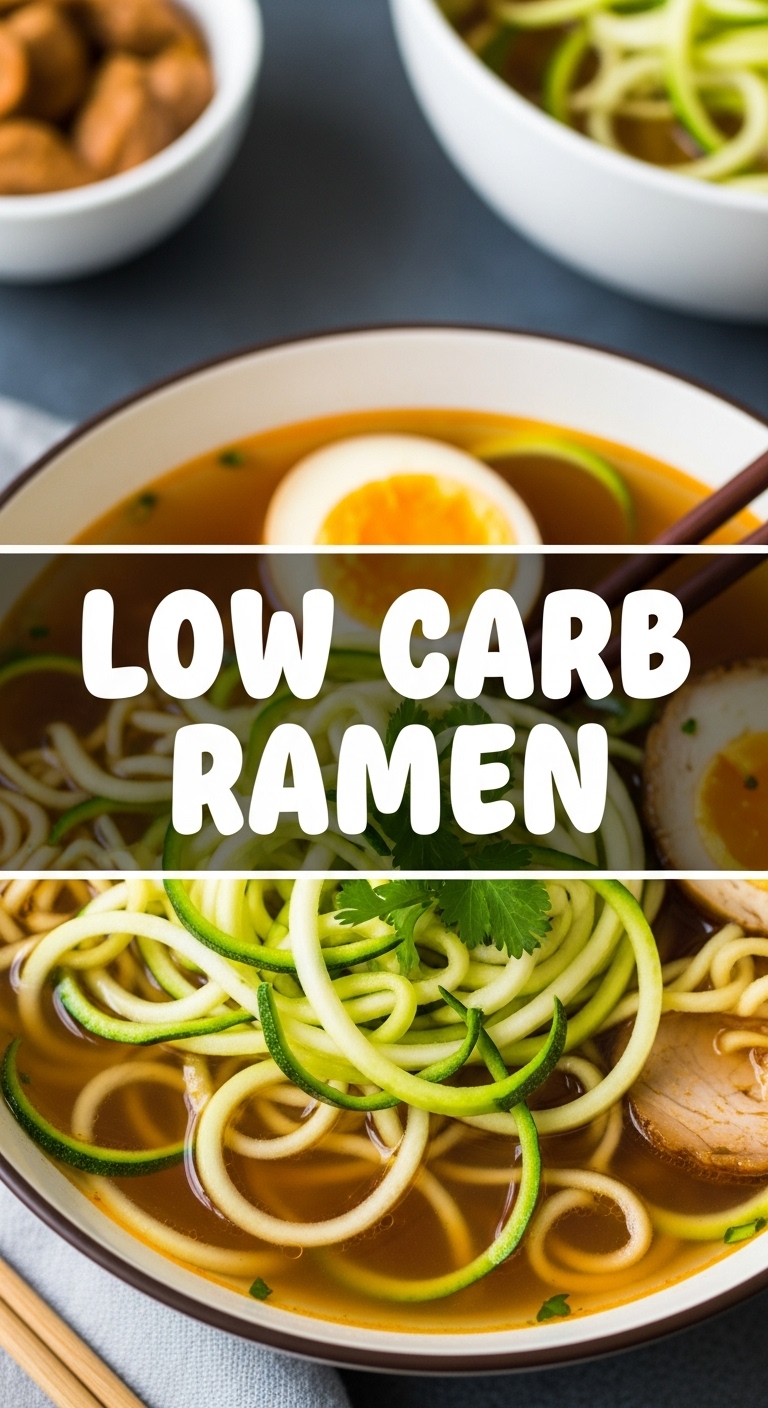
So, you’ve got that ramen itch, huh? That deep, brothy, noodle-y craving that screams ‘comfort’ but your carb-counting brain is silently screaming ‘nooooooo!’ We’ve all been there. You want the soul-warming goodness without feeling like you just ate a small loaf of bread in soup form. Well, my friend, buckle up, because I’m about to drop some low-carb ramen wisdom that will change your life (or at least your dinner plans for tonight).
Why This Recipe is Awesome
Let’s be real, life is too short for bland, “healthy” food that tastes like cardboard’s less exciting cousin. This low-carb ramen recipe? It’s the rebel child of the ramen world. It’s basically a magic trick: turn humble shirataki noodles into a flavor bomb that makes your taste buds high-five your stomach. Plus, it’s pretty darn quick, which is ideal for those nights when cooking feels like an Olympic sport you didn’t sign up for. It’s idiot-proof, even I didn’t mess it up! No really, if you can boil water and chop a few things, you’re practically a Michelin-star chef in the making with this one.
Ingredients You’ll Need
Gather ’round, pantry explorers! Here’s what you’ll need for this culinary masterpiece. Don’t worry, nothing too exotic, unless you consider shirataki noodles ‘exotic’ (they’re just shy, really).
- Good Quality Broth: 4 cups (chicken, beef, or vegetable). Don’t skimp here, this is the soul of your ramen! Seriously, go for the good stuff, not that watery nonsense.
- Shirataki Noodles: 1-2 packages (about 7 oz each), rinsed and drained. These are your low-carb heroes. They might smell a bit funky out of the package, but trust the process!
- Protein of Choice: 4-6 oz thinly sliced cooked chicken, pork belly, or even some pan-fried tofu. Pick your poison, or go wild and use an egg!
- Fresh Ginger: 1-inch piece, grated or minced. The zing.
- Garlic: 2 cloves, minced. Because garlic makes everything better, fight me on it.
- Soy Sauce: 2-3 tablespoons (or tamari for gluten-free). Umami time!
- Sesame Oil: 1 teaspoon. A little goes a long way for that nutty aroma.
- Chili Oil: ½ – 1 teaspoon (or more if you’re feeling spicy). For that little kick.
- Veggies: A handful of spinach, sliced mushrooms, green onions (chopped). Because adulting means eating some greens.
- Optional Garnishes: Soft-boiled egg, nori (seaweed) strips, a sprinkle of sesame seeds. Make it pretty, you deserve it!
Step-by-Step Instructions
- Noodle Prep (The Crucial First Step!): First things first, get those shirataki noodles ready for their starring role. Open the packages, drain them, and rinse them *really* well under cold water for a minute or two. This washes away their unique smell. Then, for a perfect texture, dry-fry them in a non-stick pan over medium-high heat for 5-7 minutes until most of the moisture is gone and they start to “squeak.” Set them aside.
- Aromatic Awakening: Grab a medium saucepan and heat your sesame oil over medium heat. Toss in the minced ginger and garlic. Sauté for about 1 minute until fragrant. Don’t burn it, that’s a rookie mistake!
- Broth Bonanza: Pour in your glorious broth, soy sauce (or tamari), and chili oil. Bring it to a gentle simmer. Let it hang out for 5-10 minutes, allowing all those beautiful flavors to meld together. Taste it. Does it need more salt? More spice? You’re the boss!
- Protein Power-Up (if needed): If you’re using raw chicken or tofu, now’s the time to cook it in the broth until it’s done. If you’re using pre-cooked protein (like pork belly or rotisserie chicken), you’ll add it later to warm through.
- Veggie Victory: Add your sliced mushrooms to the simmering broth and cook for 2-3 minutes until slightly softened. Right before serving, stir in the fresh spinach until it just wilts, like a drama queen on a hot day.
- Assemble Your Masterpiece: Divide the prepared shirataki noodles evenly between two deep ramen bowls. Ladle the hot, flavorful broth and veggies over the noodles. Arrange your protein of choice beautifully on top.
- Garnish Galore: Now for the fun part! Garnish with chopped green onions, a perfectly soft-boiled egg (halved, obvs), some nori strips, and a sprinkle of sesame seeds. Presentation is key, my friend!
Common Mistakes to Avoid
- Skipping the Shirataki Rinse: You will regret this. That funky smell? Yeah, it won’t go away. Rinse those noodles like your life depends on it!
- Ignoring the Dry-Fry: Just boiling shirataki noodles makes them watery and rubbery. Dry-frying them vastly improves the texture. It’s a non-negotiable step, IMO.
- Weak Broth Syndrome: Using sad, watery broth is like going to a concert and the lead singer mumbles. It’s just not the same. Invest in good broth, or make your own!
- Overcooking Your Veggies: Nobody wants mushy spinach. Add the delicate greens right at the end to keep them vibrant and slightly crisp.
- Forgetting the Garnishes: Garnishes aren’t just for Instagram! They add texture, extra flavor, and make your bowl look like it came from a fancy ramen joint. Don’t be lazy!
Alternatives & Substitutions
Got a rogue ingredient or just feeling experimental? Here are some ways to shake things up:
- Protein Swap: No chicken? No problem! Try shrimp, ground pork, thinly sliced beef, or even some meaty portobello mushrooms for a vegetarian twist. Tofu is also a solid choice.
- Veggie Variety: Feel free to toss in bok choy, bean sprouts, shredded cabbage, or even some bamboo shoots. Whatever crunchy goodness you have in the fridge!
- Noodle Nuances: If shirataki isn’t your jam, spiralized zucchini noodles or spaghetti squash can work, though they’ll have a different texture. Just don’t expect them to taste *exactly* like ramen noodles.
- Flavor Boosters: A dollop of miso paste dissolved in a little hot water can add incredible depth. A splash of fish sauce can also amp up the umami.
- Spice It Up: Don’t have chili oil? A pinch of red pepper flakes will do the trick. Or Sriracha, if you’re a fan.
FAQ (Frequently Asked Questions)
Got questions? I’ve got (casual) answers!
- “Shirataki noodles taste weird/rubbery, what gives?”
Aha! Did you rinse them properly? And more importantly, did you dry-fry them? If not, that’s your culprit! Rinsing gets rid of the ‘smell,’ and dry-frying transforms the texture from rubbery to delightfully chewy. Seriously, don’t skip the dry-fry!
- “Can I make this vegetarian/vegan?”
Absolutely! Use vegetable broth, swap chicken for tofu or tempeh, and make sure your chili oil is vegan. Easy peasy lemon squeezy!
- “How spicy can I make this?”
Your mouth, your rules! Start with ½ teaspoon of chili oil and add more to your heart’s content. Or even throw in some fresh sliced chilies if you’re feeling brave. Live on the edge!
- “Can I meal prep this?”
Kind of! You can make the broth ahead of time and store it. Cook your protein and veggies separately. Store the shirataki noodles drained but not yet dry-fried. When you’re ready to eat, dry-fry the noodles, heat the broth, and assemble. This prevents soggy noodles and overcooked veggies.
- “Is this *really* low carb?”
You betcha! Shirataki noodles are basically zero net carbs, and the rest of the ingredients are naturally low carb. It’s why we’re here, friend!
- “What if I don’t have all the specific ingredients?”
Hey, cooking is about improvising! Don’t have fresh ginger? Ginger powder works in a pinch (use less!). No spinach? Use kale or bok choy. The core is the flavorful broth and the low-carb noodles. Get creative!
- “Can I add cheese?”
Buddy, it’s ramen, not pasta. But hey, who am I to judge your adventurous spirit? Try it and report back, you culinary rebel!
Final Thoughts
So there you have it! A low-carb ramen recipe that doesn’t make you feel like you’re missing out. It’s hearty, flavorful, and guilt-free, which is pretty much the holy grail of weeknight dinners, right? Now go impress someone—or yourself—with your new culinary skills. You’ve earned it!