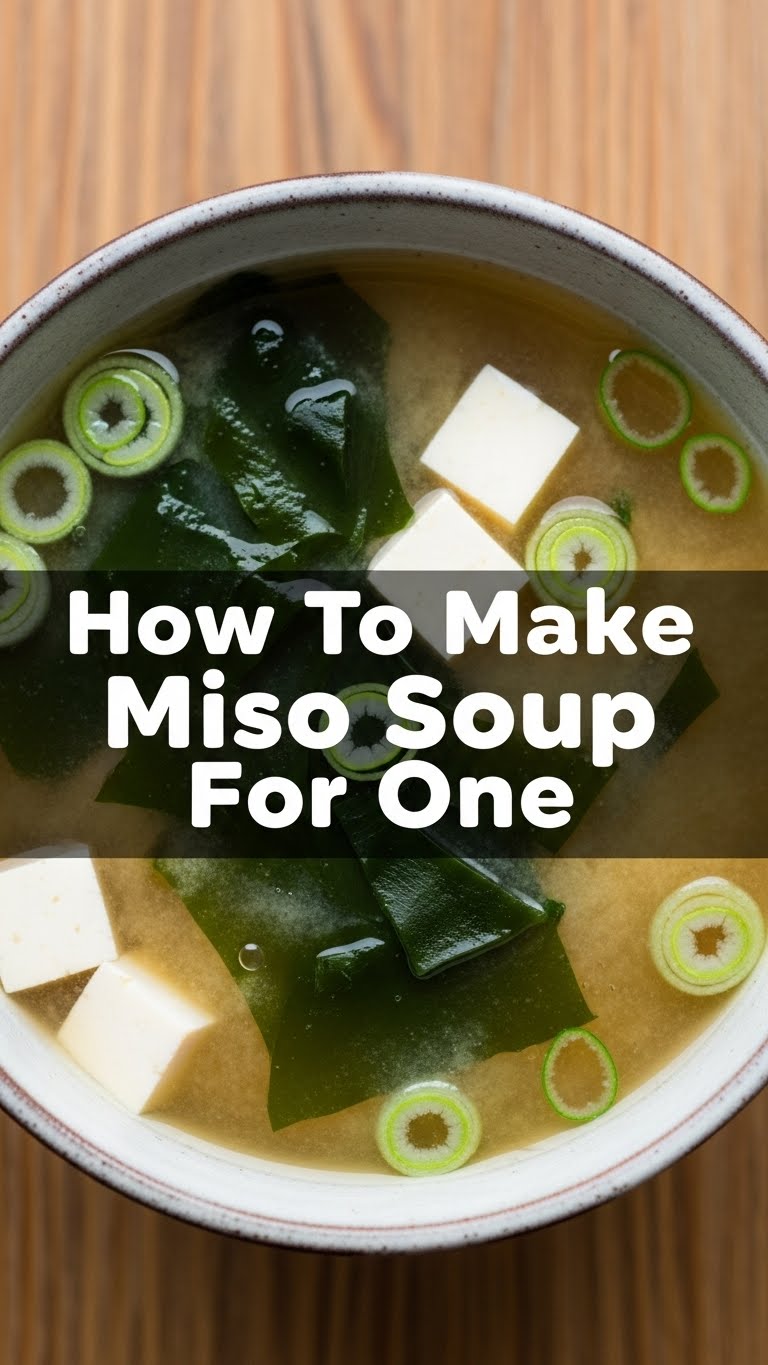
So you’re craving something tasty but too lazy to spend forever in the kitchen, huh? Same. We’ve all been there: stomach rumbling, fridge looking bleak, and the thought of an hour-long cooking adventure sounds less appealing than doing your taxes. But what if I told you there’s a solution so quick, so comforting, and so ridiculously easy, it feels like cheating? Enter the mighty Miso Soup for One, your new best friend for those “I need something warm and delicious *right now*” moments.
Why This Recipe is Awesome
Listen, I get it. Cooking for one can feel like a chore. But this isn’t just *any* recipe; it’s a culinary hug in a bowl, designed for minimal effort and maximum reward. Here’s why you’ll be obsessed:
- **It’s idiot-proof.** Seriously, even I didn’t mess it up. If you can boil water, you can make this.
- **Speed demon.** We’re talking 5-10 minutes from “hmm, I’m hungry” to “ahhh, that’s better.” Perfect for lunch, a light dinner, or a pre-dinner snack (no judgment here).
- **Soul-soothing.** There’s just something about miso soup that calms the soul. It’s warm, savory, and feels like a little act of self-care.
- **Healthy-ish.** Good for the gut, good for the soul. Plus, you get some veggies in there without even trying too hard. Win-win!
- **No sharing required.** This is *your* bowl. All for you. Enjoy every single slurp.
Ingredients You’ll Need
Gather ’round, my lazy-but-gourmet friend. Here’s your hit list of essentials. Keep it simple; we’re not running a Michelin-star restaurant over here.
- **1 cup Water:** The ultimate solvent, obviously. Or, if you’re feeling fancy, 1 cup dashi broth (but let’s be real, water is fine).
- **1-2 tablespoons Miso Paste:** This is the star of the show! I usually go for **white (shiro) miso** because it’s milder and a bit sweet, perfect for a gentle hug.
- **1/4 cup Silken or Soft Tofu:** Cubed into bite-sized pieces. Don’t be shy; it adds protein and makes it feel substantial.
- **1 teaspoon Dried Wakame Seaweed:** It looks like tiny shriveled leaves now, but trust me, it’ll bloom into beautiful, slippery green goodness. Adds that authentic umami kick.
- **1 Green Onion (Scallion):** Thinly sliced, for garnish and a little peppery fresh crunch.
- *Optional but highly recommended:* A tiny pinch of **dashi powder** if you have it for an extra flavor boost, but not essential.
Step-by-Step Instructions
Get ready to impress yourself with your lightning-fast culinary skills. Active voice, baby!
- **Heat the Water:** Grab a small saucepan and pour in your cup of water (or dashi). Bring it to a gentle simmer over medium heat. We’re not aiming for a rolling boil here, just a happy little bubbly dance.
- **Add the Good Stuff (Part 1):** Once simmering, toss in your dried wakame seaweed. It’ll start to rehydrate and unfurl almost immediately. Give it a minute or two to soften.
- **Introduce the Tofu:** Gently slide in your cubed tofu. We want to warm it through, not cook it to oblivion. Let it hang out in the warm broth for another minute.
- **Remove from Heat – This is Crucial!** Take your saucepan off the burner. **Seriously, do it.** Miso is a delicate flower; boiling it will kill off its beneficial probiotics and mess with its beautiful flavor.
- **Dissolve the Miso:** Spoon your miso paste into a small bowl or a ladle. Add a tablespoon or two of the warm broth from your pot and whisk it with a fork until it’s a smooth, lump-free paste. This makes sure it incorporates perfectly into the soup.
- **Stir in the Miso:** Pour your dissolved miso mixture into the saucepan and stir gently until it’s fully combined. Taste and adjust! If you like it saltier or more intense, add another half-tablespoon of miso (dissolve it first!).
- **Serve and Garnish:** Pour your magnificent miso soup into your favorite bowl. Sprinkle those thinly sliced green onions generously over the top. Now, go forth and conquer that hunger!
Common Mistakes to Avoid
Don’t be that person. Learn from others’ tragic missteps and glide through this recipe like a pro.
- **Boiling the Miso:** I’m not kidding, I told you! **Never boil the miso paste after adding it to the soup.** It’s like cooking a fancy cheese; you just don’t do it.
- **Too Much Miso:** Start with one tablespoon, then add more if needed. Miso is salty, and a little goes a long way. You can always add more, but you can’t take it away without diluting your deliciousness.
- **Lumpy Miso:** Not dissolving the miso paste properly beforehand? Rookie mistake. Embrace the whisk!
- **Overcooking Everything:** This isn’t a stew. The tofu and wakame just need to warm up and rehydrate. Keep it brief.
Alternatives & Substitutions
Feeling rebellious? Or just ran out of something? No worries, we can totally improvise.
- **No Tofu? No Problem!** Skip it, or swap it for thinly sliced mushrooms (shiitake or enoki are great!), a handful of fresh spinach (add at the very end to just wilt), or even a few cooked shrimp if you’re feeling fancy.
- **Wakame MIA?** You can use small pieces of dried nori (the seaweed for sushi) cut into strips, or honestly, just omit it. The soup will still be delicious.
- **Green Onions?** Chives work too, or a tiny grating of fresh ginger for a bit of zing.
- **Want More Umami?** If you *really* want to level up, using dashi broth instead of plain water will give you a deeper, richer base. But again, plain water is totally acceptable and still tasty!
FAQ (Frequently Asked Questions)
Because you’ve got questions, and I’ve got (casual) answers.
- **What kind of miso paste should I use?** For a classic, lighter flavor, **shiro (white) miso** is your best bet. Awase (a mix) is also good, but red miso is much stronger, so use sparingly if you dare!
- **Can I make a bigger batch?** You *can*, but honestly, miso soup is best enjoyed fresh. The flavors can change if stored too long. Making it for one means peak deliciousness every time!
- **How do I store leftover miso soup?** My advice? Don’t have leftovers! But if you absolutely must, store the broth (without the miso added) in the fridge, and then add the freshly dissolved miso paste when you reheat it. Reheating miso paste *in* the soup isn’t ideal.
- **Can I add other veggies?** Absolutely! Thinly sliced daikon radish, a few pieces of enoki mushrooms, or even some corn kernels can be lovely additions. Just make sure they cook quickly.
- **Is miso soup gluten-free?** Most miso pastes are made from soybeans and rice koji, so they *can* be gluten-free. However, **always double-check the label** as some brands might contain barley or other glutinous grains.
- **Why shouldn’t I boil the miso?** Beyond killing the good-for-your-gut probiotics, boiling can also make the miso taste a bit… off. Like a sad, boiled version of its former glorious self. **Don’t do it!**
- **Do I *really* need the wakame?** No, but it adds that authentic briny, oceanic flavor and a nice texture. Plus, it looks cool. But if you don’t have it, your soup won’t be ruined, just a little less… sea-kissed.
Final Thoughts
See? You’re basically a ninja chef now, whipping up delicious, comforting meals in minutes. No stress, no mess, just pure, unadulterated deliciousness. So next time that craving hits, don’t reach for the instant noodles; reach for your miso paste. You’ve earned this moment of culinary zen. Now go impress someone—or yourself—with your new culinary skills. You’ve earned it!