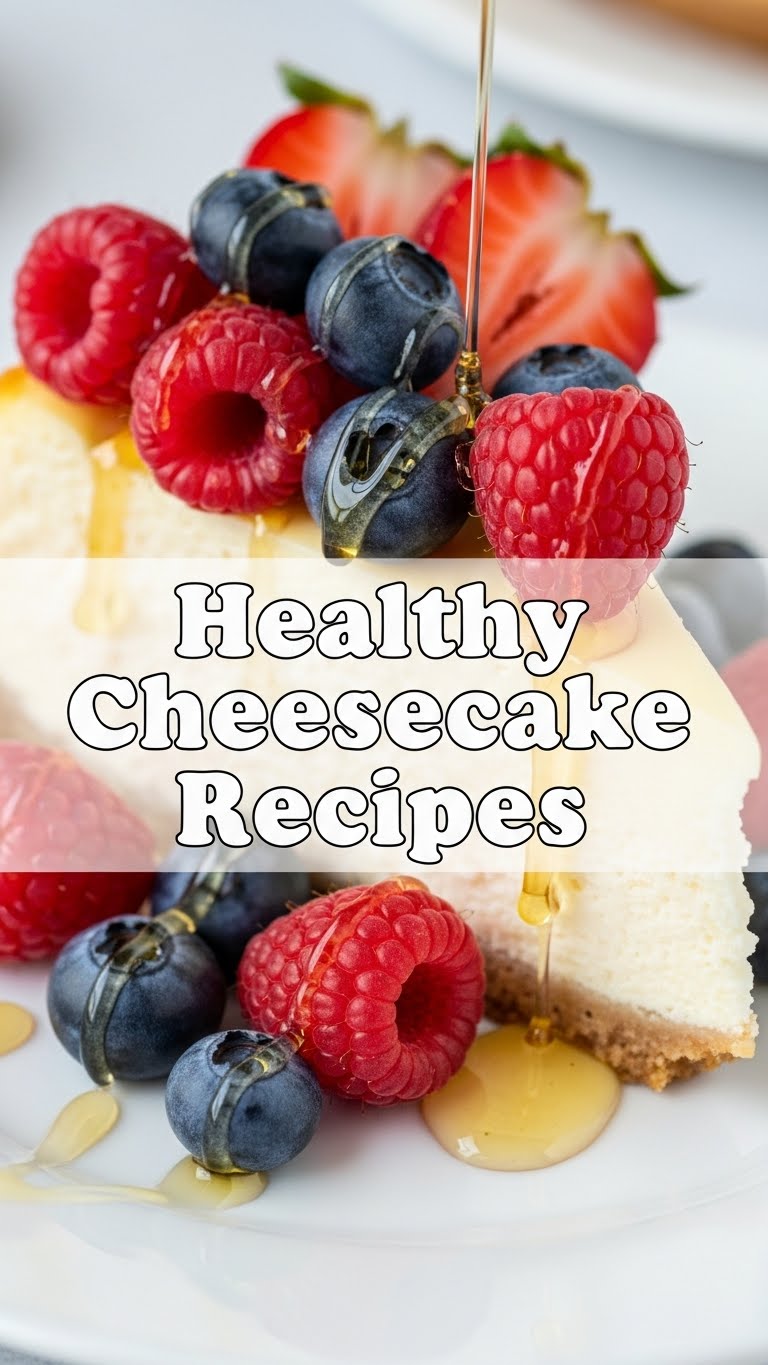
Alright, let’s be real for a sec. You’ve been staring at that dreamy cheesecake picture online, haven’t you? Fantasizing about that creamy, tangy slice of heaven but also, deep down, dreading the sugar crash and the inevitable guilt trip? What if I told you we could totally have our cheesecake and eat it too, without feeling like we just ran a marathon… *backwards*? Yep, we’re diving into the glorious world of healthy cheesecake, where delicious meets “I don’t feel bad about this!” Let’s bake, bestie!
Why This Recipe is Awesome
Okay, so why should you bother with *this* particular cheesecake adventure? Well, for starters, this isn’t your grandma’s “take all day and use three sticks of butter” kind of recipe. This is more like “I woke up like this, now I want cheesecake, and I’m totally going to make it before my first coffee” level easy. It’s practically foolproof, even for those of us who occasionally mistake salt for sugar (no judgment!). We’re talking **seriously delicious cheesecake with way less guilt** because we’re swapping out some of the usual suspects for healthier alternatives. It’s creamy, it’s dreamy, and honestly, you might even impress yourself. Plus, think of the bragging rights!
Ingredients You’ll Need
Get ready to gather your culinary arsenal! Here’s what you’ll need for your healthy cheesecake masterpiece:
- For the Crust (the foundation of all greatness):
- 1 ½ cups whole wheat graham cracker crumbs: Or oat biscuits, or digestive biscuits if you’re feeling fancy. Basically, anything crumbly that’s not pure sugar.
- ¼ cup unsalted butter, melted: Just a smidgen to hold it all together. Don’t be shy, but don’t drown it either.
- 1-2 tablespoons your favorite natural sweetener: Think maple syrup, erythritol, or a pinch of brown sugar. Totally optional, but adds a nice touch.
- For the Filling (the star of the show):
- 2 (8-ounce) blocks light cream cheese, softened: Our hero! Make sure it’s soft, otherwise, you’ll have lumpy cheesecake, and nobody wants that.
- 1 cup plain Greek yogurt: This is your secret weapon for extra creaminess and a protein boost. Non-fat or low-fat works wonderfully.
- ½ cup natural sweetener: Granulated erythritol, monk fruit, or a blend. We’re cutting sugar, not joy! Adjust to your sweet tooth.
- 2 large eggs: These are the binders. Don’t skip ’em unless you want a sad, crumbly mess.
- 1 teaspoon vanilla extract: Because life’s too short for bland cheesecake. Use the good stuff!
- A pinch of salt: Just a tiny bit to balance the sweetness and really make those flavors pop. Trust me on this one.
Step-by-Step Instructions
Crush it, Mix it, Press it: First up, the crust! Grab those graham cracker crumbs (or whatever you chose) and mix them with the melted butter and your optional sweetener in a medium bowl. Once it looks like wet sand, press it firmly into the bottom of a 9-inch springform pan. Use the back of a spoon or your clean hands to get an even layer. No need for perfection, just make sure it’s packed.
Pre-Bake the Base: Pop that crust into an oven preheated to 350°F (175°C) for about 8-10 minutes. This helps it get nice and sturdy. While it’s doing its thing, you can start on the filling.
Whip up the Wonders: In a large mixing bowl (or stand mixer), beat the softened light cream cheese until it’s super smooth and fluffy. This is where patience pays off – get it completely lump-free. Then, add the Greek yogurt, your chosen sweetener, vanilla extract, and that tiny pinch of salt. Mix on low speed until just combined. Remember, **don’t overmix!**
Gently Add the Eggs: Crack your eggs into a small bowl, give them a light whisk, then gently fold them into the cream cheese mixture. Mix on the lowest speed possible, just until they’re incorporated. Overmixing eggs can introduce too much air, which leads to cracks. We want smooth operators here!
Pour and Bake: Pour your glorious cheesecake filling over the slightly cooled crust in the springform pan. Smooth out the top with a spatula. Now, if you’re feeling fancy (and want to avoid cracks), you can place your springform pan into a larger roasting pan, and fill the larger pan with about an inch of hot water (a water bath!). Bake at 325°F (160°C) for 50-60 minutes, or until the edges are set but the center still has a slight wobble.
Cool Down, Chill Out: Once baked, turn off the oven and prop the door open slightly, leaving the cheesecake inside for about an hour. This gradual cooling prevents cracking. After an hour, take it out, let it cool completely on a wire rack, then cover it and **refrigerate for at least 4 hours, or ideally overnight.** Trust me, the chill time is non-negotiable for a perfect slice!
Common Mistakes to Avoid
Nobody’s perfect, but we can learn from past cheesecake dramas! Here are a few rookie (and sometimes veteran) mistakes to sidestep:
- Overmixing the Batter: This is probably the number one culprit for cracked cheesecakes. When you beat the filling too much, you incorporate too much air, which expands during baking and then collapses, causing cracks. Mix until *just combined*, no more!
- Skipping the Chill Time: I know, I know, the wait is agonizing. But cutting the chilling short will result in a soft, un-set, potentially messy cheesecake. **Patience, my friend, is a virtue**—especially in cheesecake making.
- High Oven Temperature & Quick Cooling: Baking too hot or cooling too quickly are also major crack-inducers. Gradual changes are key. Turn off the oven and let it hang out in there for an hour, then cool slowly on the counter before hitting the fridge.
- Not Using a Springform Pan (or forgetting to grease/line it): Trying to get a whole cheesecake out of a regular cake pan is a recipe for disaster. And even with a springform, make sure the bottom is greased or lined with parchment to prevent sticking.
- Forgetting the Water Bath (if you want a perfect top): It’s like a spa day for your cheesecake, providing moist, even heat that reduces cracking. It’s an extra step, but **FYI**, it makes a difference!
Alternatives & Substitutions
Feeling creative? This recipe is super flexible! Here are some ideas to mix things up:
- Crust Alternatives:
- Nut-Based: For a gluten-free and higher protein option, blend 1 ½ cups of almond flour or finely ground walnuts/pecans with ¼ cup melted coconut oil or butter and a tablespoon of sweetener.
- Oatmeal Crust: Mix 1 ½ cups rolled oats (pulsed slightly in a food processor) with ¼ cup melted coconut oil and 2 tablespoons maple syrup.
- No-Crust Option: Purely decadent filling, baby! Just grease your springform pan well.
- Sweetener Swaps:
- If you don’t mind a *little* sugar, a few tablespoons of honey or maple syrup work great, but keep it minimal to keep it healthy.
- Stevia or sucralose are other options, but adjust to taste as they’re much sweeter.
- Flavor Boosts:
- Lemon/Lime Zest: Add 1-2 tablespoons of fresh citrus zest to the filling for an amazing zing. **IMO**, this elevates any cheesecake!
- Fruit Swirl: After pouring the filling, dollop spoonfuls of fruit puree (like berries or mango) on top and swirl gently with a knife.
- Chocolate Lover: Mix 2-3 tablespoons of unsweetened cocoa powder into the filling.
- Dairy-Free Option:
- Swap regular light cream cheese for a vegan cream cheese alternative.
- Replace Greek yogurt with a thick, plain dairy-free yogurt (like coconut or almond yogurt).
FAQ (Frequently Asked Questions)
Got questions? I’ve got (casual) answers!
- Can I use regular cream cheese instead of light?
Well, technically yes, but then it wouldn’t be our “healthy” cheesecake, would it? We’re trying to be good here, remember? Baby steps! Go for the light, you won’t miss a thing.
- Why did my cheesecake crack? It looks like a desert landscape!
Oh, the drama! Probably overmixing the batter, baking at too high a temperature, or cooling it down too quickly. Next time, be gentle, lower the heat, and let it chill out slowly. It wants to relax, not be shocked!
- How long does this healthy cheesecake last in the fridge?
In your fridge? Maybe 5-7 days, if you’re good at self-control. In *my* fridge? About 24 hours if I’m lucky, because who can resist this kind of deliciousness?
- Do I *really* need a water bath for baking? It seems like a faff.
Need? Maybe not if you like rustic charm. Want a perfectly smooth, crack-free top that looks like it came from a fancy bakery? Then yes, it’s worth the extra step for that moist, even bake. It’s like a spa day for your cheesecake!
- Can I freeze leftover cheesecake?
Absolutely! Wrap individual slices or the whole cooled cheesecake tightly in plastic wrap, then foil. It’ll be good for a month or two. Future you will totally thank present you for this genius move.
- My cheesecake is too soft/runny. What did I do wrong?
Hmm, probably didn’t bake long enough, or maybe you pulled it out of the fridge too soon (remember, 4 hours minimum!). Also, make sure your cream cheese was fully softened, and the Greek yogurt wasn’t too watery.
Final Thoughts
You, my friend, have just conquered the art of healthy cheesecake! Give yourself a high-five, a pat on the back, or maybe just go straight for a slice. You’ve navigated the creamy depths, dodged common mistakes, and emerged victorious with a delicious, guilt-free dessert. Now go forth and share (or don’t, I won’t tell!) this culinary triumph. Enjoy every single creamy, dreamy bite. You totally crushed it. What’s next on our healthy-but-decadent adventure?