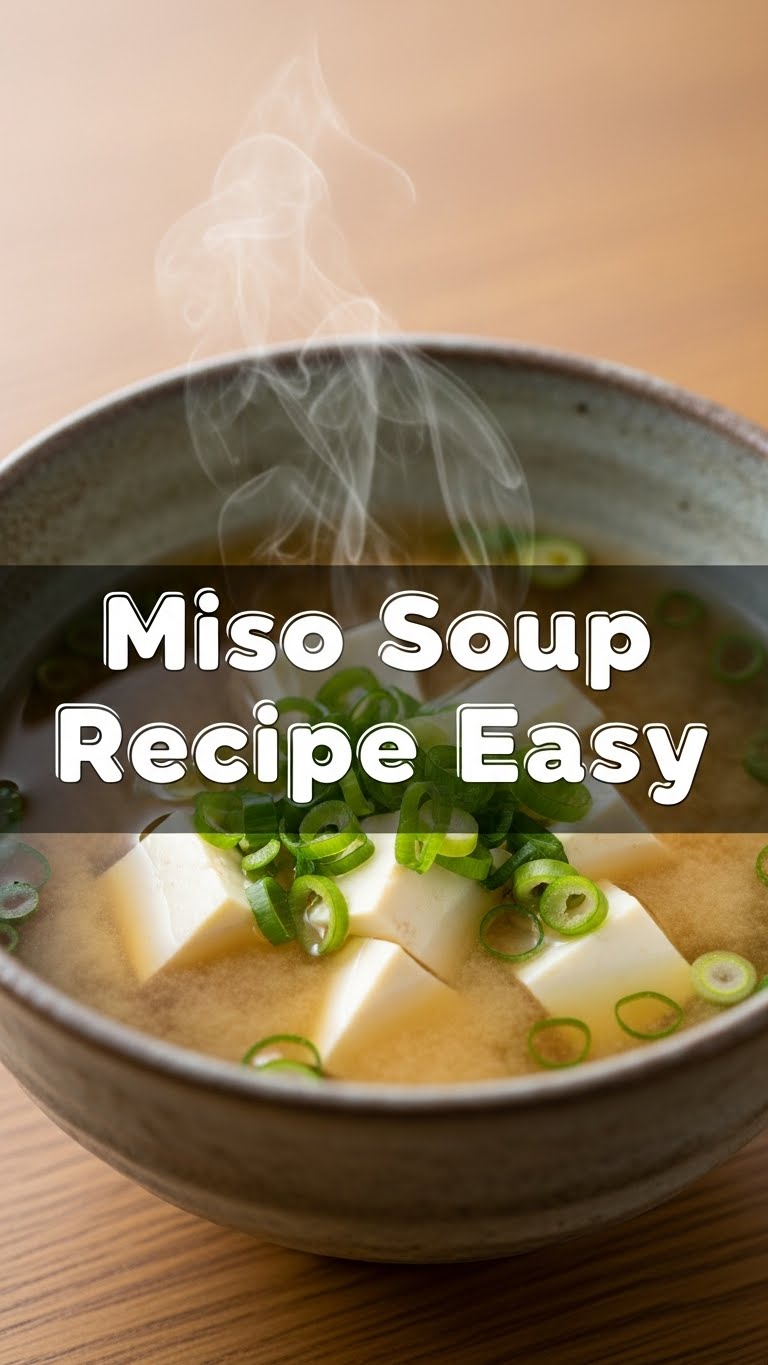
So you’re craving something warm, comforting, and ridiculously easy to make without sacrificing your precious couch time? You’ve come to the right place, my friend. Forget those overly complicated recipes that make you feel like you need a culinary degree just to chop an onion. Today, we’re diving into the glorious, soul-soothing world of Miso Soup, and we’re making it so simple, you’ll wonder why you ever ordered takeout. Seriously, get ready to impress yourself (and maybe your cat, if it’s watching).
Why This Recipe is Awesome
Let’s be real, sometimes you want something delicious but your energy levels are firmly stuck in “sloth mode.” This miso soup recipe is your hero. It’s:
- **Stupidly Fast:** We’re talking 10-15 minutes, tops. From zero to hero in the kitchen.
- **Idiot-Proof:** If I can make it without setting off the smoke alarm, you can too. No complex techniques, no fancy equipment.
- **Healthy-ish:** It’s light, packed with good-for-you fermented goodness (hello, gut health!), and totally customizable.
- **Seriously Delicious:** That umami bomb hits just right every single time. It’s like a warm, savory hug in a bowl.
This isn’t one of those “easy” recipes that secretly requires 17 obscure ingredients and a rare spice you can only find in a hidden village in the Himalayas. This is *actually* easy, with ingredients you can find pretty much anywhere.
Ingredients You’ll Need
Gather ’round, my budding chefs! Here’s your simple shopping list. Don’t overthink it.
- **4 cups (about 1 liter) Water:** The OG base of all good things. Tap water works perfectly, no need for fancy spring water unless you’re feeling extra.
- **1-2 teaspoons Dashi Granules or Powder:** Your secret weapon for instant umami magic. This is what gives miso soup its distinctive savory depth. Don’t skip this, unless you want salty water with stuff in it.
- **3-4 tablespoons Miso Paste (white or yellow):** The absolute star of the show! White (Shiro) or yellow (Shinshu) miso are milder and perfect for a light, everyday soup. Think of it as salty, savory, fermented goodness. Not the kind you use for face masks, BTW.
- **4 oz (about half a block) Tofu (silken or firm, cubed):** Protein punch! Cut it into small, bite-sized squares. It’s like edible sponges for all that miso goodness.
- **2 tablespoons Dried Wakame Seaweed:** Because what’s miso soup without a little sea veggie wiggle? This stuff rehydrates like a champ and adds a lovely texture.
- **2-3 Green Onions (scallions), thinly sliced:** For that pop of color, a bit of freshness, and a subtle oniony kick. Fancy!
Step-by-Step Instructions
Alright, apron on (or don’t, I won’t tell), let’s get cooking! These steps are so simple, you could probably do them in your sleep.
- **Heat the Water:** Pour your 4 cups of water into a medium saucepan. Bring it to a gentle simmer over medium-high heat. You’re looking for those little bubbles, not a rolling boil.
- **Dashi Time!** Once the water is simmering, whisk in your dashi granules. Stir until they’re fully dissolved. See? Instant flavor base. Feel free to give it a little taste—it should be pleasantly savory.
- **Add Tofu & Wakame:** Carefully add your cubed tofu and dried wakame to the simmering dashi broth. The wakame will plump up surprisingly quickly. Let it all simmer for just 2-3 minutes to allow the flavors to meld and the wakame to fully rehydrate.
- **The Miso Moment (Crucial!):** This is where people mess up, so listen up! **Turn off the heat** or remove the pot from the burner. Take a small amount of the hot broth (about 1/4 cup) and put it into a small bowl with your miso paste. Whisk it until the miso is completely dissolved and smooth. This step is important because **boiling miso kills its delicate flavor and beneficial probiotics.**
- **Combine & Serve:** Pour the dissolved miso mixture back into your pot of broth. Stir gently to combine. Taste and adjust if needed – if you like it saltier, add a tiny bit more dissolved miso. Ladle your glorious miso soup into bowls and garnish generously with those freshly sliced green onions.
Boom! You just made miso soup like a pro. Go on, give yourself a pat on the back.
Common Mistakes to Avoid
We’ve all been there, making rookie errors. Learn from my (and others’) mistakes so you don’t have to!
- **Boiling the Miso:** Seriously, I can’t stress this enough. **Do NOT boil your miso soup after adding the miso paste.** It destroys the enzymes and delicate flavor, making it taste… well, sad.
- **Too Much Dashi/Miso:** While we love flavor, too much dashi or miso can make your soup overly salty. Start with the lower recommended amount, taste, and add more if you prefer. You’re not making ocean water!
- **Skipping the Dashi:** “Can I just use water?” you ask. Technically yes, but then it’ll just taste like salty water with tofu. The dashi is what gives it that authentic, umami depth. Trust the dashi.
- **Forgetting to Dissolve Miso Properly:** If you just dump the miso paste straight into the pot, you’ll end up with clumps of undissolved paste. Take the extra minute to whisk it with some broth in a separate bowl first.
Alternatives & Substitutions
Feel free to get creative! This recipe is a fantastic base for whatever you have on hand. It’s your soup, your rules!
- **Veggies Galore:** Want more green goodness? Add a handful of fresh spinach or thinly sliced mushrooms (shiitake or enoki are fantastic) during step 3.
- **Protein Boost:** Feeling extra hungry? Cooked shrimp, shredded chicken, or even some leftover salmon can be added right before serving. Just make sure it’s already cooked!
- **Different Miso:** Red miso (aka “Aka Miso”) has a stronger, saltier, and more pungent flavor. If you use it, start with less than recommended for white/yellow miso and taste as you go. IMO, white/yellow is your BFF for an easy, light vibe.
- **Vegetarian Dashi:** If you’re strictly vegetarian or vegan, look for kombu dashi or shiitake mushroom dashi granules. They’ll give you that umami punch without any fish products.
FAQ (Frequently Asked Questions)
Got questions? I’ve got answers (and probably a joke or two).
**Q: Can I make this vegetarian/vegan?**
A: Absolutely! Just make sure your dashi granules are vegetarian (some contain bonito, a fish product). Many brands offer kombu-based dashi which is 100% plant-based. Everything else in this recipe is already vegan!
**Q: How long does homemade miso soup last?**
A: It’s best enjoyed fresh, but you can store leftovers in an airtight container in the fridge for 2-3 days. FYI, the tofu might get a little softer.
**Q: Can I reheat miso soup?**
A: Yes, but gently! Warm it on the stovetop over low heat, or in the microwave. **Whatever you do, don’t let it boil!** Refer back to “Common Mistakes.”
**Q: What kind of tofu should I use?**
A: Silken tofu is traditionally used for its delicate texture, but firm or medium-firm tofu works great too and holds its shape a bit better. Just make sure it’s packed in water, not the shelf-stable kind.
**Q: Where do I buy dashi granules and miso paste?**
A: You can usually find them in the international aisle of larger supermarkets, at Asian grocery stores, or, of course, online. Miso paste is often in the refrigerated section.
**Q: Is miso soup healthy?**
A: Generally, yes! It’s low in calories, provides beneficial probiotics from the fermented miso, and is hydrating. Plus, it’s packed with flavor, so you won’t feel like you’re missing out.
Final Thoughts
See? Told you it was easy! You just whipped up a delicious, warming, and impressive bowl of miso soup with minimal effort. No stress, no fuss, just pure culinary triumph. Now go impress someone—or yourself—with your new culinary skills. You’ve earned it (and your taste buds will definitely thank you!). Happy slurping!