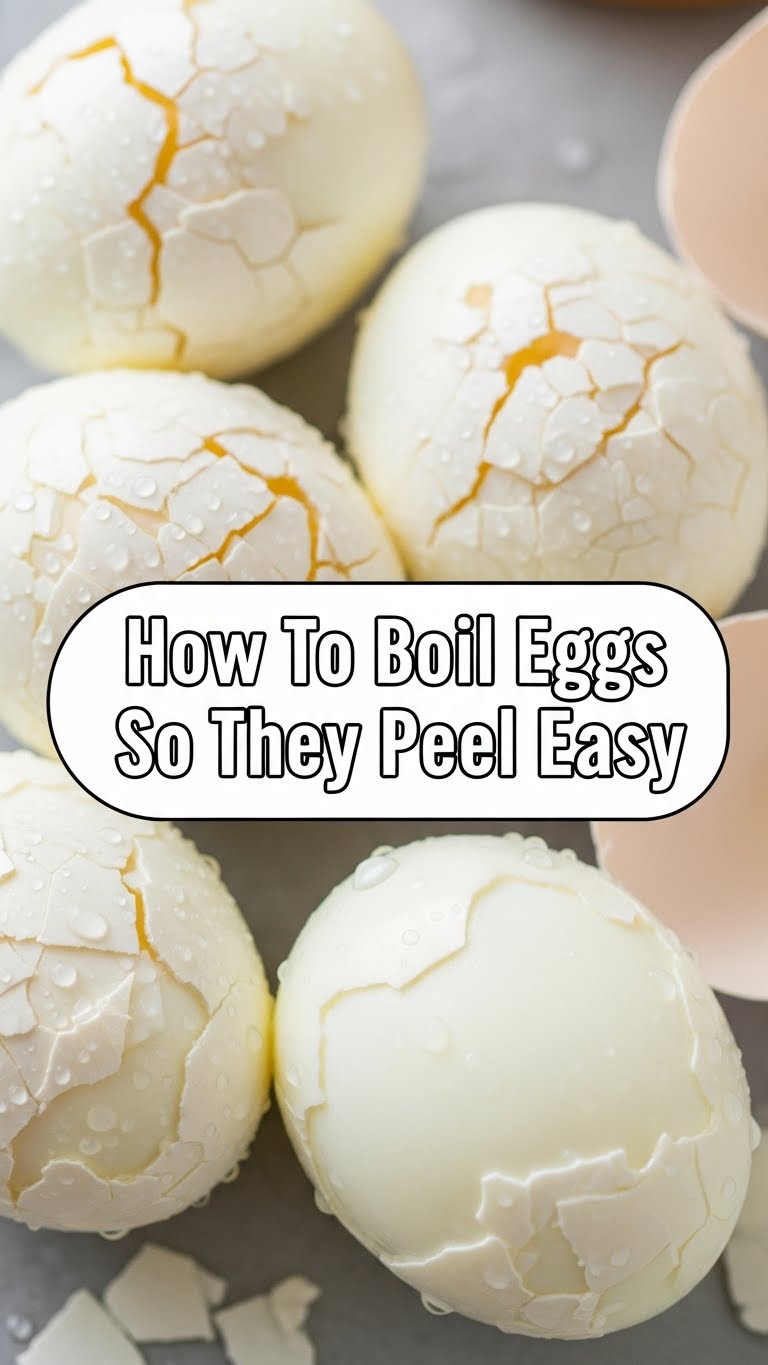
Ever stood there, battling a hard-boiled egg like it’s a tiny, stubborn sumo wrestler, only to rip half the white off with the shell, leaving you with a sad, crater-faced breakfast? Yeah, been there, done that, probably cried a little into my coffee. My eggs used to look like they’d lost a fight with a tiny, angry badger. But guess what? Your egg-peeling woes are officially OVER. Today, we’re diving into the ridiculously simple secret to perfectly peeled hard-boiled eggs. Get ready to have your mind (and your breakfast) blown!
Why This Recipe is Awesome
Okay, so “recipe” might be a strong word for boiling water, but trust me, this isn’t just a recipe; it’s a **life hack**. It’s the kind of kitchen magic that makes you feel like a culinary genius without actually doing anything complicated. No more jagged edges, no more sacrificing precious egg white to the shell gods. This method ensures your eggs practically jump out of their shells, looking smooth and ready for their close-up. It’s idiot-proof, honestly, even I didn’t mess it up, and my kitchen adventures often involve smoke alarms. Plus, it’s quick, efficient, and frees up more time for important things, like binging your favorite show.
Ingredients You’ll Need
Prepare yourself for an epic list of… well, not many things. You ready?
- Eggs: As many as your heart (or your stomach) desires. Fresh from the grocery store is fine, but surprisingly, **eggs that are a week or two old actually peel easier!** Who knew, right?
- Water: The magical liquid, straight from your tap. Nothing fancy here, unless you have a fancy tap, then go wild.
- Ice: Crucial for the “shock therapy” your eggs are about to receive. Don’t skimp on this!
- A pinch of Salt or a dash of Vinegar (Optional but Recommended): Some say it helps prevent cracking and makes peeling easier. I say it’s like a good luck charm for your eggs. Pick your potion!
Step-by-Step Instructions
Let’s get cracking! (Pun absolutely intended.)
- Gather Your Eggs & Pot: Gently place your eggs in a single layer at the bottom of a pot. Don’t overcrowd them – they need their space to simmer happily.
- Cover with Cold Water: Fill the pot with cold water until the eggs are covered by at least one inch of water. Add your pinch of salt or dash of vinegar now if you’re using it.
- Heat It Up: Place the pot on high heat and bring the water to a **rolling boil**. We’re talking big, enthusiastic bubbles here, not just a gentle simmer.
- The “Off-Heat” Cook: Once the water hits that roaring boil, immediately **remove the pot from the heat**. Seriously, take it off the burner. Cover the pot with a lid and let it sit.
- Timing is Everything: This is where you decide your egg’s destiny!
- For soft-boiled, jammy yolks: Let sit for **6-7 minutes**.
- For medium-boiled, creamy yolks: Let sit for **8-9 minutes**.
- For hard-boiled, fully set yolks: Let sit for **10-12 minutes**.
**Don’t peek!** Let the residual heat do its work.
- Prepare the Ice Bath: While your eggs are doing their thing, fill a large bowl with ice and cold water. This is their spa treatment after a hot bath.
- Shock ‘Em Cold: As soon as the timer goes off, carefully transfer the eggs from the hot water to the ice bath using a slotted spoon. Let them chill out for at least **5-10 minutes**. This stops the cooking process dead in its tracks and is **THE KEY** to easy peeling.
- Peel with Pleasure: Once cooled, gently tap an egg on a hard surface to crack the shell all around. Start peeling from the wider end (where the air pocket usually is). You’ll be amazed at how easily the shell slips off, often in large pieces! You can peel under a trickle of cold water for extra help, but honestly, you probably won’t need it.
Common Mistakes to Avoid
We’ve all been there, making rookie errors that lead to egg-induced frustration. Here’s what not to do:
- Boiling *Too* Fresh Eggs: While counter-intuitive, very fresh eggs are notorious for being harder to peel. If you can, use eggs that are a week or two old. Trust me on this one.
- Skipping the Ice Bath: This isn’t optional, people! The sudden temperature change causes the egg white to contract, separating it from the shell membrane. **It’s the secret sauce for easy peeling!**
- Overcrowding the Pot: Trying to boil a small army of eggs in a tiny pot leads to uneven cooking and potential shell-bashing. Give them space!
- Peeling Hot Eggs: Resist the urge! Hot eggs cling to their shells like your grandma to her favorite armchair. Let them cool completely in the ice bath.
- Overcooking: Boiling for too long can lead to that lovely green ring around the yolk, which is harmless but a sign of a slightly chalky texture. The ice bath helps prevent this too.
Alternatives & Substitutions
Okay, so “substituting” eggs is a bit like “substituting water” when you’re making soup – you just can’t really. But here are some fun twists and ideas once you master the perfect peel!
- Go for the Golden Yolks: Want that rich, jammy yolk for your ramen or avocado toast? Stick to the 6-7 minute sit time in the covered pot. It’s a game-changer!
- Big Bird Eggs? If you’re using duck eggs or other larger eggs, add an extra 1-2 minutes to the covered sitting time to ensure they’re cooked through.
- Deviled Egg Dreams: This peeling method is your absolute best friend for deviled eggs. You’ll have perfectly smooth whites, making your appetizer platter look pro. IMO, it’s the only way to go.
- Pickled Perfection: Once peeled, these eggs are prime candidates for pickling. Just whip up a quick brine, and you’ve got a fantastic snack for later.
FAQ (Frequently Asked Questions)
Got questions? I’ve got answers (and a little sass).
- Do fresh eggs really matter for peeling?
Oh, my friend, they matter *a lot*. Fresher eggs cling to their inner membrane with the tenacity of a toddler to a lollypop. Using eggs that are a week or two old will make your life significantly easier. You’re welcome. - Salt or vinegar in the water, what’s the deal?
Both *can* help if a shell cracks during boiling by helping to seal it up, preventing the whites from oozing out. Some folks swear it makes peeling easier, but honestly, the ice bath is the real MVP here. Consider them a bonus track on your favorite album. - How long do hard-boiled eggs last?
Keep ’em in their shells in the fridge, and they’re good for about a week. Once peeled, consume them within a couple of days for optimal freshness. - Can I boil a dozen eggs at once?
Absolutely! As long as they’re in a single layer at the bottom of your pot and fully covered by at least an inch of water, you can boil as many as your pot can handle. Just make sure the water returns to a rolling boil before you start your “off-heat” timer. - Why do my yolks sometimes turn green?
Ah, the dreaded green ring! That’s usually a sign of overcooking. The iron in the yolk reacts with hydrogen sulfide (released from the white when it’s cooked too long), causing that unattractive discoloration. The ice bath also helps prevent this by rapidly cooling the egg. - Is it okay if a shell cracks while boiling?
It happens to the best of us! If you added salt or vinegar, it might help “seal” the crack, minimizing leakage. But don’t fret; the egg is still perfectly safe to eat, it just won’t be as pretty. We all have our flaws, right? - What’s the best way to store boiled eggs?
Keep ’em in their shells in the original carton or an airtight container in the fridge. This helps prevent them from absorbing odors from other foods.
Final Thoughts
See? You just unlocked a superpower: the power of the perfectly peeled egg. No more messy battles, no more wasting delicious egg white. You’re now a hard-boiled egg whisperer, a peeling pro, an absolute legend in your own kitchen. Go forth and conquer those brunches, amaze your friends with perfectly smooth deviled eggs, or simply enjoy a satisfying, frustration-free snack. You’ve earned it!