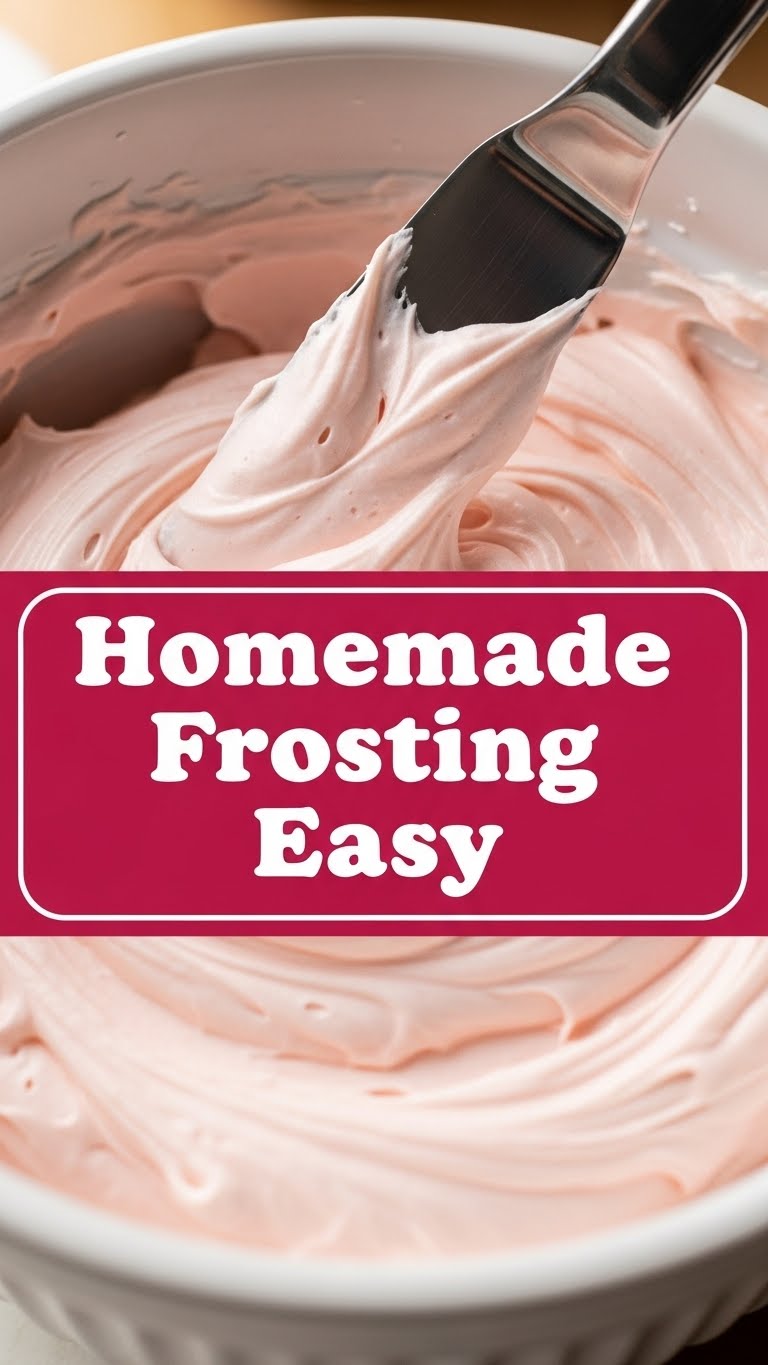
So, you’re eyeing that store-bought tub of frosting, thinking about the weird ingredients list, and simultaneously craving something that tastes like a cloud of sugary bliss, but you’re *also* way too lazy to spend all day on it, huh? Same. High five! You’re in the right place. We’re about to whip up some homemade frosting that’s so easy, you’ll wonder why you ever bought that plastic-tasting stuff.
Why This Recipe is Awesome
Because, my friend, this isn’t just “easy”—it’s practically foolproof. I’m talking “I could probably make this with one eye closed and a cat draped over my arm” easy. Seriously, even if your culinary skills usually involve calling for takeout, you got this. This frosting is creamy, dreamy, and infinitely better than anything from a can. Plus, you get major bragging rights, and IMO, that’s half the fun of baking. It’s also super versatile, meaning you can easily tweak it to match whatever cake, cupcake, or spoon you’re planning to apply it to.
Ingredients You’ll Need
- 1/2 cup (1 stick) unsalted butter, softened: And I mean *softened*, not melted. Leave it on the counter for a bit. We’re aiming for “spreadable,” not “liquid gold.”
- 2 cups (about 250g) powdered sugar (aka confectioners’ sugar), sifted: Don’t skip the sifting! Unless you like lumpy frosting, which, no judgment, but also, why?
- 1-2 tablespoons milk or heavy cream: Start with one, add more if needed. This is our magic consistency adjuster.
- 1 teaspoon vanilla extract: The soul of vanilla frosting. Don’t be stingy, but also don’t drown it.
- Pinch of salt: Trust me on this one. It balances the sweetness and makes everything pop. It’s like the unsung hero of frosting.
Step-by-Step Instructions
- Grab a medium-sized mixing bowl and your electric mixer (or a strong arm, if you’re feeling ambitious and masochistic). Toss in your softened butter.
- Beat the butter on medium speed for about 2-3 minutes until it’s light and fluffy. It should look pale and creamy, almost like a cloud that got a really good workout.
- Now, gradually add the sifted powdered sugar, about half a cup at a time, mixing on low speed until combined after each addition. **Go slow** here, or your kitchen will look like a snow globe exploded. Once all the sugar is in, crank the speed up to medium and beat for another 2 minutes.
- Pour in the vanilla extract and that tiny pinch of salt. Mix well until everything is happily blended.
- Finally, add 1 tablespoon of milk or cream. Mix on low until it’s incorporated, then increase to medium and beat until smooth. If your frosting seems too thick for your liking, add the second tablespoon of milk/cream, a tiny bit at a time, until you hit that perfect, spreadable consistency.
- Taste test! This is the most crucial step, obviously. Adjust sweetness or flavor if needed. Then go forth and frost your culinary masterpieces!
Common Mistakes to Avoid
- Using cold butter: Your frosting will be lumpy, difficult to mix, and generally just sad. Plan ahead, people!
- Skipping the sifting: Those powdered sugar lumps are notoriously stubborn. Sift, or forever hold your peace (and chunky frosting).
- Adding all the liquid at once: One tablespoon at a time, my friend. It’s easier to add more than to take away, especially when you’re aiming for that perfect consistency. Nobody wants soup-frosting.
- Overmixing: Once it’s smooth and fluffy, stop. Overmixing can incorporate too much air, making it less stable or sometimes even a bit greasy.
Alternatives & Substitutions
This recipe is a fantastic base, begging for your personal touch!
- Chocolate Frosting: Add 1/2 cup unsweetened cocoa powder along with your powdered sugar. You might need an extra splash of milk to maintain consistency. Divine!
- Flavor Variations: Swap vanilla extract for almond extract, peppermint extract, or even a citrus zest (lemon, orange!) for a completely different vibe. FYI, almond extract is potent, so start with half the amount.
- Cream Cheese Frosting: Reduce butter to 1/4 cup and add 4 ounces (half a block) softened cream cheese along with the butter in step 1. Beat them together until smooth, then proceed with the rest of the steps. So good on red velvet or carrot cake!
- Color Fun: A few drops of food coloring can turn your plain frosting into a party. Gels work best for vibrant colors without thinning the frosting.
FAQ (Frequently Asked Questions)
Got questions? I probably thought of them too. Let’s tackle ’em!
Can I use margarine instead of butter? Well, technically yes, you *can*, but why hurt your soul like that? Butter provides a richer flavor and better texture. If you must use margarine, choose one that’s high in fat and meant for baking, but really, butter is the way to go for the best results.
How long does homemade frosting last? Stored in an airtight container in the fridge, it’s generally good for about 1 week. Bring it to room temperature and give it a quick whip before using to restore its fluffiness.
Why is my frosting too thick/thin? If it’s too thick, add more milk or cream, 1 teaspoon at a time, until it loosens up. If it’s too thin, add more powdered sugar, 1/4 cup at a time, until it thickens. It’s a delicate dance!
Can I make this ahead of time? Absolutely! Make it, store it in the fridge, then let it come to room temperature and re-whip it with your electric mixer before you’re ready to frost. It’ll be good as new!
Is it okay to skip sifting the powdered sugar? Only if you enjoy battling stubborn lumps in your otherwise perfect frosting. For a smooth, professional-looking (and tasting!) result, always sift. Your future self will thank you.
Final Thoughts
See? That wasn’t so scary, was it? You just made homemade frosting, probably while simultaneously juggling emails, a podcast, and a strong craving for something sweet. You’re basically a kitchen wizard now. So go impress someone—or yourself—with your new culinary skills. Slather it on, take a picture, and then devour it. You’ve earned it!