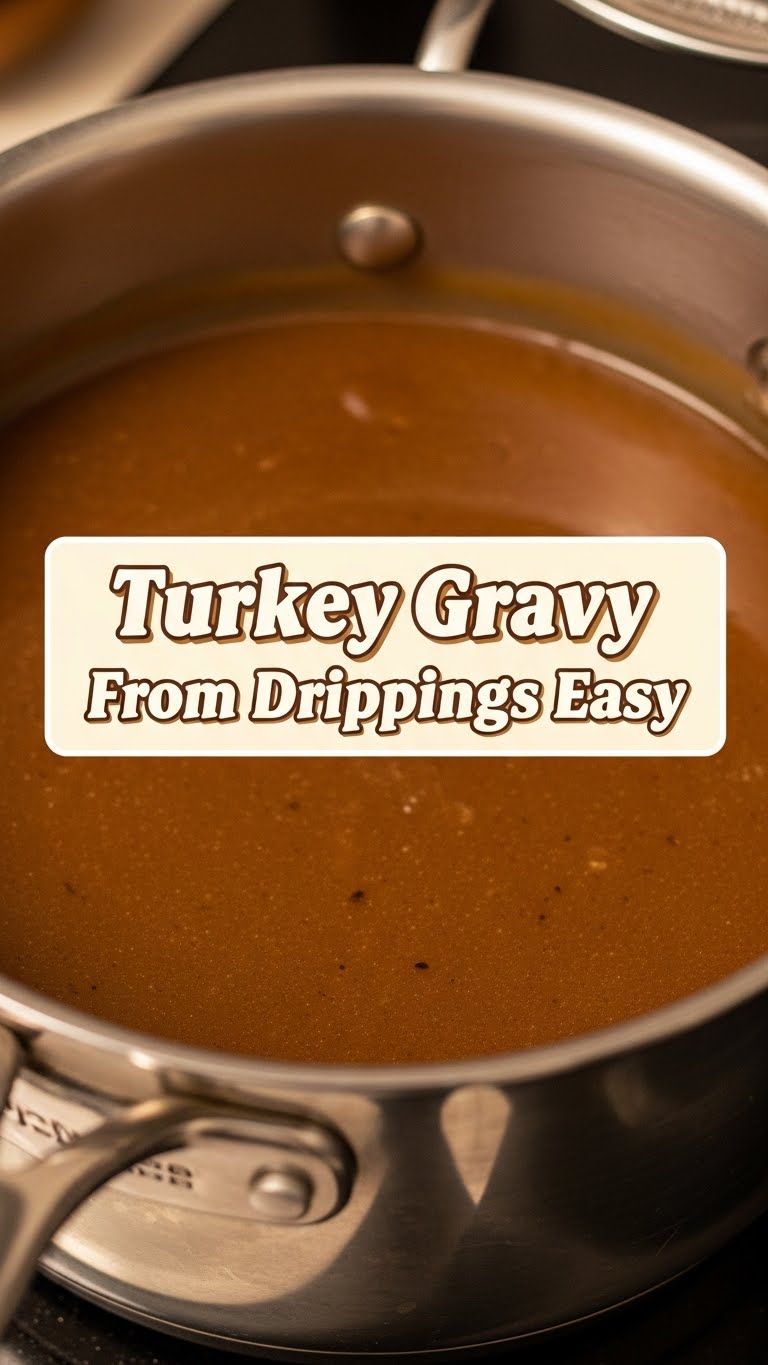
So, you’ve just wrangled a magnificent turkey, battled the oven, and now you’re staring at those glorious pan drippings, wondering, “What magic can I weave with *these*?” Or maybe you’re thinking, “Is making gravy from scratch actually a thing, or just a myth told by grandmas?” Fear not, my friend! We’re about to dive into the surprisingly easy, utterly delicious, and ridiculously satisfying art of turkey gravy from drippings. And trust me, it’s so good, you’ll want to bathe in it. (Don’t actually do that. Please.)
Why This Recipe is Awesome
Let’s be real, nobody wants bland, watery gravy. It’s an insult to the turkey! This recipe? It’s your secret weapon against culinary disappointment. It’s so awesome because:
- It uses the literal essence of your turkey, meaning maximum flavor with minimal effort. Think of it as liquid gold, but tastier.
- It’s ridiculously easy. Seriously, if you can whisk and not burn water, you can make this. Even I, a person who once accidentally set off a smoke alarm making toast, can nail this.
- It tastes 100 times better than anything from a packet or jar. Your guests (and more importantly, your taste buds) will thank you. Maybe even give you a medal.
- It makes you look like a kitchen wizard. You just pulled off a whole turkey AND homemade gravy? Bow down, mortals!
Ingredients You’ll Need
Gather ’round, my fellow kitchen adventurers! Here’s what you’ll need for gravy glory. Spoiler alert: not much!
- Turkey Drippings: Straight from the roasting pan. This is the star of the show, the Beyoncé of your gravy. Don’t throw them out!
- All-Purpose Flour: About 1/4 to 1/3 cup, depending on how much fat you have. This is our trusty thickening agent, helping us achieve that silky texture.
- Turkey or Chicken Broth/Stock: Around 2-3 cups. If you don’t have homemade, store-bought low-sodium works just fine. Think of it as giving your gravy a little hydration boost.
- Salt and Freshly Ground Black Pepper: To taste. Because flavor, darling, flavor! Don’t be shy.
- Optional: A splash of cream or wine: For extra richness or a little zing, if you’re feeling fancy.
Step-by-Step Instructions
Alright, let’s get this gravy party started! Follow these super simple steps:
- Separate the Good Stuff: After your turkey is out of the pan, pour all those glorious drippings into a heat-proof measuring cup or a fat separator. Let it sit for a few minutes. The fat will rise to the top, like the cream of the crop (pun intended!). Skim off the fat and measure about 1/4 cup back into your roasting pan (or a saucepan if you’ve cleaned the roasting pan). Discard the rest of the fat, but keep the flavorful turkey juice underneath! That’s pure liquid gold.
- Make a Roux, You Genius: Place your roasting pan (or saucepan) over medium heat on the stovetop. Add the measured turkey fat. Once it’s shimmering, sprinkle in the flour. Whisk continuously for about 1-2 minutes until it forms a smooth paste and smells a little nutty. This magical paste is called a roux, and it’s going to make your gravy thick and dreamy. Don’t let it burn!
- Whisk in the Liquid Gold: Slowly, I repeat, SLOWLY, whisk in the reserved turkey juices from the bottom of your measuring cup. Once that’s incorporated, gradually whisk in the turkey or chicken broth, about half a cup at a time. Keep whisking to prevent lumps! This is where the magic really happens – it starts to transform.
- Simmer and Thicken: Bring the gravy to a gentle simmer, whisking occasionally. Let it cook for 5-10 minutes, or until it has thickened to your desired consistency. Remember, it will thicken a bit more as it cools. If it gets too thick, add a splash more broth. If it’s too thin, simmer a little longer, or whisk in a slurry of 1 tbsp flour/cornstarch mixed with 2 tbsp cold water.
- Season and Serve: Taste your gravy! This is crucial. Add salt and pepper to your liking. Don’t be afraid to season generously. Remember, you’re dealing with a lot of liquid, so it needs enough seasoning to shine. If using, stir in a splash of cream or wine now. Pour into a gravy boat and prepare for applause!
Common Mistakes to Avoid
Even the best chefs (read: us) make mistakes. Here are a few snafus to dodge:
- Lumpy Gravy Syndrome: This happens when you add liquid too quickly to your roux or don’t whisk enough. The fix? Slowly add liquid, whisk like your life depends on it, and if all else fails, a quick whiz with an immersion blender or a pass through a fine-mesh sieve will rescue it.
- Too Salty (or Not Salty Enough): Gravy needs seasoning! But taste as you go. Remember you can always add more salt, but you can’t take it away. If you over-salt, a tiny bit of sugar or a raw potato slice simmered for a few minutes can sometimes help.
- Not Skimming Enough Fat: While fat equals flavor, too much will make your gravy greasy. Aim for just enough to make your roux.
- Forgetting to Deglaze: Before you even pour out those drippings, scrape all the delicious browned bits from the bottom of the pan while it’s still warm (using a bit of broth or wine helps). That’s where a ton of flavor lives!
Alternatives & Substitutions
Life’s too short for rigid rules, especially in the kitchen! Here are some ways to shake things up:
- Thickeners: Not a fan of flour? You can use cornstarch! Make a slurry (equal parts cornstarch and cold water), and whisk it into simmering gravy until thickened. It makes a super shiny gravy, which some people adore.
- Broth Boosters: No turkey drippings? (Gasp!) Or not enough? Use all chicken or vegetable broth. For extra depth, you can sauté some chopped onions and carrots in butter before adding flour for a richer base.
- Herb Power: Feel free to toss in a sprig of fresh thyme, rosemary, or a bay leaf while the gravy simmers. Just remember to fish them out before serving!
- Dairy Free? Absolutely! Just skip any optional cream. The gravy will still be divine.
FAQ (Frequently Asked Questions)
Got questions? I’ve got answers! (Mostly.)
- “My gravy is lumpy! What did I do wrong, and can I fix it?” Oh, honey, we’ve all been there! You probably added liquid too fast or didn’t whisk enough. No worries! Pour it through a fine-mesh sieve or give it a quick buzz with an immersion blender. Problem solved, gravy saved!
- “Can I make this ahead of time?” You sure can! Make it up to 2-3 days in advance. Just store it in an airtight container in the fridge. When reheating, you might need to add a splash of broth or water to thin it out if it’s too thick.
- “How do I know when it’s thick enough?” Dip a spoon in it. If the gravy coats the back of the spoon and you can run your finger across it leaving a clear line, you’re golden! Remember it will thicken a little more as it cools.
- “Can I freeze leftover gravy?” You betcha! Gravy freezes beautifully. Store it in freezer-safe containers or bags for up to 3 months. Thaw in the fridge and reheat gently on the stovetop.
- “What if my drippings aren’t enough for the fat?” No biggie! Supplement with a little butter or neutral oil. We’re not picky; we just need something to make that roux work its magic.
- “Can I use store-bought stock instead of homemade turkey broth?” Absolutely! It’s less ideal than homemade, IMO, but totally acceptable. Just make sure it’s low-sodium so you can control the seasoning yourself.
Final Thoughts
And there you have it, folks! The secret to truly spectacular turkey gravy, unlocked and simplified. You’ve transformed humble pan drippings into a velvety, flavor-packed masterpiece that will elevate any meal from “good” to “oh-my-gosh-can-I-have-more-please?!” So go ahead, pat yourself on the back, pour yourself a celebratory beverage, and bask in the glory of your culinary prowess. Now go impress someone—or yourself—with your new gravy-making skills. You’ve earned it!