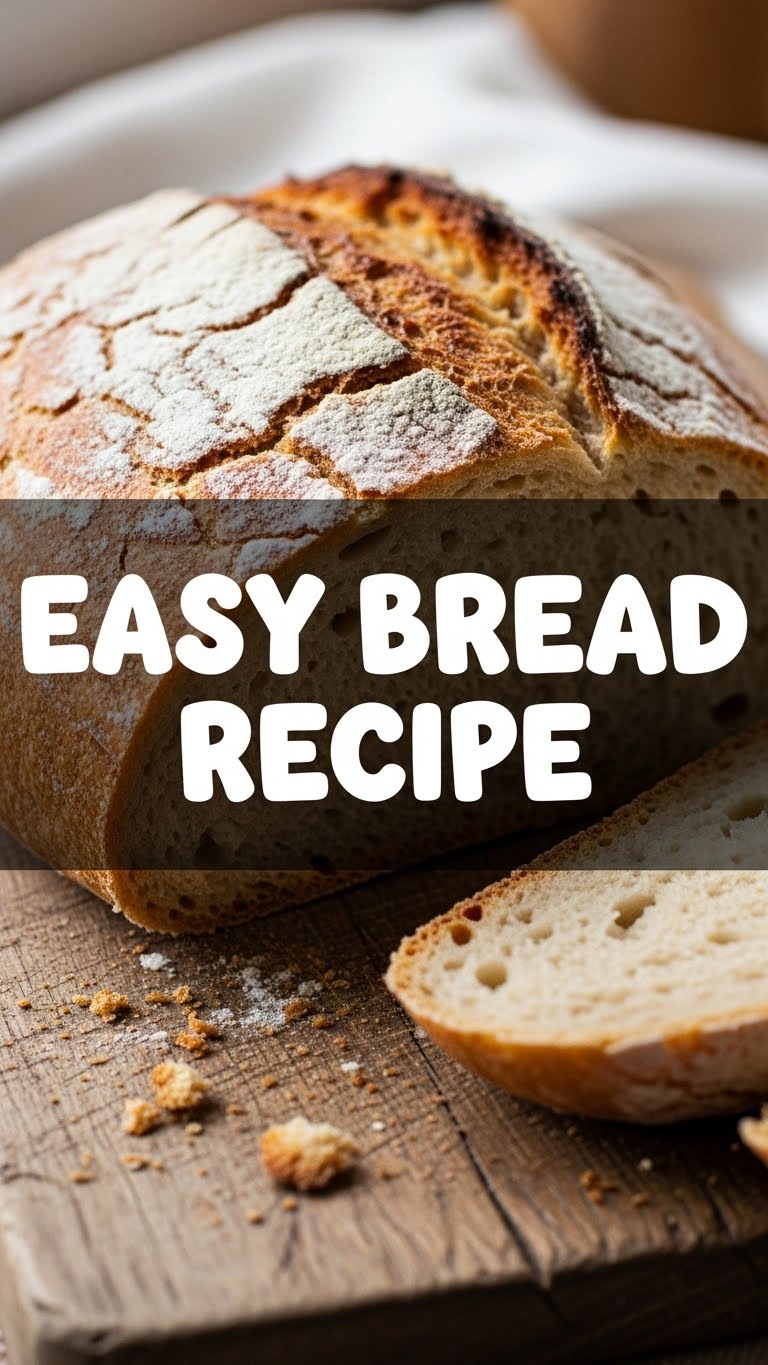
So, you’ve been eyeing those fancy artisan loaves at the bakery, dreaming of that warm, crusty goodness, but the thought of baking bread yourself feels like trying to solve a Rubik’s Cube blindfolded, right? Chill out! We’re about to tackle homemade bread that’s so ridiculously simple, you’ll wonder why you ever bought a loaf again. Get ready to impress your taste buds (and maybe a few friends, if you’re feeling generous).
Why This Recipe is Awesome
Let’s be real, most bread recipes look like they require a science degree and the patience of a saint. This one? Nope. This isn’t your grandma’s 12-hour sourdough (bless her heart, though). This is the “I want warm bread, and I want it relatively soon, with minimal effort” kind of bread. It’s practically idiot-proof. I mean, if *I* can make it without setting off the smoke detector, you totally can. Plus, your house will smell like a dream, and that alone is worth the minuscule effort, IMO.
Ingredients You’ll Need
Gather ’round, my future bread masters! You probably have most of this stuff lurking in your pantry already. No fancy-pants equipment needed, just a bowl and an oven. Win!
- All-Purpose Flour: About 3 cups. The backbone of our bread-y dreams. Don’t overthink it, basic stuff works.
- Warm Water: 1 ½ cups. Not hot enough to kill your yeast, not cold enough to make it grumpy. Think lukewarm bathwater.
- Active Dry Yeast: 2 ¼ teaspoons (one packet). This is our magic fairy dust that makes the bread all fluffy. Make sure it’s not expired, unless you enjoy dense, sad bricks.
- Salt: 1 ½ teaspoons. Flavor, baby! Don’t skip it unless you want bread that tastes like… well, nothing.
- A tiny bit of sugar (optional): 1 teaspoon. It’s like a little snack for the yeast to get it going, but not strictly necessary if you’re anti-sugar.
- Olive Oil (for greasing): Just a drizzle to keep things from sticking.
Step-by-Step Instructions
Alright, let’s get down to business. Follow these steps, and you’ll be swimming in bread in no time. Promise!
- Activate the Yeast: In a large bowl, whisk together your warm water and sugar (if using). Sprinkle the yeast over the top. Let it sit for about 5-10 minutes. It should get bubbly and foamy – that means it’s alive and ready to party! If it doesn’t foam, your yeast might be dead, or your water was too hot/cold. Start over, no shame.
- Mix ‘er Up: Add the flour and salt to your foamy yeast mixture. Grab a sturdy spoon or a rubber spatula and mix until just combined. You’re aiming for a shaggy, sticky dough. Don’t overmix! We’re not trying to develop gluten like crazy here; we want easy-peasy.
- First Rise (The Chill-Out Phase): Lightly oil another large bowl (or just clean out the one you used). Scrape your dough into the oiled bowl, then flip it once to coat with oil. Cover the bowl with plastic wrap or a clean kitchen towel. Let it rise in a warm spot for about 1.5 to 2 hours, or until it’s roughly doubled in size. Patience, young padawan.
- Preheat and Prep: About 30 minutes before your dough is done rising, preheat your oven to 450°F (230°C). If you have a Dutch oven or an oven-safe pot with a lid, put that in the oven to preheat too. This is the secret to a super crusty crust! If not, a baking sheet works fine.
- Shape and Bake: Once risen, gently punch down the dough to release some air. On a lightly floured surface, quickly shape it into a round loaf. Try not to handle it too much. Carefully (seriously, it’s hot!) remove the preheated Dutch oven. Plop your dough into it, score the top with a sharp knife (just for looks, if you want), cover, and bake for 30 minutes.
- Final Bake: Remove the lid from your Dutch oven and continue baking for another 10-15 minutes, or until the crust is golden brown and sounds hollow when tapped.
- Cool Down: Transfer your beautiful loaf to a wire rack to cool completely before slicing. This is the hardest part – resisting the urge to tear into it immediately. But trust me, it’s worth the wait for the texture to set properly!
Common Mistakes to Avoid
We’ve all been there, staring at a culinary disaster. Here’s how to steer clear of common bread-making blunders:
- Skipping the Yeast Activation Test: Thinking your yeast is alive when it’s actually DOA. **Always check for foam!** Otherwise, you’re just baking a very sad, dense disc.
- Water Temperature Woes: Too hot = dead yeast. Too cold = sleepy yeast that won’t wake up. Aim for 105-115°F (40-46°C) or just warm to the touch.
- Impatience with Rising: “It looks kinda big, good enough!” Nope. Let it double in size. The rise is crucial for that airy texture. If you rush it, your bread will be dense.
- Not Preheating the Oven (or Dutch Oven) Enough: Rookie mistake! A hot oven gives you a great initial “oven spring” and a killer crust. Don’t cheat on the preheat time.
- Slicing It Hot: I know, I know, the smell is intoxicating. But slicing a hot loaf traps steam and makes it gummy. Let it cool!
Alternatives & Substitutions
Feeling adventurous or just realized you’re missing an ingredient? No stress, we can totally tweak this bad boy.
- Flour Power: You can totally play around with different flours. Want to add some whole wheat? Substitute up to 1 cup of all-purpose flour with whole wheat flour. Just know it might make the bread a little denser. Don’t swap it all out for your first try, though.
- Yeast Variants: If you only have instant yeast, you can use the same amount and just mix it directly with the flour and salt, then add the water. No need to activate it first! But active dry is what we usually have on hand.
- Add-Ins Galore: Feeling fancy? Stir in some dried herbs (rosemary, thyme), garlic powder, or even some shredded cheese during the mixing stage for a flavored loaf. Olives or sun-dried tomatoes? Oh, behave!
- No Dutch Oven? No Problem: A heavy baking sheet will work just fine. Just know your crust might not be *quite* as crackly. You can also put a pan of hot water on the bottom rack of your oven to create steam.
FAQ (Frequently Asked Questions)
Got questions? I’ve got (casual) answers!
- Can I use cold water if I don’t have warm? Well, technically yes, but why hurt your yeast like that? It’ll take way longer to activate and rise, if at all. Warm water is yeast’s happy place!
- My dough isn’t rising, what gives? Oh, the agony! Most likely culprits: your yeast is expired/dead, or your water was too hot or too cold. Also, make sure your “warm spot” isn’t actually a cold, drafty spot.
- How do I store this awesome bread? Once completely cool, store it at room temperature in an airtight container or a bread bag. It’ll stay fresh for 3-4 days. You can also slice and freeze it for longer storage!
- Can I make a smaller or larger loaf? Absolutely! Just halve or double the recipe ingredients. Just be aware that baking times might need slight adjustment.
- Do I *have* to score the top? Nah, not really. It just looks pretty and can help control where the crust cracks. Purely aesthetic for this easy recipe.
Final Thoughts
And there you have it! Your very own, surprisingly easy, homemade bread. Take a moment to bask in the glory of your culinary achievement. Seriously, that’s a skill that never goes out of style. Now go impress someone—or yourself—with your new bread-baking prowess. You’ve earned it!