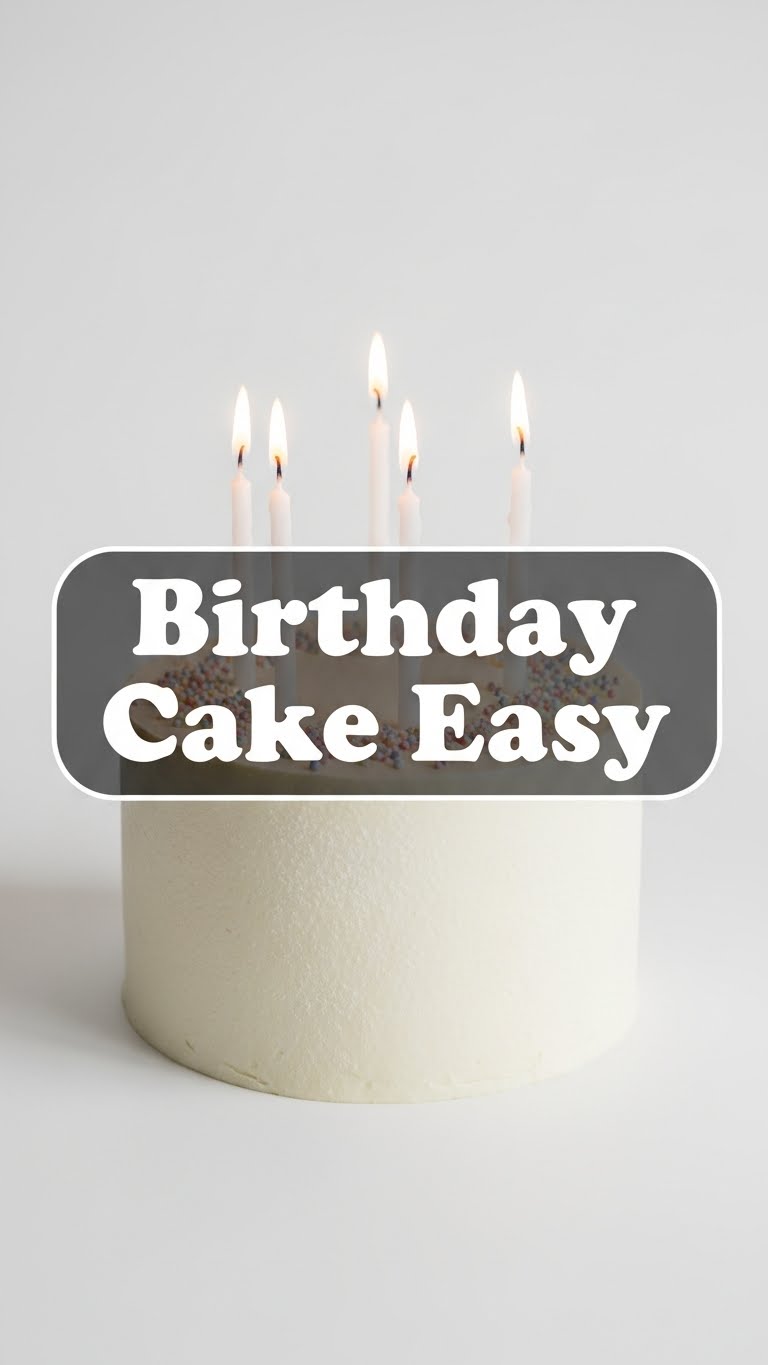
Okay, so someone’s birthday is coming up, and you remembered… like, yesterday. Or maybe *your* birthday is coming up, and you just want cake, no fuss, no drama, just pure, unadulterated deliciousness without the culinary olympics. You’re in the right place, my friend. We’re about to whip up a birthday cake that’s so easy, you’ll wonder why you ever bought those dry, overpriced bakery abominations.
Why This Recipe is Awesome
Because it’s easier than trying to assemble IKEA furniture, and way more delicious. Seriously, if you can stir, you can make this cake. It’s idiot-proof – trust me, I’ve tested its limits. We’re talking simple ingredients, minimal fuss, and maximum flavor. Plus, nothing screams “I love you (and remembered your birthday last minute)” quite like a homemade cake. It’s moist, it’s fluffy, and it’s basically a hug in cake form. Also, it tastes 100% better than anything you’ll get from a box mix, FYI. Your tastebuds will thank you, and your ego will get a nice little boost.
Ingredients You’ll Need
Get ready for a grocery list that won’t make your eyes water. Here’s what you’ll need to conjure this magic:
- All-Purpose Flour: 1 ¾ cups. The foundation of our cakey dreams.
- Granulated Sugar: 1 ½ cups. For sweetness, obvs. It’s a birthday cake, not a health food.
- Baking Powder: 1 ½ teaspoons. Our little leavening fairy, making things light and fluffy.
- Salt: ½ teaspoon. Just a pinch to make everything else pop.
- Unsalted Butter: ½ cup (1 stick), softened. Room temperature, please! This is key for a smooth batter. Don’t skip this step by microwaving it into a puddle.
- Large Eggs: 2, also at room temperature. Happy eggs make happy cakes.
- Whole Milk: 1 cup, room temperature. Or 2%, if that’s all you have. Don’t tell anyone, it’ll still be great.
- Vanilla Extract: 2 teaspoons. The soul of almost any good cake. Use good stuff!
- For the Frosting (Optional, but highly recommended unless you like naked cake):
- Unsalted Butter: ½ cup (1 stick), softened.
- Powdered Sugar: 2 cups. The finer, the better.
- Vanilla Extract: 1 teaspoon.
- Milk (or cream): 1-2 tablespoons. Just to get that perfect spreadable consistency.
- Pinch of salt: Balances the sweetness.
Step-by-Step Instructions
Deep breaths, you got this. Follow these simple steps and bask in your baking glory!
- Preheat & Prep: Preheat your oven to 350°F (175°C). Seriously, do it now. Grease and flour two 8-inch round cake pans. Or line them with parchment paper if you’re feeling fancy (and want easy release).
- Whisk the Dry Stuff: In a large bowl, whisk together the flour, sugar, baking powder, and salt. Get them all friendly with each other.
- Cream the Butter: In a separate, medium bowl (or stand mixer if you have one and want to show off), beat the softened butter until it’s light and fluffy. This usually takes about 2-3 minutes.
- Add Eggs & Vanilla: Beat in the eggs one at a time, making sure each is fully incorporated before adding the next. Scrape down the sides of the bowl. Then, stir in the vanilla extract.
- Alternate Wet & Dry: Now for the magic! Gradually add the dry ingredients to the wet ingredients, alternating with the milk. Start and end with the dry ingredients. Mix on low speed, just until everything is combined. Don’t overmix! A few lumps are fine; tough cake is not.
- Pour & Bake: Divide the batter evenly between your two prepared cake pans. Pop them in the preheated oven and bake for 25-30 minutes, or until a wooden skewer inserted into the center comes out clean.
- Cool Down: Let the cakes cool in their pans for about 10 minutes before carefully inverting them onto a wire rack to cool completely. This part is crucial! Frosting a warm cake is a one-way ticket to a melted mess.
- Frosting Time (Optional but Recommended!): While the cakes cool, make your frosting. Beat the softened butter until creamy. Gradually add the powdered sugar, then the vanilla, salt, and milk (a tablespoon at a time) until you have a smooth, spreadable frosting.
- Assemble & Decorate: Once your cakes are completely cool, spread frosting on top of one layer, place the second layer on top, and then frost the top and sides of the whole cake. Add sprinkles if you’re feeling extra festive!
Common Mistakes to Avoid
Nobody’s perfect, but we can avoid some common cake catastrophes. Learn from my past (many) errors:
- Not Preheating the Oven: Rookie mistake. Your cake needs a hot oven from the get-go to rise properly.
- Cold Ingredients: Using cold butter, eggs, or milk will result in a lumpy batter and a denser, less fluffy cake. Patience, my friend, patience.
- Overmixing: The archenemy of tender cake. Overmixing develops the gluten in the flour, leading to a tough, chewy cake. Mix just until combined.
- Opening the Oven Door Too Early: Resist the urge! Opening the oven door repeatedly lets cold air in and can cause your cake to sink in the middle. Wait until at least ¾ of the way through baking time.
- Frosting a Warm Cake: Unless you’re going for a deconstructed cake soup, don’t do it. Seriously, wait until the cakes are completely cool.
Alternatives & Substitutions
Feeling a little rebellious? Want to make it your own? Here are some ideas:
- Dairy-Free? Swap whole milk for your favorite non-dairy milk (almond, oat, soy work great!) and use a good quality vegan butter alternative. The texture might be slightly different, but still delicious!
- Gluten-Free? You can try a 1:1 gluten-free baking flour blend. Make sure it contains xanthan gum for structure.
- Flavor Frenzy: Instead of vanilla, try almond extract for a marzipan-y vibe, or a lemon/orange zest for a citrusy kick. You could even add a few tablespoons of cocoa powder for a subtle chocolate cake.
- Frosting Fun: Don’t like buttercream? Try a cream cheese frosting, a simple chocolate ganache, or even just whipped cream for a lighter touch. Or skip the frosting entirely and dust with powdered sugar – I won’t judge.
FAQ (Frequently Asked Questions)
Got questions? I probably asked them too at some point. Here are some quick answers:
- Can I use margarine instead of butter? Well, technically yes, but why hurt your soul like that? Butter tastes better, gives a richer flavor, and has a better texture. If you *must*, use stick margarine, not the tub kind.
- My cake sank in the middle! What happened? Likely culprits: oven door opened too soon, oven temp was too low, or you overmixed. Or maybe it’s just really humble.
- How long does this cake last? Covered tightly at room temperature, it’s usually good for 3-4 days. In the fridge, maybe a day or two longer, but it can dry out a bit.
- Can I make cupcakes with this recipe? Absolutely! Just fill cupcake liners about two-thirds full and bake for 18-22 minutes. Keep an eye on them!
- What if I only have one cake pan? You can totally bake one layer at a time. Just make sure to keep the remaining batter at room temperature while the first one bakes.
- Do I really need room temperature ingredients? Yes, yes, a thousand times yes! It ensures your batter emulsifies properly, leading to a smoother, more even crumb. Cold ingredients don’t mix as well.
Final Thoughts
See? That wasn’t so scary, was it? You just made a delicious, homemade birthday cake that’s sure to impress everyone (especially you!). Go ahead, take a bow. You deserve a slice (or two). Now go impress someone—or yourself—with your new culinary skills. You’ve earned it!