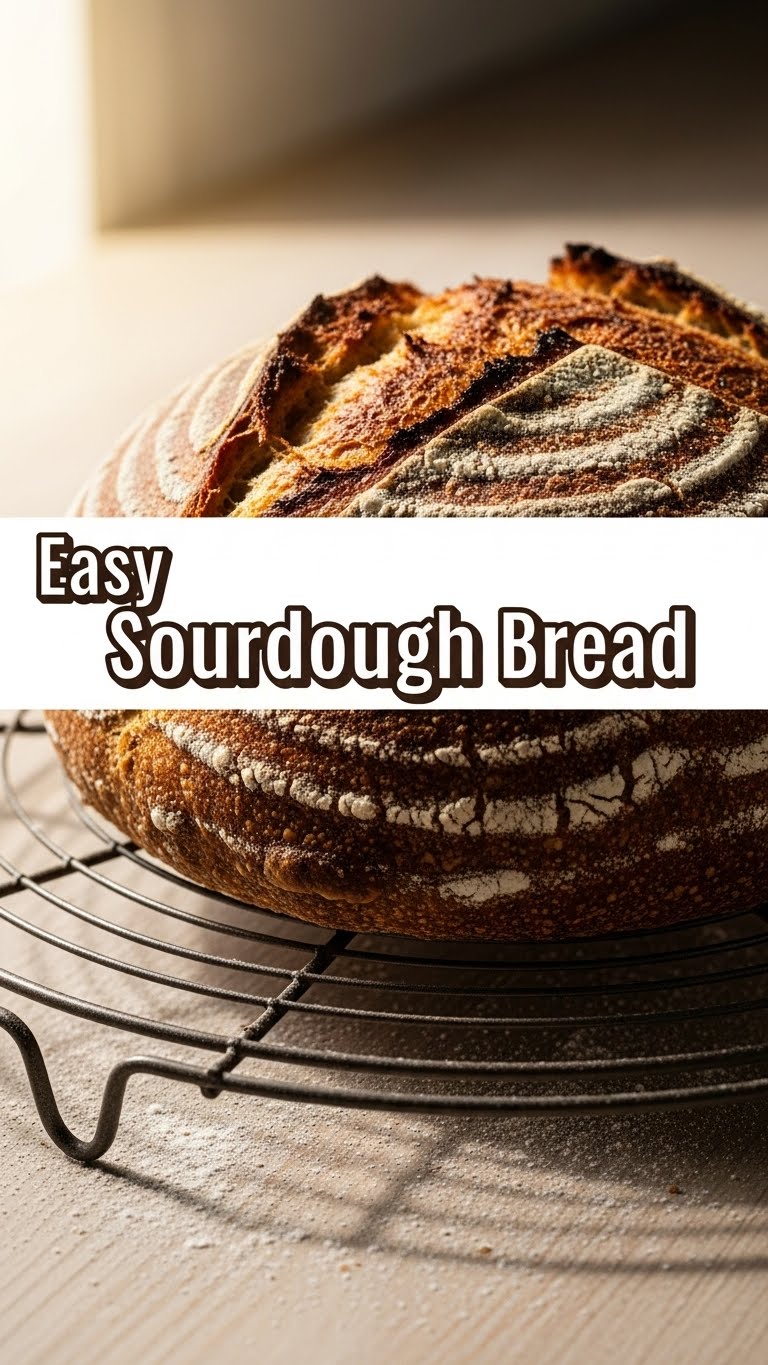
So, you’ve heard the whispers, seen the glorious, crusty loaves on Instagram, and thought, “Sourdough? That’s, like, for people who own actual bakeries, right?” Nope! We’re about to bust that myth wide open and get you baking some seriously impressive bread without turning your kitchen into a science lab or your life into a full-time fermentation project. Consider this your cheat sheet to looking like a culinary wizard with minimal effort. 😉
Why This Recipe is Awesome
Okay, let’s be real. Sourdough sounds intimidating. All that starter feeding, proofing, folding… it’s enough to make you just buy a loaf at the store (no judgment, we’ve all been there). But this recipe? It’s basically a magic trick for the lazier among us. It’s **minimal hands-on time**, super forgiving (seriously, even I didn’t mess it up), and the results? A crispy crust, a chewy interior, and that distinct tangy flavor that screams “I know what I’m doing!” Plus, the best part is you can pretty much ignore it for long stretches. Hello, binge-watching your favorite show while bread bakes itself!
Ingredients You’ll Need
No obscure flours from the Himalayas here, just the basics. Well, mostly. You will need a sourdough starter, but hey, that’s like having a pet you can eat!
- **Active Sourdough Starter (100g):** Your bubbly, thriving little friend. If it’s not bubbly, feed it and wait. Patience, young padawan.
- **Water (350g):** Room temp is best. Straight from the tap is fine, unless your tap water tastes like a swimming pool.
- **Bread Flour (500g):** This stuff has higher protein, which means better gluten development and a chewier crumb. It’s worth getting.
- **Salt (10g):** Just regular table salt or fine sea salt. Don’t skimp, it makes a huge difference in flavor!
Step-by-Step Instructions
- **Mix It Up:** In a large bowl, combine your active sourdough starter and water. Stir until the starter is mostly dissolved. Then, add the bread flour and salt. Mix with your hands (it’s messy but fun!) or a sturdy spoon until there are no dry spots. It’ll be shaggy, don’t worry about it being perfectly smooth.
- **Rest & Relax (Autolyse):** Cover the bowl with a tea towel or plastic wrap. Let it sit on your counter for **30 minutes to 1 hour**. This is where the magic starts happening—the flour is hydrating, and gluten is developing.
- **Stretch & Fold Fun:** Now for the “active” part, which is still pretty chill. Every 30 minutes for the next 2 hours (that’s 4 rounds total), do a series of “stretch and folds.” Grab a section of dough, stretch it up, and fold it over onto itself. Rotate the bowl and repeat 3-4 times. **Wet hands help immensely!** After the last round, cover it up again.
- **Bulk Fermentation (The Long Sleep):** Let your dough chill on the counter for another 2-4 hours, or until it looks a bit puffy and jiggly. It should have increased in volume by about 20-30%. This is highly dependent on your kitchen temperature, so trust your gut.
- **Shape & Tuck In:** Gently tip the dough out onto a lightly floured surface. Shape it into a round or an oval. You want to create some tension on the surface. (YouTube “sourdough shaping” if you’re unsure—it’s easier than it sounds.) Place it seam-side up into a floured banneton basket (or a bowl lined with a floured tea towel).
- **The Cold Nap:** Cover your banneton and pop it in the fridge for anywhere from **8 to 18 hours**. This slow cold proof develops flavor and makes the dough easier to handle. Seriously, don’t skip this; it’s a game-changer.
- **Preheat Power-Up:** About an hour before you’re ready to bake, place your Dutch oven (with the lid on) into your oven. Preheat your oven to a scorching **450°F (230°C)**. It needs to get super hot!
- **Bake Off!** Carefully take the hot Dutch oven out. Gently flip your cold dough into it (score the top with a sharp knife or razor blade first for pretty patterns!). Put the lid back on and bake for **30 minutes**.
- **Crust Perfection:** Remove the lid and continue baking for another **15-20 minutes**, or until the crust is a gorgeous golden brown and sounds hollow when tapped.
- **Cool Down, Buttercup:** Resist the urge to slice it immediately! Let it cool on a wire rack for at least 1-2 hours. **This is crucial** for the crumb to set and the flavors to fully develop. Cutting it too early results in a gummy interior. You’ve come this far, be patient!
Common Mistakes to Avoid
- **Impatience, Thy Name is Sourdough Baker:** Trying to rush the bulk fermentation or, worse, slicing the bread fresh out of the oven. It’s like prematurely opening a Christmas present—you ruin the surprise (and the texture!).
- **Cold Oven Syndrome:** Thinking you don’t need to preheat your Dutch oven for a full hour. Rookies! A properly scorching hot environment is key for that epic oven spring.
- **Forgetting the Salt:** Can you imagine? A bland, flat loaf. The horror! Salt isn’t just for flavor; it also helps control fermentation and strengthens the dough.
- **Overworking the Dough:** Sourdough loves a gentle touch. Aggressive kneading is usually not needed here thanks to the long fermentation. Think gentle stretches and folds.
Alternatives & Substitutions
Feeling adventurous? Good! This recipe is pretty chill about variations:
- **Flour Power:** Want a chewier, more rustic loaf? Replace up to 100g of the bread flour with **whole wheat flour** or **rye flour**. Just remember these flours absorb more water, so your dough might feel a little stiffer.
- **Mix-Ins Mania:** After the final stretch and fold, you can gently fold in up to a cup of your favorite add-ins: toasted seeds (sesame, poppy, sunflower), olives, dried herbs, or even cheese (if you’re feeling extra decadent).
- **No Dutch Oven? No Problem!** You can use a pizza stone or a heavy baking sheet. Just make sure to create steam in your oven (e.g., placing a pan of hot water on the bottom rack) for the first 30 minutes of baking to help create that crust.
FAQ (Frequently Asked Questions)
- **My starter isn’t bubbly! Can I still use it?**
Nope! A sleepy starter makes sleepy bread. Feed your starter and wait until it’s super active and bubbly, usually 4-8 hours after feeding. It’s like sending an athlete to a marathon without breakfast.
- **How do I know if my dough is proofed enough?**
The “poke test” is your friend! Gently poke the dough with a wet finger. If it slowly springs back but leaves a slight indentation, it’s ready. If it springs back immediately, it needs more time. If it collapses, well, oops, you overproofed a little. (But still bake it, it’ll still taste good!)
- **My bread didn’t rise much. What gives?**
Could be a few things! A weak starter, underproofed dough (didn’t let it rise enough), or not preheating your Dutch oven enough. Also, sometimes it just happens, don’t sweat it. Keep baking, you’ll get the hang of it!
- **Can I skip the cold proof in the fridge?**
You *could*, but why hurt your soul like that? The cold proof develops so much flavor and makes the dough easier to handle. Skipping it means a faster bake but a less flavorful, potentially harder-to-score loaf. IMO, it’s worth the wait.
- **How do I store sourdough bread?**
On the counter, cut-side down, or in a paper bag for a day or two. For longer storage, slice it up and freeze it! You can just toast slices straight from the freezer. It’s a game-changer for busy mornings.
Final Thoughts
See? That wasn’t so scary, was it? You just made sourdough bread! From scratch! Your house probably smells amazing right now, and you’ve got bragging rights for days. This isn’t just bread; it’s a delicious, tangible testament to your newfound (or rediscovered) kitchen prowess. Now go impress someone—or yourself—with your new culinary skills. You’ve earned it!