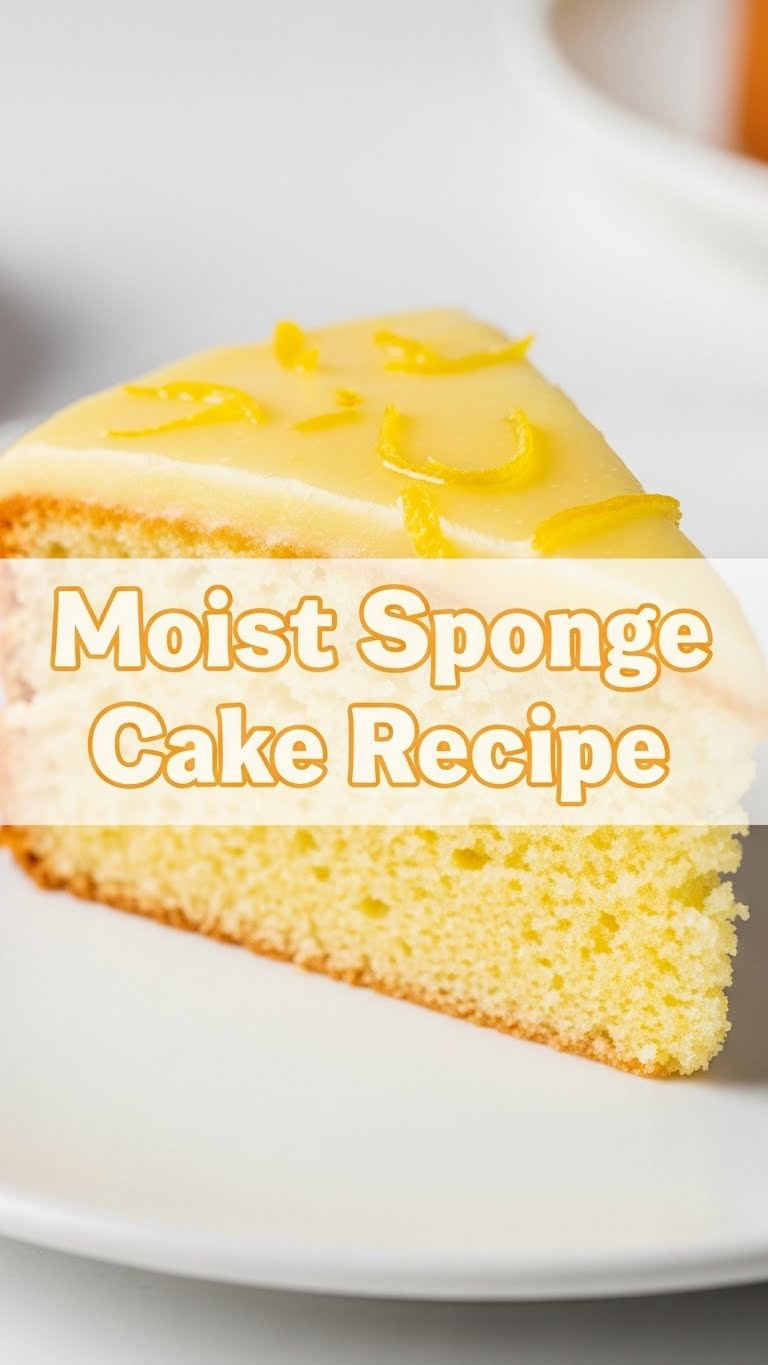
So you’re craving something tasty but too lazy to spend forever in the kitchen, huh? Same, friend, same. We’ve all been there: staring into the fridge, wishing a magical cake would just *appear*. Well, I can’t summon one, but I *can* give you the next best thing: a super easy, ridiculously moist lemon sponge cake recipe that’ll make you look like a baking wizard without, you know, actually needing a wand. Or even much effort. Let’s get zesty!
Why This Recipe is Awesome
Honestly? Because it’s practically idiot-proof. And coming from someone who once set off a smoke detector with toast, that’s high praise. This isn’t one of those fussy, delicate recipes that requires a culinary degree and the patience of a saint. Nope. This lemon sponge cake is moist, tangy, and fluffy – basically everything you want in a cake without the drama. It’s the kind of cake that whispers sweet nothings to your taste buds and doesn’t judge you for eating it straight off the cooling rack. Plus, it smells utterly divine while baking, which is a bonus point for tricking people into thinking you’re a domestic goddess. Win-win, IMO.
Ingredients You’ll Need
Gather your troops, folks! These are your humble heroes in the quest for cake domination:
- 175g (6 oz) Unsalted Butter: Softened, because cold butter is the enemy of smooth creaming. Let it chill on the counter for a bit.
- 175g (6 oz) Caster Sugar: The fine stuff. Granulated works too, but caster plays nicer.
- 3 Large Eggs: Room temperature, please! They emulsify better. Don’t ask me why, just trust me on this one.
- 175g (6 oz) Self-Raising Flour: Our trusty rising agent. If you only have plain, don’t panic! See the “Alternatives” section.
- 1 tsp Baking Powder: Just an extra little boost for maximum fluffiness. Because nobody wants a flat cake.
- Zest of 2 Large Lemons: The real MVP. Don’t skimp on this! That fragrant oil is where all the magic happens.
- 2 tbsp Lemon Juice: Freshly squeezed, obviously. Store-bought is fine in a pinch, but fresh is boss.
- 2-3 tbsp Milk: Any kind! Just a splash to loosen things up.
- For the Glaze (Optional, but highly recommended): A few tablespoons of icing sugar and a tiny bit more lemon juice. For that extra zing!
Step-by-Step Instructions
Alright, aprons on (or not, I’m not your boss), let’s bake!
- Preheat & Prep: First things first, turn your oven to 180°C (350°F / Gas Mark 4). Grease and flour (or line with baking parchment, my preferred lazy method) a 20cm (8-inch) round cake tin. Don’t skip this, unless you want to wrestle with your cake later.
- Cream It Up: In a large bowl, cream together the softened butter and caster sugar until it’s light, pale, and fluffy. This is where your arm workout comes in, or your stand mixer can do the heavy lifting. Don’t rush this step; it’s crucial for airiness!
- Egg-cellent Addition: Crack in your eggs, one at a time, beating well after each addition. If it looks a little curdled, don’t freak out! A tablespoon of flour often sorts it right out.
- Zest & Juice It: Stir in the lemon zest and lemon juice. Take a moment to inhale that glorious lemony aroma. Ahh, bliss!
- Fold in the Dry: Sift in the self-raising flour and baking powder. Gently fold it into the wet ingredients using a spatula. Don’t overmix! We’re aiming for just combined, not gluten development for days.
- Milk It: Add the milk, one tablespoon at a time, until the mixture is a nice, dropping consistency. It should fall off your spoon easily but not be watery.
- Bake Time!: Pour the batter into your prepared tin and smooth the top. Pop it into the preheated oven for 25-30 minutes. It’s done when it’s golden brown, springs back when lightly touched, and a skewer inserted into the centre comes out clean.
- Cool Down: Let the cake cool in the tin for 5-10 minutes, then carefully turn it out onto a wire rack to cool completely. Patience, my friend, patience.
- Glaze (If You’re Feeling Fancy): Once the cake is completely cool, mix your icing sugar with just a tiny bit of lemon juice until you have a thick, drizzly consistency. Drizzle it all over the top. Instant upgrade!
Common Mistakes to Avoid
Consider this your cheat sheet for not messing things up. You’re welcome.
- Not Preheating the Oven: Rookie mistake. Your cake needs that consistent heat from the get-go. Otherwise, it won’t rise properly and you’ll get a sad, dense cake.
- Using Cold Ingredients: Especially butter and eggs. They just don’t play nice when they’re chilly, leading to a lumpy, less-fluffy batter. Plan ahead, even if it’s just 30 minutes!
- Overmixing the Batter: I repeat: don’t overmix the batter! Once you add the flour, fold gently until just combined. Overmixing develops the gluten, making your cake tough instead of tender. We want tender, folks.
- Opening the Oven Door Too Early: Resist the urge! Opening the oven door lets out heat and can cause your cake to sink in the middle. Wait until at least 20 minutes have passed before peeking.
- Not Greasing Your Tin Properly: Unless you love a challenge (or want to serve your cake in pieces), grease and flour/line that tin. Your future self will thank you.
Alternatives & Substitutions
Life happens, and sometimes you don’t have exactly what the recipe asks for. No sweat!
- No Self-Raising Flour? No problem! For every 175g (6oz) of plain (all-purpose) flour, whisk in 1.5 teaspoons of baking powder and a pinch of salt. Boom, self-raising flour!
- Lime Instead of Lemon? Absolutely! Swap out the lemon zest and juice for lime. You’ll get a slightly different, but equally delicious, zesty kick. Tropical vibes, anyone?
- Want More Moisture (Because Why Not)? Replace 1-2 tablespoons of milk with Greek yogurt or sour cream. It adds an extra layer of richness and tang. Seriously good!
- No Unsalted Butter? Salted butter is fine in a pinch; just omit any extra salt you might be adding (which we aren’t, so you’re good!). Just be aware the flavour might be ever-so-slightly different.
- Gluten-Free Option: You can totally use a good quality gluten-free self-raising flour blend. The texture might be a *tad* different, but it’ll still be delicious.
FAQ (Frequently Asked Questions)
- “Can I use margarine instead of butter?” Well, technically yes, but why hurt your soul like that? Butter just tastes better, period. If you must, a block margarine will give a better result than a spread, but stick to butter for the best flavour and texture.
- “My cake is dry! What went wrong?” Oh no! Most likely, you either overbaked it or your oven runs hot. Get an oven thermometer if you don’t have one! Also, ensure you’re not overmixing, as that can lead to a tougher crumb.
- “How long does this cake keep?” In an airtight container, it’ll stay fresh and moist for about 3-4 days at room temperature. But let’s be real, it probably won’t last that long.
- “Can I add more lemon zest to the batter?” My friend, you absolutely *should*! The more zest, the more intense the lemon flavour. Don’t be shy!
- “Can I freeze this cake?” You bet! Let it cool completely, then wrap it tightly in cling film and then foil. It’ll keep in the freezer for up to 3 months. Thaw at room temperature. Pro tip: freeze it *before* glazing.
- “What if I don’t have a specific size cake tin?” You can adjust! For a slightly smaller or larger tin, just keep an eye on the baking time. A smaller tin might need longer, a larger one, less. The skewer test is your best friend here.
Final Thoughts
So there you have it! A moist, zesty lemon sponge cake that’s bound to be a crowd-pleaser (or a personal treat – no judgment here). This recipe is proof that delicious baking doesn’t have to be complicated or stressful. Now go impress someone—or yourself—with your new culinary skills. You’ve earned it!
Happy baking, you magnificent creature!