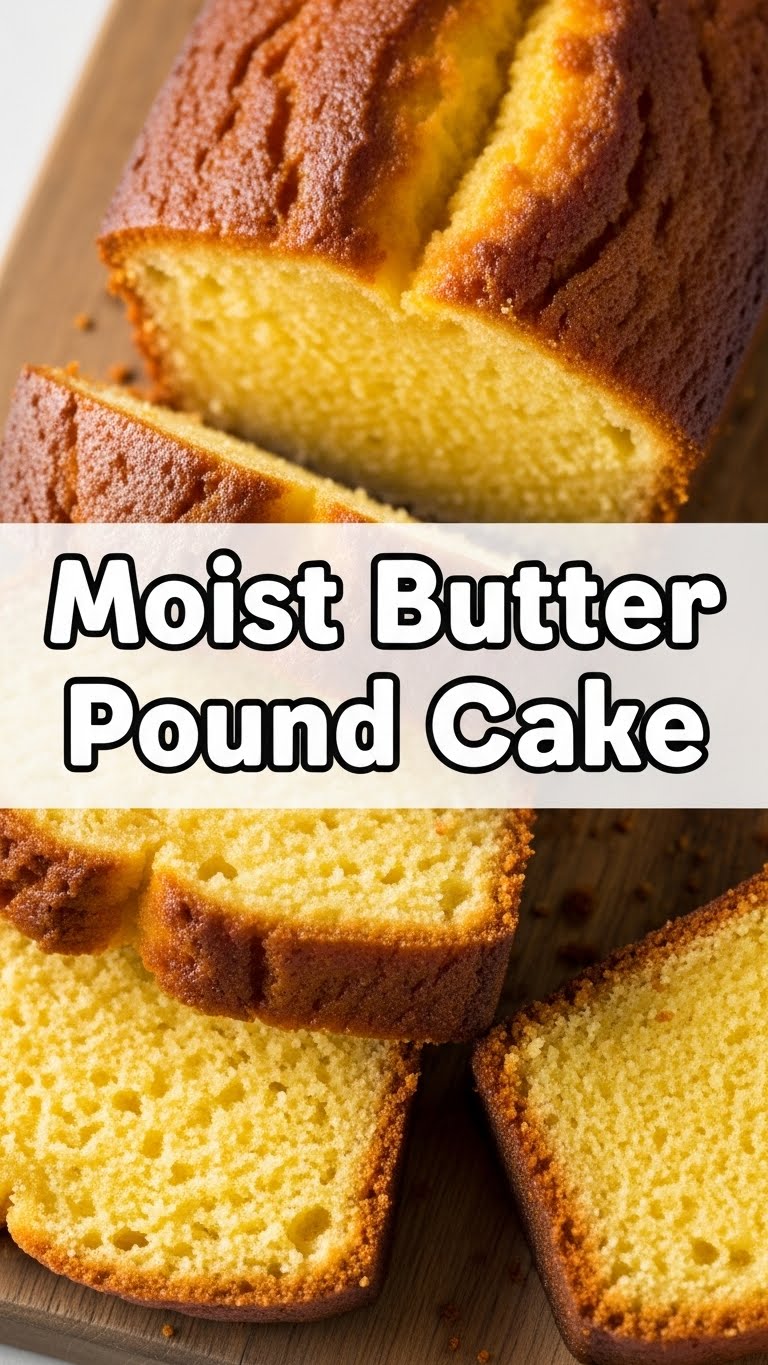
Okay, so you’ve got that craving. That deep, existential need for something rich, buttery, and utterly comforting? And you want it to be *moist*? Not that dry, dusty stuff your auntie sometimes brings to potlucks? (No offense, Auntie, but we’ve all been there.) Well, my friend, you’ve come to the right place. We’re making a Moist Butter Pound Cake that’s so good, you might just marry it. Or at least have a very serious, long-term relationship with it.
Why This Recipe is Awesome
This isn’t just *any* pound cake recipe. This is THE pound cake recipe that will make people ask if you secretly went to pastry school (you didn’t, don’t worry, your secret’s safe with me). It’s ridiculously simple, uses pantry staples, and the result? A slice of pure, unadulterated buttery heaven. Plus, it’s practically idiot-proof. If I can nail it after a long day of adulting, you definitely can. Trust me, your taste buds will thank you, and your future self will high-five your past self for making this happen.
Ingredients You’ll Need
- Butter: The star of the show! We’re talking 1 cup (2 sticks) of unsalted butter, softened. And no, don’t even *think* about using margarine unless you want a sad, flavorless imposter cake. We demand butter here!
- Granulated Sugar: 1 ½ cups. Because sweetness is not a crime, my friend.
- Large Eggs: 4 of ’em. Room temperature is key, so pull them out of the fridge a bit before you start. They’ll mix better, promise!
- All-Purpose Flour: 2 cups. Sifted, if you’re feeling fancy, but honestly, a good whisk through it will probably do just fine.
- Baking Powder: 1 teaspoon. Our little lift-off assistant.
- Salt: ½ teaspoon. Just a pinch to make all those sweet flavors sing!
- Whole Milk: ½ cup, also at room temp. This is our secret weapon for *moistness*, because nobody likes a dry cake. Nobody.
- Vanilla Extract: 2 teaspoons. Go for the good stuff if you can; it really makes a difference. Or, you know, whatever’s in your pantry. No judgment.
Step-by-Step Instructions
- Preheat & Prep: First things first, get that oven nice and toasty to 325°F (160°C). Then, butter and flour a 9×5 inch loaf pan. Or use non-stick spray, I won’t tell. This step is crucial—no one wants a stuck cake.
- Cream that Butter & Sugar: In a large bowl, or your stand mixer (if you’re living the dream), beat the softened butter until it’s light and fluffy. Now, gradually add the granulated sugar, beating until the mixture is pale and airy, about 3-5 minutes. It should look like a sweet, fluffy cloud.
- Egg-cellent Addition: Add the eggs one at a time, beating well after each addition. Make sure each egg is fully incorporated before adding the next. Scrape down the sides of the bowl as needed.
- Dry Meets Wet: In a separate bowl, whisk together the flour, baking powder, and salt. Then, with the mixer on low speed, gradually add the dry ingredients to the wet mixture, alternating with the milk. Start and end with the flour mixture. Don’t overmix! Just combine until *just* blended. Overmixing makes for tough cakes, and we’re aiming for tender love and care.
- Vanilla Vibes: Stir in the vanilla extract. Give it a good swirl. Mmm, smells good already, right?
- Into the Pan: Pour the batter into your prepared loaf pan. Smooth the top with a spatula. Give the pan a gentle tap on the counter to release any air bubbles.
- Bake Away! Pop that beauty into your preheated oven. Bake for about 60-70 minutes, or until a wooden skewer inserted into the center comes out clean. If the top starts to brown too quickly, you can loosely tent it with foil.
- Cool Down: Once baked, let the cake cool in the pan for about 10-15 minutes. Then, carefully invert it onto a wire rack to cool completely. Patience, young grasshopper! Cooling completely is vital before slicing for the best texture.
Common Mistakes to Avoid
- Cold Ingredients: Trying to cream cold butter or incorporate cold eggs? Rookie mistake! Room temperature ingredients are your best friends for a smooth, emulsified batter. Science, baby!
- Overmixing: Once the flour hits the wet ingredients, treat it with respect. Overmixing develops gluten, leading to a tough, dry cake. Nobody wants that. Mix until *just* combined.
- Not Greasing the Pan Properly: Seriously, do you want your beautiful cake to cling for dear life to the pan? No. Butter AND flour, or a good spray. Every time.
- Impatience: Slicing into a warm cake might seem like a good idea (the smell is intoxicating, I get it), but it’s often crumbly and doesn’t hold its shape as well. Let it cool! It’s worth the wait, I promise.
- Guessing on Oven Temperature: Your oven might lie to you. Consider an oven thermometer if you bake often. A perfectly calibrated oven means perfectly baked cakes.
Alternatives & Substitutions
- Flavor Boost: Want to jazz it up? Add some lemon zest or orange zest to the batter for a bright, citrusy kick. So good! You could also add a splash of almond extract with the vanilla.
- Dairy-Free: For a dairy-free version, use plant-based butter (like Earth Balance sticks) and a neutral-flavored plant milk (almond or oat milk work well). Just make sure they’re at room temp too!
- Gluten-Free Flour: You *can* use a 1:1 gluten-free baking flour blend, but be aware that the texture might be slightly different. GF flours can sometimes absorb more liquid, so keep an eye on your batter consistency. IMO, the classic version is king, but you do you!
- Different Pan: No loaf pan? No problem! You can use an 8-inch square pan, just adjust the baking time (it’ll likely be shorter, so start checking earlier).
FAQ (Frequently Asked Questions)
- “My cake is dry! What went wrong?” Oof, sorry to hear that! Chances are, you either overbaked it or overmixed the batter. Or maybe your ingredients weren’t at room temp. Next time, try an oven thermometer and mix *just* until combined.
- “Can I make this ahead of time?” Absolutely! Pound cake actually gets *better* the next day as the flavors meld. Store it tightly wrapped at room temperature for up to 3-4 days, or freeze slices for longer.
- “What’s the deal with room temperature ingredients?” Ah, the age-old question! Basically, room temp butter creams better with sugar, creating air pockets for a lighter texture. Room temp eggs and milk emulsify (mix smoothly) with the butter and sugar, creating a uniform batter. It’s about chemistry, my friend!
- “Why is it called ‘pound cake’?” Fun fact! Traditionally, pound cakes called for a pound of butter, a pound of sugar, a pound of eggs, and a pound of flour. Our recipe is a modern take, but it keeps that rich, dense, buttery goodness we all love.
- “Can I add chocolate chips?” Heck yes, you can! Fold in about 1 cup of your favorite chocolate chips at the very end with the vanilla extract. Chocolate makes everything better, right?
Final Thoughts
And there you have it, folks! Your very own, incredibly moist, deliciously buttery pound cake. Go ahead, take a bite. Revel in that pure joy. You just created magic in your kitchen, and you didn’t even break a sweat (or at least, not too much). Now go impress someone—or yourself—with your new culinary skills. You’ve earned it! Seriously, pour yourself a cuppa and enjoy this glorious cake. You deserve it.