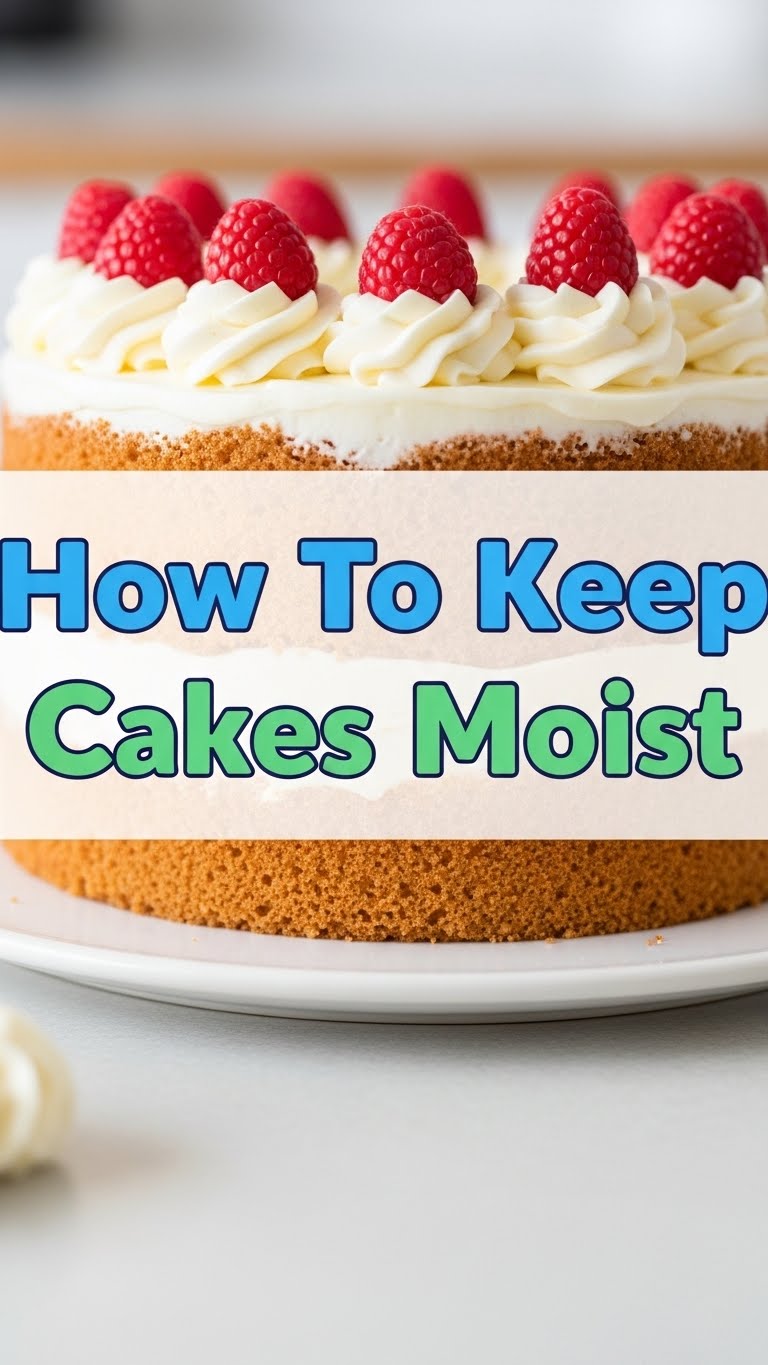
So you’ve stared wistfully at a perfectly beautiful cake, taken a bite, and… *sad trombone sound*… it’s drier than a stand-up comedian’s worst set? Yeah, us too. It’s a tragedy, really. A betrayal of the highest order when a cake looks like a supermodel but eats like a piece of cardboard. But fear not, my baking-curious compadre! We’re about to dive into the mystical arts of keeping your cakes so moist, they’ll make other cakes jealous.
Why This “Recipe” (AKA Life Hack) Is Awesome
Okay, “recipe” is a strong word here. Think of this more as your secret playbook, your cheat sheet, your culinary equivalent of finding a 20-dollar bill in an old coat pocket. This isn’t about baking a *specific* cake; it’s about making *any* cake you bake ridiculously, shamelessly, wonderfully moist. It’s idiot-proof, even for those of us who once tried to bake cookies without preheating the oven (spoiler: it doesn’t work). You want cakes that stay fresh for days? Cakes that practically melt in your mouth? This is your jam. Or rather, your moist cake.
Ingredients (AKA Your Secret Weapons) You’ll Need
These aren’t ingredients for a specific cake, but rather the star players you should be looking for in any cake recipe or considering adding to your baking arsenal to boost that moisture factor!
- Buttermilk or Yogurt or Sour Cream: The holy trinity of tang and tenderness. Seriously, these dairy delights work wonders.
- Oil (Neutral-flavored, like Canola or Vegetable): While butter offers flavor, oil is a moisture *champion*. It stays liquid at room temp, meaning a softer crumb.
- Sugar: More than just sweetness, sugar is a humectant, meaning it loves to hold onto water molecules. Don’t skimp (within reason, of course!).
- Eggs (Room Temperature, please!): They emulsify, create structure, and add richness. And room temp eggs mix better. Science!
- Good Quality Flour: Not too much protein! Cake flour is your friend for a tender crumb, but all-purpose is fine if you don’t overdo it.
- Optional: Simple Syrup, Milk, or Fruit Juice: Your post-bake hydration station. More on this later.
Step-by-Step Instructions (AKA Your Moisture Manifesto)
This isn’t about a specific order for a recipe, but rather a set of golden rules to keep in mind whenever you’re baking a cake. Incorporate these, and you’ll be swimming in moist goodness!
- Embrace the “Wet” Ingredients: Many recipes call for milk, but often buttermilk, sour cream, or plain yogurt can be swapped in (with minor adjustments to leavening, sometimes). These acidic ingredients break down gluten, leading to a softer, more tender cake. They also bring a richness that plain milk often lacks.
- Oil is Your Best Friend: While butter tastes amazing, oil often leads to a moister cake because it’s liquid at room temperature. Butter, being solid, can make cakes feel dense and dry once cooled. Consider recipes that use a mix of both, or even just oil for ultimate moisture.
- Do NOT Overmix the Batter: This is probably the biggest culprit for dry cakes, IMO. Once you add the dry ingredients to the wet, mix *just* until combined. Overmixing develops gluten, which is great for bread, but a death sentence for a tender, moist cake. Mix until you can’t see dry streaks, then stop.
- Don’t Overbake – The Cardinal Sin: This is HUGE. An overbaked cake is a dry cake, end of story. Your oven thermometer might lie, but a toothpick (or skewer) doesn’t. Insert it into the center of the cake; if it comes out with moist crumbs, it’s done. If it comes out clean, you’re already flirting with dry town. Err on the side of slightly underbaked if you must choose.
- The Post-Bake Hydration Station: Once your cake comes out of the oven, and while it’s still warm, consider brushing it with a simple syrup (equal parts sugar and water, heated until sugar dissolves), a bit of milk, or even a fruit juice that complements the cake’s flavor. The warm cake will absorb this liquid like a sponge, adding an extra layer of moisture.
- Wrap It Up (Literally): As soon as your cake has cooled *enough* to handle (but is still slightly warm!), wrap it tightly in plastic wrap. For extra credit, wrap it in foil over the plastic. This traps any escaping steam and moisture right back into the cake. You can even pop it into an airtight container after wrapping.
- Store Smart: Once completely cool, always store your cake in an airtight container at room temperature. If it has perishable frosting, then fridge it, but cakes dry out faster in the fridge. For longer storage, you can freeze wrapped cake layers; they’ll be super moist when thawed!
Common Mistakes to Avoid (Unless You Like Dry Cakes, You Monster)
- Overmixing the Batter: We already mentioned it, but it’s worth repeating. It’s like pushing a delicate flower through a meat grinder. Don’t do it.
- Ignoring Your Oven: “Preheating? Nah, I’ll just shove it in!” Rookie mistake. An oven that’s not at the right temperature will mess with baking times and potentially dry out your cake. Also, get an oven thermometer—the built-in ones can be off by 50 degrees!
- Overbaking: Again, so important it gets a double mention. That extra 5-10 minutes “just to be sure” is often the difference between moist perfection and crumbly disappointment.
- Not Measuring Flour Correctly: Scooping flour directly from the bag compacts it, meaning you’re adding too much. Always spoon flour into your measuring cup, then level it off. A scale is even better, FYI.
- Letting Your Cake Air-Dry: Once it’s out of the oven, don’t just leave it naked on the counter for hours. That’s a one-way ticket to dry-ville. Wrap it up!
Alternatives & Substitutions (Because We’re Flexible Like That)
Life happens, and sometimes you don’t have exactly what the recipe calls for. No biggie!
- No Buttermilk? No Problem! You can make your own! For every cup of buttermilk needed, add 1 tablespoon of lemon juice or white vinegar to a liquid measuring cup, then fill the rest with regular milk until you hit the 1-cup mark. Let it sit for 5-10 minutes until it looks slightly curdled. Voila!
- Sour Cream or Yogurt Swap: If a recipe calls for one, you can usually swap for the other in equal amounts. Go for full-fat for the best texture and moisture. Low-fat might save your waistline, but it won’t save your cake’s moisture.
- Oil vs. Butter: If a recipe calls for all butter but you want more moisture longevity, you can often substitute up to half the butter with a neutral oil. You’ll lose a bit of that buttery flavor, but gain serious moisture.
- Simple Syrup Flavor Boosts: Instead of plain simple syrup, infuse it with citrus zest, vanilla bean, a splash of liqueur, or even a bit of jam dissolved in warm water. Get creative!
FAQ (Frequently Asked Questions – No Dumb Ones Here!)
- Does butter or oil make a cake moister?
Well, technically, oil wins for *moisture retention* at room temperature because it stays liquid. Butter gives incredible flavor and structure, but can make a cake feel drier as it cools. For max moisture, look for recipes with oil or a good combo! - Can I just add more liquid to a recipe to make it moister?
Oh, if only it were that simple! Adding extra liquid willy-nilly can throw off the whole balance of the recipe, making your cake dense, gooey, or even causing it to collapse. Stick to the recipe, but incorporate the *techniques* we discussed. - How do I know my cake is truly done without overbaking?
Ah, the age-old dilemma! Beyond the toothpick test (moist crumbs, not wet batter!), gently touch the top of the cake. If it springs back slightly, it’s probably good. If your edges are pulling away from the pan, it’s definitely done, maybe even *past* done. - Should I cool my cake completely before frosting?
YES, please, for the love of all that is holy! Frosting a warm cake is a messy, melty disaster. Let it cool completely. If you’re in a rush, you can pop it in the fridge for a bit to speed up the process once it’s not piping hot. - My cake always tastes dry the next day. Help!
This is exactly why we went through all these steps! The culprit is usually overbaking, not wrapping it properly, or storing it uncovered. Nail those steps, and your cake will be doing a happy dance even on day three. - Can I freeze my cake to keep it moist?
Absolutely! Freezing cake layers (tightly wrapped in plastic wrap and then foil) is an excellent way to lock in moisture and preserve freshness. Just thaw overnight in the fridge or for a few hours at room temp before frosting. - What’s the deal with “room temperature” ingredients? Does it really matter?
YES, it totally matters! Room temperature eggs and dairy emulsify better, creating a smoother batter and a more uniform texture. Cold ingredients can cause your batter to curdle and result in a less cohesive final product. Plan ahead, my friend!
Final Thoughts
See? Keeping your cakes moist isn’t some dark art practiced by ancient baking wizards. It’s a combination of smart ingredient choices and a few simple techniques. Now go forth, armed with your new moisture-retaining superpowers, and bake glorious, tender, melt-in-your-mouth cakes that will make everyone wonder what your secret is. You’ve earned it!