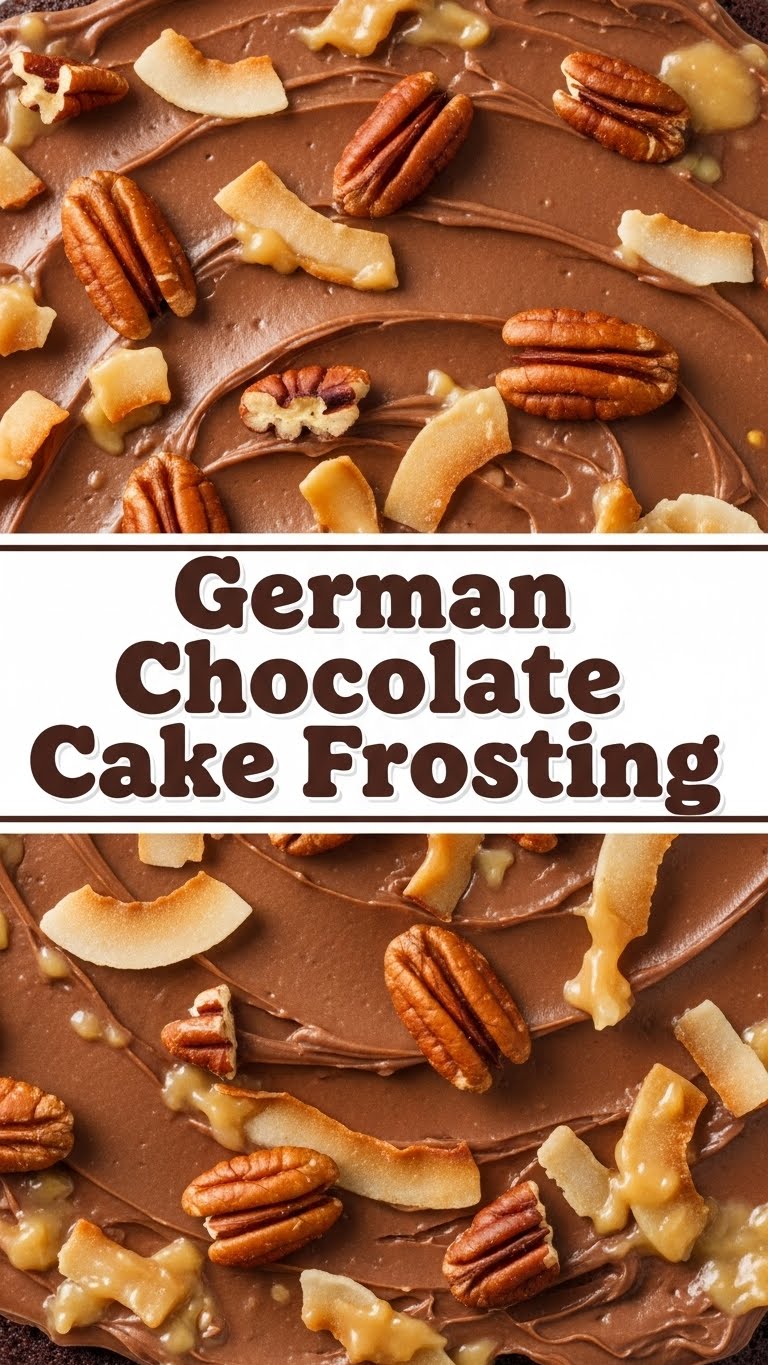
So, you’ve got that *look* in your eye, that ‘I need something decadent but my energy level is currently set to ‘sloth mode” vibe, right? Totally get it. You want to make a German Chocolate Cake… but also, you want to get on with your life. The good news? The frosting part, the crown jewel of that masterpiece, is surprisingly chill to make. And oh boy, is it worth it. Forget those fussy, multi-step recipes that make you question all your life choices. This one? It’s the culinary equivalent of a warm hug… from a really easy friend. Let’s make some magic, shall we?
Why This Recipe is Awesome
Okay, let’s be real. German Chocolate Cake frosting looks intimidating. All those delicious bits, all that creamy goodness! But here’s the secret: it’s practically idiot-proof. Seriously, even if your culinary experience is limited to toasting bread without burning it (which, let’s face it, is a skill in itself), you can nail this. It uses simple ingredients, comes together relatively quickly, and tastes like you spent an entire day slaving away. Plus, it makes your kitchen smell like a dream, and who doesn’t love that? Minimal effort, maximum deliciousness. You’re welcome.
Ingredients You’ll Need
Gather ’round, my fellow kitchen adventurers! Here’s what you’ll need for this glorious German Chocolate Cake frosting. Don’t skimp on the good stuff – your taste buds (and your ego, when you present this masterpiece) will thank you.
- 1 cup Evaporated Milk: This isn’t your regular milk. It’s the concentrated, creamy superhero that makes this frosting *this* frosting. Do not substitute unless you enjoy disappointment.
- 1 cup Granulated Sugar: Sweetness incarnate. Duh.
- 3 large Egg Yolks: These guys are the binders, the richness-bringers. Don’t worry, we’re cooking them thoroughly.
- ½ cup (1 stick) Unsalted Butter: Because everything’s better with butter. Fact. Cut it into a few chunks to help it melt faster.
- 1 teaspoon Vanilla Extract: The soul of most desserts. Don’t skip it!
- 1 ½ cups Sweetened Flaked Coconut: The tropical whisper. You can use unsweetened if you prefer less sweetness, but I like the extra chew and flavor from sweetened.
- 1 cup Chopped Pecans: Crunchy bits of heaven. Toast these bad boys lightly in a dry pan for a few minutes before adding them – it makes a world of difference, trust me.
Step-by-Step Instructions
Alright, apron on, game face ready! Let’s get this deliciousness cooking. Follow these steps, and you’ll be a German Chocolate Frosting wizard in no time.
- In a medium-sized, heavy-bottomed saucepan (heavy bottom prevents scorching!), combine the evaporated milk, granulated sugar, egg yolks, and the chunks of butter.
- Place the saucepan over medium-low heat. Now, here’s the crucial part: whisk continuously! Don’t walk away! This isn’t a ‘set it and forget it’ situation.
- Keep whisking and cooking. It might look a bit separated at first, but keep going. The mixture will start to thicken, usually taking about 10-15 minutes. You’re looking for it to coat the back of a spoon.
- Once it’s thick and lovely, remove the saucepan from the heat. Stir in the vanilla extract. Give it a good swirl.
- Now, add your sweetened flaked coconut and your toasted, chopped pecans. Stir until everything is beautifully combined and coated in that creamy goodness.
- Pour the frosting into a heat-safe bowl and let it cool completely to room temperature. It will thicken even more as it cools. Cover it with plastic wrap directly on the surface to prevent a skin from forming.
- Once cool, it’s ready to spread on your cake! Spread it generously and admire your handiwork.
Common Mistakes to Avoid
We’ve all been there – kitchen mishaps that make you want to throw your spatula across the room. But fear not! Here are a few common pitfalls to sidestep when making this frosting, so you can avoid unnecessary drama.
- Walking Away From the Stove: Seriously, don’t do it. This isn’t the time to check your Instagram. Scrambled eggs and scorched milk are not the vibe we’re going for. Keep whisking!
- Not Whisking Constantly: If you stop, you’ll likely end up with lumps or a weird texture. Or worse, the bottom burns while the top stays runny. Keep that wrist moving!
- Overcooking the Mixture: If you cook it too long, it’ll get too thick and dry once cooled, making it difficult to spread. Aim for a thick custard-like consistency on the stove.
- Undercooking the Mixture: On the flip side, if it’s too thin when you take it off the heat, it won’t set up properly. It needs to coat the back of a spoon.
- Skipping the Cooling Step: Patience, young padawan! If you try to spread warm frosting on a cake, you’ll just have a melted, slidy mess. Let it cool completely.
Alternatives & Substitutions
Life’s about options, right? While this frosting is pretty perfect as is, sometimes you gotta adapt. Here are a few ideas, though I’ll always steer you towards the classic for the full experience!
- Nuts: Not a pecan fan? (Gasp! But okay, I respect your choices.) You can swap them out for toasted walnuts or even chopped almonds. Just make sure to toast them for that extra depth of flavor.
- Coconut: If you absolutely, positively despise coconut (again, gasp!), you *could* technically omit it. But then, is it really German Chocolate Frosting? It’ll still be a delicious, rich, nutty frosting, just… less tropical.
- Butter: For a dairy-free version, a good quality plant-based butter might work, but the texture and flavor might vary slightly. Don’t even *think* about margarine unless it’s an apocalypse scenario. Your soul deserves better.
- Sweetener: While granulated sugar is traditional, you could try using a blend of granulated and light brown sugar for a slightly deeper, more caramel-y note. Start with a small substitution to test the waters!
FAQ (Frequently Asked Questions)
Got questions? I’ve got (casual, opinionated) answers! Let’s clear up any lingering doubts about this glorious frosting.
- Can I make this frosting ahead of time? Absolutely! It’s a fantastic make-ahead component. Just store it in an airtight container in the fridge for up to a week. Let it come to room temperature or gently warm it slightly if it’s too stiff to spread.
- My frosting is too thin/thick, help! If it’s too thin, you can try gently heating it again over low heat, whisking constantly, to cook it down a bit more. If it’s too thick, you can try whisking in a teaspoon or two of warm milk or cream until it reaches your desired consistency.
- Do I have to use egg yolks? The egg yolks are key for the richness and thickening power. While you can find egg-free versions, this traditional recipe relies on them for that authentic texture and flavor. Plus, since they’re cooked, they’re safe!
- What kind of coconut should I use? Sweetened or unsweetened? I usually go for sweetened flaked coconut because it adds extra moisture and a lovely chew. However, if you prefer less sweetness overall, unsweetened will work just fine – you’ll just have a slightly less sweet frosting.
- Can I double the recipe? You betcha! Just use a larger saucepan and be prepared for the cooking time to be a bit longer. Keep whisking, and you’ll be golden.
- How long does this frosting last? Stored in an airtight container in the refrigerator, it’ll keep well for about 3-5 days. It’s best eaten fresh, but it holds up well!
- Can I use raw eggs if I’m brave? No! Please, for the love of all that is delicious and safe, do not use raw eggs in this recipe. The cooking process is what makes the eggs safe to consume and helps thicken the frosting properly.
Final Thoughts
Boom! You just made magic. Seriously, give yourself a high-five. This German Chocolate Cake frosting is pure, unadulterated bliss, and you crafted it with your own two hands. Now go forth and conquer that cake, you culinary genius! Whether you’re impressing friends, family, or just indulging in a solo dessert adventure (no judgment here!), you’ve earned every single delicious bite. Enjoy!