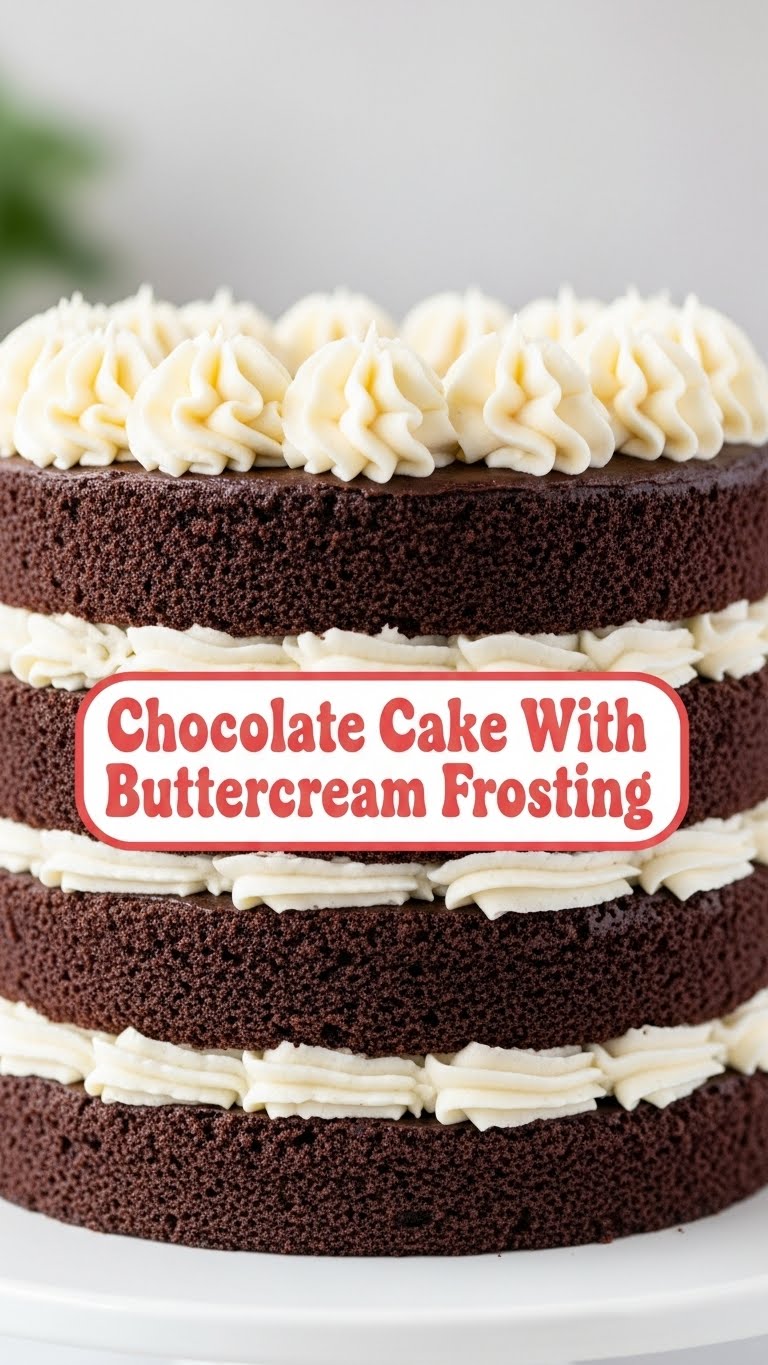
So, you just watched a baking show, got inspired for approximately 3.7 seconds, and now your sweet tooth is screaming for chocolate cake, but the thought of a complicated recipe makes you want to crawl under a blanket? Been there, friend. Consider this your delicious intervention.
Why This Recipe is Awesome
Okay, first off, this isn’t one of those “bake for 8 hours and use a special spatula blessed by a pastry wizard” kind of recipes. Nah. This is the **”I made a chocolate cake from scratch and it actually tastes good, look at me go!”** kind. It’s seriously fool-proof. Even if your culinary skills usually peak at instant noodles, you got this.
Plus, it uses common ingredients you probably already have, so no emergency grocery store runs in your pajamas. Score! It’s moist, chocolatey, and the buttercream? Oh, honey, the buttercream is *dreamy*. Prepare for compliments.
Ingredients You’ll Need
For the Cake:
- All-Purpose Flour: Just regular flour, nothing fancy. Don’t overthink it.
- Granulated Sugar: Sweetness! The good stuff.
- Unsweetened Cocoa Powder: This is where the chocolate magic happens. Make sure it’s *unsweetened*, unless you like things really, really sweet.
- Baking Soda & Baking Powder: Our dynamic duo for lift. Don’t skip these, unless you want a chocolate pancake.
- Salt: Just a pinch to make everything taste better. It’s science, trust me.
- Eggs: Room temp, if possible. They mix better, apparently.
- Milk: Any kind works, but whole milk gives it that extra richness. Live a little!
- Vegetable Oil: Or canola. Keeps it moist. *So* moist.
- Vanilla Extract: A splash of pure joy. Always go for the good stuff here.
- Boiling Water: The secret weapon for super moist, intensely chocolatey cake. Don’t ask, just do.
For the Buttercream Frosting:
- Unsalted Butter: Softened to room temperature. This is crucial. Like, **seriously crucial**.
- Powdered Sugar (Confectioners’ Sugar): The fine stuff. Sifting it helps avoid lumps, FYI.
- Heavy Cream (or Milk): For creamy, dreamy consistency.
- Vanilla Extract: More joy!
- Pinch of Salt: Balances the sweetness, so it’s not just a sugar bomb.
Step-by-Step Instructions
- Get Ready, Get Set, Bake! Preheat your oven to 350°F (175°C). Grease and flour two 8 or 9-inch round cake pans. Or just line with parchment paper. Whatever makes your heart sing.
- Dry Mix Fun: In a large bowl, whisk together the flour, sugar, cocoa powder, baking soda, baking powder, and salt. Make sure there are no lumpy bits.
- Wet Mix Wonders: In another medium bowl, whisk the eggs, milk, oil, and vanilla extract until well combined.
- Combine Forces: Pour the wet ingredients into the dry ingredients. Mix on low speed with an electric mixer (or by hand, if you’re feeling strong) until *just* combined. Don’t overmix! **Overmixing equals tough cake.** Nobody wants tough cake.
- The Boiling Water Secret: Carefully, gradually, pour in the boiling water. Stir until just combined. The batter will be thin—don’t panic, this is normal! It’s the secret to its moisture.
- Into the Pans: Divide the batter evenly between your prepared cake pans.
- Bake It Up: Bake for 30-35 minutes, or until a wooden skewer inserted into the center comes out clean.
- Cool Down: Let the cakes cool in the pans for about 10-15 minutes, then carefully invert them onto a wire rack to cool completely. Patience, young grasshopper. **Frosting a warm cake is a recipe for disaster (and melty frosting).**
Now for the Buttercream Magic:
- Butter Up: In a large bowl, beat the softened butter with an electric mixer on medium speed until creamy and pale. This takes a few minutes, so be patient.
- Sugar Rush: Gradually add the powdered sugar, one cup at a time, beating well after each addition. If it looks too dry, add a splash of heavy cream.
- Flavor Boost: Beat in the vanilla extract and salt. Add more heavy cream, one tablespoon at a time, until your frosting reaches that perfect, spreadable consistency. Taste it! Adjust sweetness or vanilla as needed.
- Assemble & Devour: Once the cakes are *completely* cool, spread a generous layer of frosting on top of one cake. Place the second cake on top, then frost the top and sides of the whole glorious thing. Get creative!
Common Mistakes to Avoid
- Not preheating your oven: Seriously, don’t be that person. A cold oven equals unevenly baked, sad cake.
- Overmixing the batter: I warned you! Less mixing means a tender, fluffy cake. More mixing means a dense, chewy cake that nobody wants to eat.
- Not using room temperature ingredients (especially butter for frosting): It genuinely makes a difference in texture and how well things combine.
- Frosting a warm cake: Unless you’re going for a *very* rustic, *very* melted look, wait until those cakes are stone cold.
- Eyeballing ingredients: Baking is a science, my friend. **Measure accurately**, especially flour and leavening agents. Don’t go rogue here.
Alternatives & Substitutions
Dairy-Free? No problem! Use your favorite non-dairy milk (almond, oat, soy) for the cake. For the frosting, try a good quality plant-based butter alternative and non-dairy cream. It won’t be *exactly* the same, but still delicious!
Cocoa Powder: If you have Dutch-processed cocoa powder, it works great and often gives a darker color and milder chocolate flavor. Just be aware it reacts differently with baking soda, so if you want to be super precise, look up recipes specifically for Dutch-processed. For this recipe, regular unsweetened cocoa is what we’re aiming for.
Frosting Flavors: Feeling adventurous? Add a teaspoon of espresso powder to your frosting for a mocha kick, or some lemon zest for a bright twist. You could even melt some chocolate and fold it in for a chocolate buttercream (because more chocolate is always a good idea, IMO).
FAQ (Frequently Asked Questions)
- “My cake batter looks really thin after adding boiling water. Is it ruined?” Nope, absolutely not! That thin batter is your secret weapon for an incredibly moist cake. It’s supposed to be like that, so chill out, baker.
- “Can I make this as cupcakes instead?” You betcha! Just line a muffin tin with liners, fill them about two-thirds full, and reduce the baking time to about 18-22 minutes. Keep an eye on them!
- “My buttercream is too stiff/too runny! Help!” Don’t fret! Too stiff? Add a tiny bit more heavy cream (1 teaspoon at a time) and beat. Too runny? Add a little more powdered sugar (1 tablespoon at a time) and beat. You’ll get there. **Baking is about adjusting!**
- “How long does this cake last?” Covered at room temperature, it’s usually good for 2-3 days. In the fridge, maybe up to 5 days. But honestly, who lets chocolate cake last that long?
- “Do I *really* need to use room temperature butter for the frosting?” Yes. Just, yes. It emulsifies properly, leading to smooth, fluffy, lump-free frosting. Cold butter will result in a clumpy, sad mess. Trust me on this one.
- “Can I make the cake ahead of time?” Absolutely! Bake the cakes, let them cool completely, then wrap them tightly in plastic wrap and store at room temp overnight, or freeze them for up to a month. Thaw before frosting!
Final Thoughts
See? That wasn’t so scary, was it? You just whipped up a legitimately delicious chocolate cake, and probably barely broke a sweat (unless you were *really* into that whisking action). Now go impress someone—or yourself—with your new culinary skills. You’ve earned it! Grab a slice, put on your comfiest PJs, and pat yourself on the back. You’re basically a pro. Maybe even send me a slice? Kidding! (Mostly.)