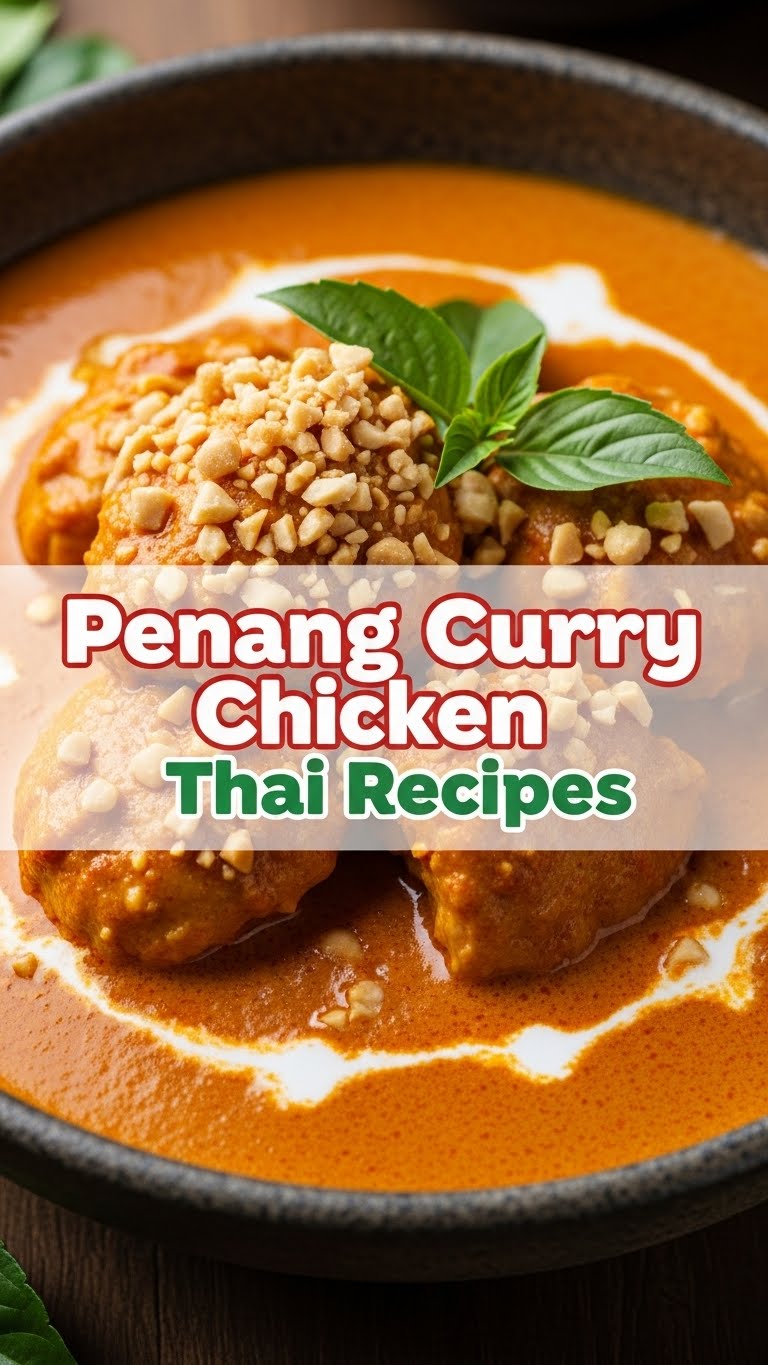
So, you’ve scrolled through your favorite food delivery app one too many times, eyeing that glorious Penang Curry Chicken, but your wallet’s crying and your couch feels too comfy to move, right? Been there, done that! What if I told you we could whip up something even tastier, probably healthier, and definitely cheaper, right in your own kitchen? And no, you don’t need to be a Michelin-star chef or even own a chef’s hat. Just bring your appetite and a willingness to pretend you’re on a mini-vacation to Thailand. Let’s get cooking!
Why This Recipe is Awesome
Seriously, this Penang Curry Chicken recipe is like a warm, spicy hug for your soul, and it comes together faster than you can say “extra rice, please!” It’s that perfect blend of creamy, spicy, and subtly sweet that makes you close your eyes and do a happy dance. Plus, it’s pretty much **idiot-proof**. I even managed not to mess it up, and my kitchen adventures often involve setting off smoke detectors. It’s a fantastic way to impress your dinner guests (or just yourself, no judgment here) without actually breaking a sweat or needing to call your mom for cooking advice. You get big, bold flavors with minimal fuss, which, in my book, is a win-win-win!
Ingredients You’ll Need
Gather ’round, my fellow food adventurer! Here’s what you’ll need to make this magic happen. Don’t worry, most of these are pretty easy to find, even at your regular grocery store.
- Chicken Thighs (about 1.5 lbs): Boneless, skinless, cut into bite-sized pieces. Thighs are superior here; they stay juicy and tender. Don’t even think about breast meat unless you enjoy dry chicken.
- Penang Curry Paste (3-4 tbsp): This is the star of the show! Get a good quality one. Not red curry, not green curry, we want PENANG.
- Coconut Milk (1 can, 13.5 oz / 400ml): Full-fat, please. This isn’t the time to be shy with creaminess. It’s what gives our curry that lush texture.
- Fish Sauce (1-2 tbsp): The umami bomb! Don’t skip it; it adds depth without making things taste “fishy.” Trust me on this.
- Palm Sugar (1-2 tsp): Or brown sugar if you’re in a pinch. Balances the spice and salt.
- Kaffir Lime Leaves (3-4 leaves): Crushed slightly to release their amazing aroma. These are non-negotiable for that authentic Thai fragrance!
- Red Bell Pepper (1 medium): Sliced. For a bit of color, crunch, and veggie goodness.
- Green Beans (a handful): Trimmed. Adds another layer of texture.
- Fresh Thai Basil Leaves (small handful): Stirred in at the very end. This is the cherry on top, folks!
- Vegetable Oil (1 tbsp): For sautéing.
- Cooked Jasmine Rice: For serving, obviously. Because what’s curry without rice?
Step-by-Step Instructions
- Prep Your Chicken: Pat those chicken thighs dry and cut them into nice, even, bite-sized pieces. Season them lightly with salt and pepper.
- Get Sautéing: Heat your vegetable oil in a large pot or Dutch oven over medium heat. Once it’s shimmering, toss in your chicken pieces and cook until they’re nicely browned on all sides. You don’t need to cook them through, just get some good color. Remove the chicken and set it aside.
- Awaken the Curry Paste: In the same pot, add a splash more oil if needed, then spoon in your Penang curry paste. Stir-fry it for about 1-2 minutes until it smells super fragrant and a little darker. **This step is crucial for deepening the flavor!** Don’t rush it.
- Creamy Goodness: Pour in about half of your coconut milk. Stir it well, scraping up any bits from the bottom of the pot. Let it simmer gently for 5 minutes, allowing the flavors to meld and the oil to separate slightly (that’s a good thing!).
- Bring on the Chicken: Add the browned chicken back to the pot, along with the remaining coconut milk, fish sauce, palm sugar, and kaffir lime leaves. Stir everything together.
- Simmer Down: Bring the curry to a gentle boil, then reduce the heat to low, cover, and let it simmer for about 15-20 minutes, or until the chicken is cooked through and tender.
- Veggies & Finish: Toss in your red bell pepper and green beans. Cook for another 5-7 minutes, until the vegetables are tender-crisp.
- Basil Time: Remove the pot from the heat. Stir in the fresh Thai basil leaves. They’ll wilt beautifully in the residual heat. Taste and adjust seasoning if needed – maybe a bit more fish sauce or palm sugar?
- Serve It Up: Ladle that glorious Penang Curry Chicken over a generous bed of fluffy Jasmine rice. Garnish with a few extra basil leaves if you’re feeling fancy. Enjoy your delicious creation!
Common Mistakes to Avoid
Listen, we all make mistakes, especially in the kitchen. But some are easily avoidable, so let’s learn from mine, shall we?
- Not browning your curry paste: Rookie mistake! Skipping that initial fry time means you’re missing out on a huge flavor boost. **Don’t rush this step!**
- Using low-fat coconut milk: Why even bother? It’ll make your curry watery and sad. Go full-fat, you deserve it. Your taste buds will thank you.
- Overcooking the chicken: Chicken thighs are forgiving, but even they have limits. Once they’re cooked through and tender, take it easy.
- Forgetting to taste and adjust: Your curry’s flavor profile might need a little tweaking. A pinch more sugar for sweetness, a dash more fish sauce for saltiness/umami. **Always taste before you serve!**
- Leaving out the kaffir lime leaves or basil: These aren’t just for decoration. They contribute immensely to the authentic Thai aroma and flavor. Don’t be a hero and omit them.
Alternatives & Substitutions
Life happens, and sometimes you don’t have every single ingredient. Here are a few swaps that won’t totally derail your delicious curry train:
- Chicken: Not a chicken person? You can totally use **shrimp** (add them in the last 5 minutes of simmering) or firm **tofu** (fry it up first for some texture). Just remember, cooking times will vary.
- Veggies: Feel free to swap out the bell pepper and green beans for other quick-cooking veggies like snap peas, bamboo shoots, or even some thinly sliced carrots. Cauliflower florets work great too!
- Palm Sugar: No palm sugar? No worries! **Brown sugar** or even regular granulated sugar will do the trick to balance the flavors.
- Kaffir Lime Leaves: These are pretty unique, but if you absolutely can’t find them, a tiny squeeze of **lime juice** at the end can offer a hint of citrusy brightness, but it won’t be the same, FYI.
- Spice Level: If you’re a heat-seeker, feel free to add a few slices of fresh **bird’s eye chilies** when you’re sautéing the curry paste. If you’re a wimp (no judgment!), stick to the paste and enjoy the mild warmth.
FAQ (Frequently Asked Questions)
Got questions? I probably do too, but here are some common ones that might be buzzing around your head.
Q: Can I use red curry paste instead of Penang?
A: Well, technically yes, you can use it, but then it wouldn’t be Penang Curry Chicken, would it? It’d be Red Curry Chicken, which is also delicious, but a different vibe. So, if you want that specific Penang magic, stick to the script!
Q: Is Penang curry spicy?
A: It usually has a mild to medium kick, but the coconut milk mellows it out beautifully. If you want more fire, go wild with some fresh chilies or add extra paste. If you’re sensitive, start with less paste and add to taste.
Q: Can I freeze this curry?
A: Absolutely! It freezes beautifully. Just cool it completely, transfer to an airtight container, and pop it in the freezer for up to 2-3 months. Thaw overnight in the fridge and reheat gently on the stovetop.
Q: What if I can’t find kaffir lime leaves?
A: Ah, a common predicament! While fresh is best, some Asian markets sell them frozen. If all else fails, a teaspoon of lime zest might offer a very faint hint, but **IMO**, it’s worth seeking out the real deal for that authentic aroma.
Q: Can I add other proteins?
A: Definitely! Prawns, firm tofu, or even beef work well. For beef, opt for stewing cuts and simmer longer until tender. For prawns, add them towards the very end to prevent overcooking.
Q: Do I really need palm sugar? Can’t I just use regular sugar?
A: You can definitely use regular brown or white sugar in a pinch. Palm sugar has a slightly more complex, caramel-like sweetness, but the dish will still be delicious with a standard sugar. Don’t let it stop you!
Final Thoughts
And there you have it! A truly delicious, surprisingly simple Penang Curry Chicken that’s going to make your taste buds sing. Who knew you had such culinary superpowers, huh? Now go on, pat yourself on the back, pour yourself a refreshing drink, and enjoy the fruits (or rather, chicken) of your labor. You’ve earned it! Now go impress someone—or yourself—with your new culinary skills. Happy cooking!